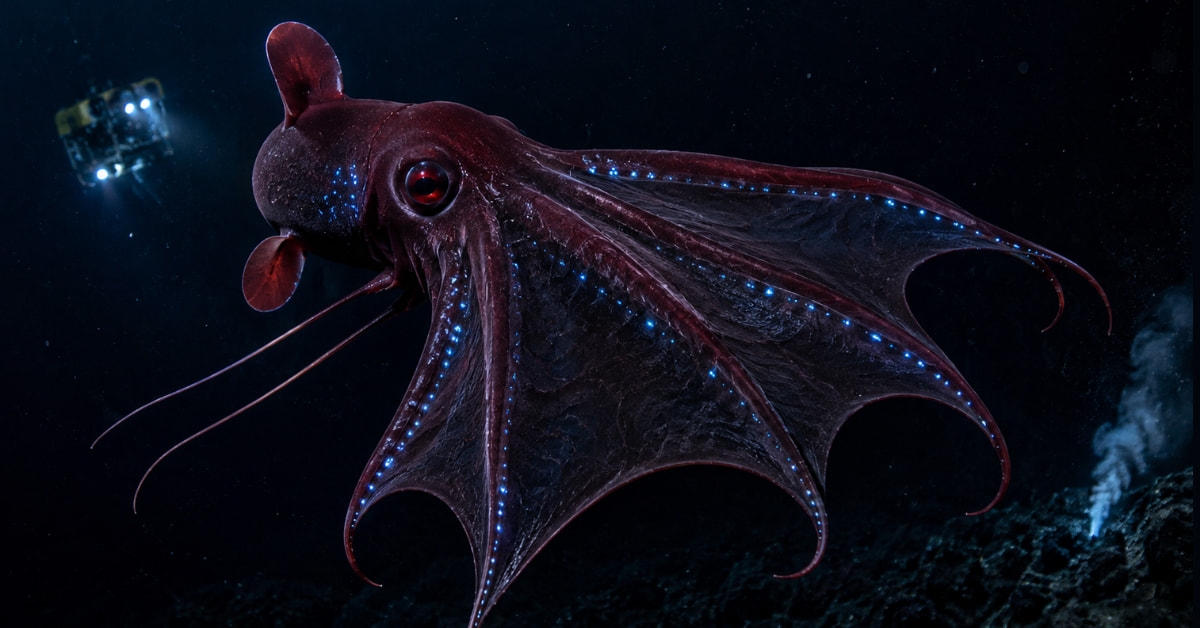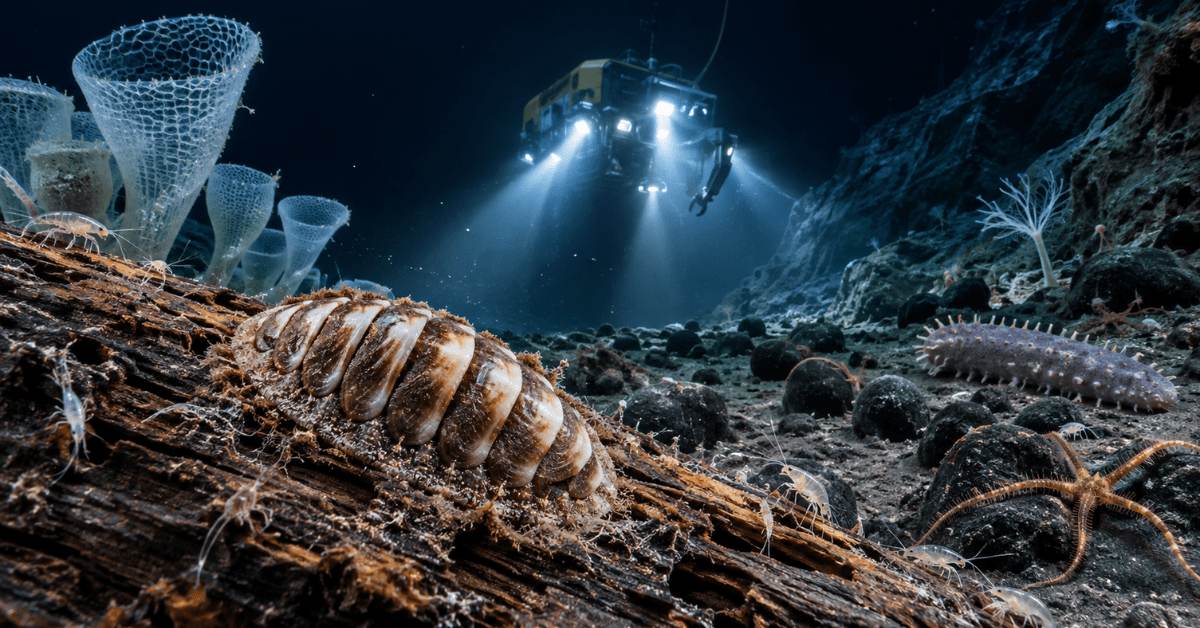


How scientists name a new species is a lot stricter, and stranger, than most people assume. Somewhere in a museum basement right now, there’s a specimen that’s been sitting in a jar for thirty years with no real name. Not because nobody’s looked at it, but because naming a species the right way takes time, precision, and a set of rules that leave very little room for guesswork.
That process drew worldwide attention in early 2026, when researchers invited the public to help name a newly discovered deep-sea chiton, Ferreiraella populi, found nearly three miles down in Japan’s Izu-Ogasawara Trench. More than 8,000 suggestions poured in over the course of a single week. Eleven different people, working completely independently, all landed on the exact same word: populi. It went viral for good reason, but it also left a lot of people wondering the same thing: who actually gets to decide what a new species is called?
The answer is simpler than most assume, but it isn’t the one people expect.
Table of Contents
How Scientists Name a New Species: The Core Process
The taxonomy naming process follows an internationally standardized system that ensures every newly described organism receives a unique, scientifically valid name recognized worldwide. Before diving into the history, it’s worth laying out the basics of how scientists name a new species from start to finish. First, a researcher has to determine the organism they’ve found isn’t already described in scientific literature. Next, they have to prove it’s different from its closest known relatives through careful anatomical comparisons. Only after those differences are clearly documented can the formal naming process begin.
That entire process is built around one goal: making sure every species has one name, used by everyone, everywhere in the world, with no confusion about what organism it’s referring to. This standardized taxonomy naming process is what allows scientists across different countries and disciplines to refer to the same organism without ambiguity.
The Origins of the System We Still Use Today
The binomial nomenclature system developed by Carl Linnaeus dates back to the 1750s, when the Swedish botanist introduced the two-part scientific naming method that taxonomists still use today. Instead of describing an animal or plant with an entire sentence of Latin, he gave each species a two-part name: the genus (which it shares with its closest relatives), and the species epithet (which is unique to that species alone).

Names like Homo sapiens, Tyrannosaurus rex, and Ferreiraella populi all follow this exact two-word structure. Before Linnaeus, this kind of consistency didn’t exist. The system was simple, consistent, and practical, which is why taxonomists around the world still rely on it more than 270 years after it was introduced.
To keep that consistency global and enforceable, animal names are governed by the International Code of Zoological Nomenclature (ICZN). Maintained by the International Commission on Zoological Nomenclature, this legal-style code exists for one reason only: to prevent the same species from getting different names, or different species from accidentally sharing the same one.
Binomial Nomenclature Explained
For readers wondering about binomial nomenclature explained in simple terms, every scientific species name consists of two parts: the genus and the species epithet. The genus groups closely related organisms together, while the species epithet identifies the individual species within that group. Together they create a unique scientific name recognized around the world. With binomial nomenclature explained this way, names like Homo sapiens, Tyrannosaurus rex, and Ferreiraella populi become much easier to understand.
Discovery vs. Description: The Biggest Point of Confusion
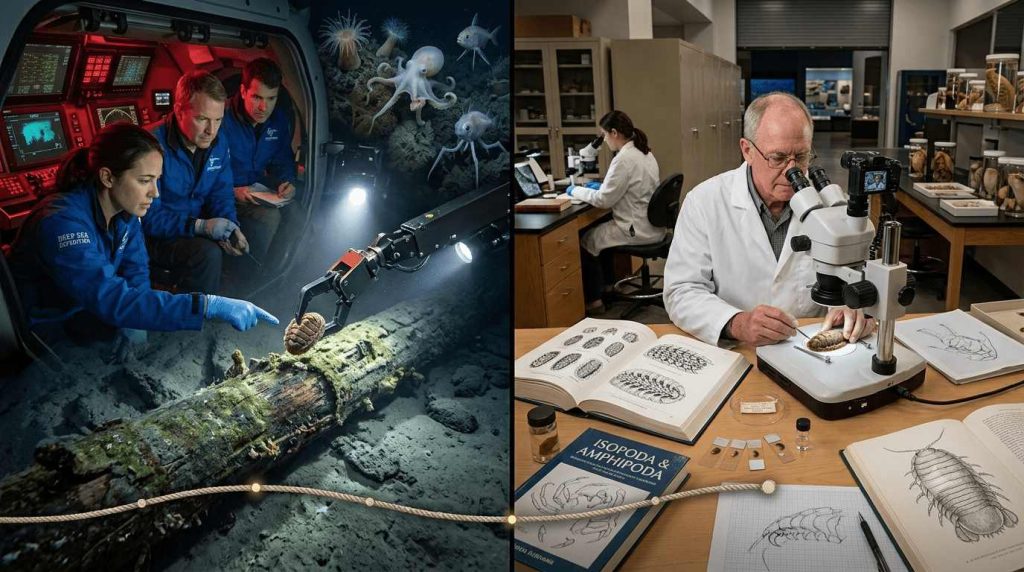
One of the most common misconceptions about naming a species is assuming the person who finds it gets to name it. In reality, finding an organism and formally naming it are two entirely separate steps. This gap between discovery and naming shows up constantly in recent research. The golden penguin that circulated online, for example, sparked public fascination years before any formal taxonomic clarity followed it. The same pattern played out with a newly identified nereidid worm, which existed in collected specimens long before it received a validly published name.
Under the ICZN’s principle of priority, naming rights go to whoever first validly publishes a complete, formal scientific description of that species in a peer-reviewed, permanently accessible journal. A specimen can be collected, photographed, or even talked about in the news for years, but until that formal description is published and meets every requirement of the code, it has no valid scientific name at all.
This is exactly why taxonomist Julia Sigwart, not the public, is the official naming author of Ferreiraella populi, even though the word populi came directly from a public naming contest. The code doesn’t recognize votes, polls, or social media engagement as valid authority. It only recognizes valid publication by a qualified researcher.
The Rules a Scientific Name Must Actually Follow
Scientific names aren’t chosen at random. For a name to be considered valid (as opposed to “informal” or “unavailable”), it has to meet strict requirements laid out by the ICZN.
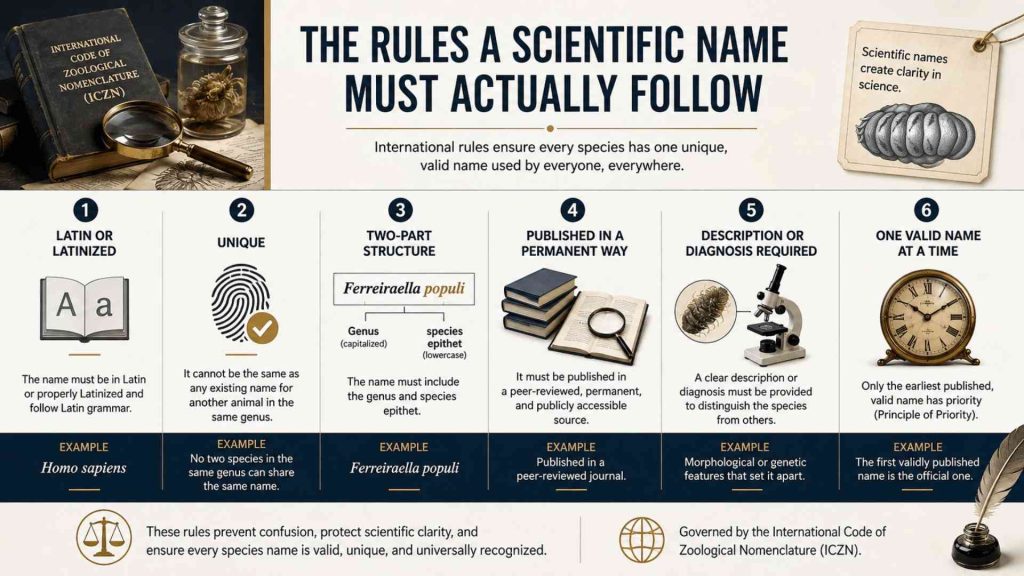
A valid species name must be Latin or properly Latinized, meaning it follows Latin grammar, case, and gender agreement between the genus and species epithet. It can’t duplicate any name already in use for another animal in that same genus. It also has to be published in a way that’s permanent and publicly traceable, so future researchers can verify exactly when and where it was established.
These rules explain why the viral joke submission Ferreiraella ellaellaeheheh (a playful nod to Rihanna’s “Umbrella”) never stood a chance of becoming official, no matter how widely it was shared. It simply doesn’t fit Latin grammatical structure. By contrast, populi, a proper Latin genitive noun meaning “of the people” met every requirement while still capturing the entire spirit of the public contest that produced it.
Other valid finalists, like Ferreiraella stellacadens (“shooting star chiton”) and Ferreiraella ohmu (a tribute to Studio Ghibli’s Nausicaä of the Valley of the Wind), were grammatically correct as well. They show just how many solid, creative options can exist for one species, while only one can become the official, permanent name. Unusual or evocative species names aren’t new. The dinosaur Lokiceratops rangiformis, named after the Norse god Loki for its distinctive curved horns, followed the exact same Latin grammatical requirements as populi. It’s proof that a name can be memorable and scientifically valid at the same time.
Type Specimens: The Permanent Reference Point
To prevent any future confusion about what a species name actually refers to, taxonomists designate a single physical reference specimen called a holotype. This specimen becomes the “gold standard” for that species and is permanently preserved in a museum or research collection for other scientists to examine decades, or even centuries, from now.
Alongside the holotype, researchers often designate paratypes (additional specimens used to show natural variation within the species). Together, these are called type specimens. The location where that holotype was collected is recorded as the type locality, locking in an unchangeable reference point for that name for as long as taxonomy exists.
Why Naming Can Take Decades, And Why It’s Speeding Up
Describing a new species properly takes painstaking work. Researchers have to compare the new specimen against every known close relative, document minute anatomical differences down to the microscopic level, and often examine physical reference specimens housed in museums across multiple countries to be sure it hasn’t already been described.
Because of that level of detail, taxonomist Julia Sigwart has noted that the full process typically takes 10–20 years from collection to publication. Ferreiraella populi broke that norm: collected in 2024 and formally described in the Biodiversity Data Journal on February 6, 2026, less than two years later.
That faster turnaround isn’t a shortcut, it’s a response to growing urgency. More and more taxonomists now treat species description as a race against habitat loss. These challenges have become increasingly important in debates over deep-sea mining, where researchers are racing to document species before industrial activity reaches poorly understood ecosystems.
That urgency isn’t limited to deep-sea trenches. Terrestrial finds face the same clock, including a glowing blue spider discovered in Angola in 2024, which taxonomists rushed to formally describe before its limited habitat came under further pressure. It’s part of a broader pattern seen across biodiversity research and conservation, including deep-sea mining, where scientists are racing to document species before industrial activity reaches poorly understood ecosystems.
Public Naming Contests: Suggestion Box, Not a Vote
Public naming contests, like the one that led to populi, are becoming more common, but they’re carefully structured to protect scientific integrity. Institutions invite suggestions from the public, taxonomists filter those suggestions down to only those that are valid under ICZN rules, and then the describing author (the credentialed taxonomist) makes the final, legally binding choice.

This approach isn’t a gimmick. Back in 2014, Berlin’s Natural History Museum ran a similar public vote for a newly described wasp, resulting in Ampulex dementor, named after the Dementors from the Harry Potter novels. Since then, it’s been used to name new cave shrimp and freshwater shrimp species as well. A 2026 paper published in BioScience examined this trend directly, framing participatory species naming as a legitimate tool for public engagement and conservation funding, while explicitly citing the Ferreiraella populi contest as a case study.
The balance works well: the public gets to take part in a process that used to be closed off entirely, while the rules that keep taxonomy consistent remain fully intact.
Once It’s Published, It’s Almost Never Changed
Once a valid scientific name is published, it’s extremely permanent. If later research shows a species needs to be moved to a different genus, the species epithet almost always stays the same. Replacing an already-valid name entirely is rare, difficult, and requires a formal, published appeal to the International Commission on Zoological Nomenclature. That long-term stability is why researchers spend so much time verifying every detail before assigning an official scientific name. A name chosen in one week of enthusiasm will, in all likelihood, still be in use hundreds of years from now.
FAQ: How Scientists Name a New Species
How do scientists name a new species?
How scientists name a new species starts by confirming it’s undiscovered, documenting its differences from close relatives, designating a holotype, writing a formal peer-reviewed description, and publishing it while following the International Code of Zoological Nomenclature (ICZN).
Can the public actually name a new species?
Not officially. Public naming contests are suggestion boxes. Scientists filter suggestions for Latin validity, and only the researcher publishing the formal description can make the final, legally recognized decision.
Why are scientific names in Latin?
Scientific names are in Latin (or properly Latinized) because Carl Linnaeus standardized binomial nomenclature in the 1750s, and Latin provides a universal, unchanging language that avoids confusion across different modern languages.
What is the difference between discovery and naming a species?
Discovery means finding or collecting an organism. Naming means formally describing and publishing it under ICZN rules. The two can be years, or even decades, apart.
What is a holotype vs. a paratype?
A holotype is the single, official reference specimen that defines a species name. Paratypes are additional specimens listed in the description to help show the natural variation within that species.
How long does it take to name a new species?
On average, 10–20 years from collection to publication. Some, like Ferreiraella populi, have been described in under two years when research was focused and well-documented.
Can a species name be changed later?
Rarely. If reclassified to a different genus, the species epithet usually stays the same. Fully replacing a valid name requires a formal appeal to the ICZN and is only granted in very specific cases.
Why does naming a species matter for conservation?
Without a formal scientific name, a species can’t be added to threatened-species lists or properly cited in environmental impact reviews. Faster, accurate naming is increasingly considered a practical conservation tool.
Related Reading
- Deep-Sea Mining: What’s Really at Stake for Ocean Life
- Kazachstania weizmannii: A New Species Hiding in Plain Sight
- 10 Newly Discovered Species That Shocked Scientists
- Lokiceratops rangiformis: The Dinosaur Named After a Norse God
- Nereidid Worm: A New Species Hiding in the Sediment
- Glowing Blue Spider: Angola’s Newest Discovery
About the Author
Mubashir Razzaq is a science and history writer for StrangeHappen.com, specializing in archaeology, space exploration, wildlife discoveries, and emerging scientific research. His work focuses on translating complex research into engaging, evidence-based stories that help readers understand the mysteries of our world and beyond.