
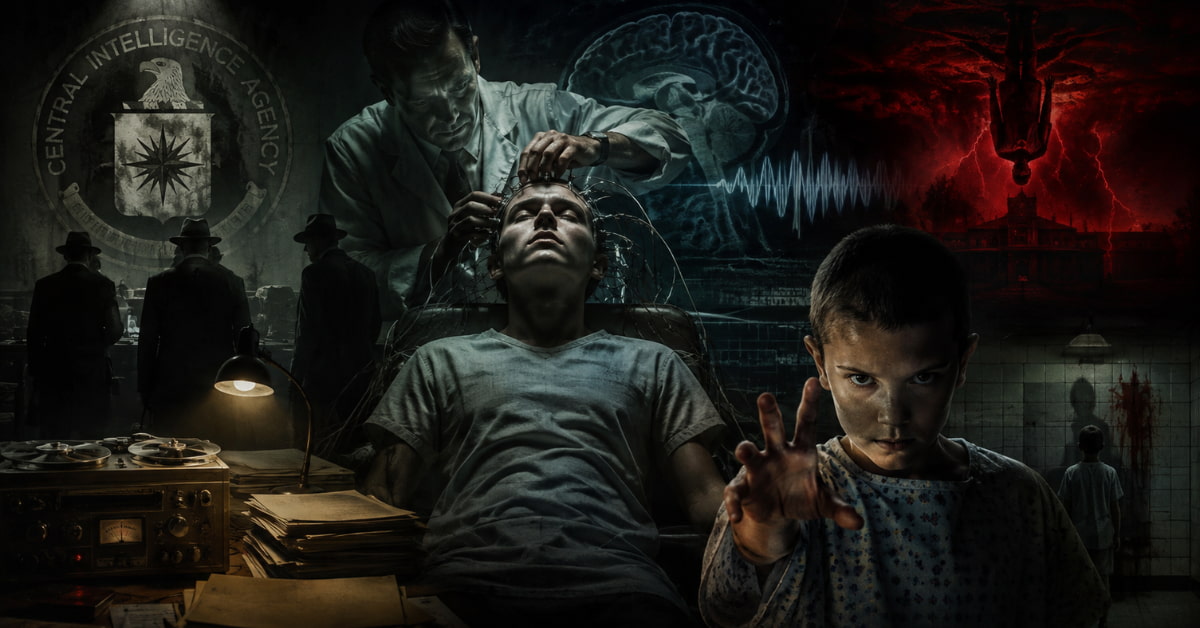
In April 1953, CIA director Allen Dulles approved a program that operated with limited oversight and secrecy that placed many of its human experiments outside the safeguards expected in modern research. That program was MKUltra, the agency’s decade-spanning attempt at CIA mind control during the early Cold War. It used LSD, hypnosis, electroshock, and sensory deprivation on subjects who frequently had no idea they were part of an experiment at all.
The program formally operated under the MKUltra name from 1953 to 1964, at which point the CIA closed out the MKUltra designation and folded its ongoing work into a successor program called MKSEARCH, which continued similar research into the early 1970s. In 1973, then-director Richard Helms ordered most of the surviving records destroyed, a decision that has shaped what historians can and cannot verify ever since.
For decades afterward, it looked like a closed chapter of Cold War history. That changed on June 30, 2026, when a congressional task force held the first hearing on the subject since 1977, reopening questions about victims who were never fully compensated and records that may still exist. This article separates what the CIA’s own declassified files confirm from what remains allegation, disputed, or outright fiction, including the claims connecting the program to Stranger Things and to the HBO series that now carries its name.
What Was Project MKUltra?
MKUltra was the CIA’s umbrella program for research into behavioral control, run through the agency’s Office of Scientific Intelligence and coordinated in part with the U.S. Army Biological Warfare Laboratories. According to the 1977 Senate Select Committee on Intelligence hearing record, it funded at least 149 separate subprojects between 1953 and 1964 alone, carried out at more than 80 institutions including universities, hospitals, prisons, and private research foundations. The Church Committee’s own account is specific on the ending point: MKUltra as a distinct program was closed out in 1964, and its remaining work was transferred to a follow-on effort called MKSEARCH rather than simply continuing under the same name.
The CIA structured the program’s funding so it fell outside the agency’s normal contracting and accounting rules. That meant many of the researchers and institutions involved were never formally told where their money came from, which is why so many university administrators later said they had no idea the agency was behind work happening on their own campuses.
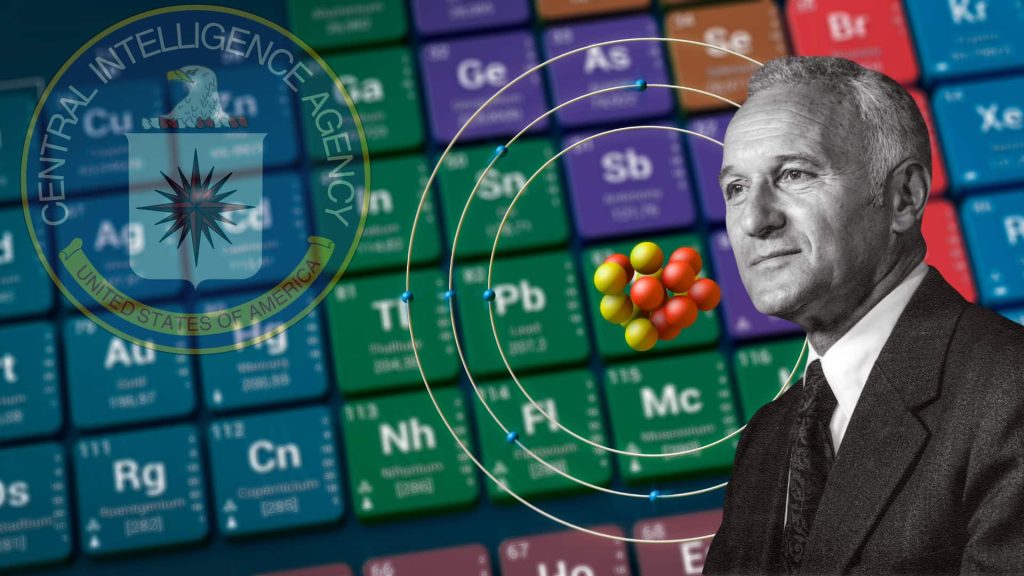
Sidney Gottlieb, a CIA chemist, ran the effort from its founding until his retirement in 1972. Under his direction, the CIA’s mind control research tested drugs, sensory deprivation, hypnosis, and electroshock on prisoners, mental patients, addicts, soldiers, and, in a smaller number of documented cases, members of the general public who never consented to anything.
CIA Mind Control: Why the Program Began
The effort was born out of a specific fear, not a vague one. After the Korean War, U.S. officials became convinced that Chinese and North Korean captors had developed effective brainwashing techniques against American prisoners of war, and that the Soviet bloc might already be ahead in the same field.
Dulles wanted the CIA to have equivalent capabilities, both defensively and offensively. That meant developing a reliable “truth drug” for interrogating suspected Soviet agents, and, more ambitiously, exploring whether a person’s behavior and memory could be altered against their will. Historian Stephen Kinzer, author of Poisoner in Chief, has argued the research drew directly on earlier interrogation work conducted by Nazi doctors at Dachau, some of whom were brought into U.S. government service through Operation Paperclip.
This CIA mind control research did not appear out of nowhere. It grew out of two earlier CIA programs, Project Bluebird and Project Artichoke, both aimed at interrogation and behavioral control before Sidney Gottlieb formally absorbed and expanded their work in 1953.
Project Bluebird and Project Artichoke: What Came First
Project Bluebird launched in 1950 under the CIA’s newly appointed director, General Walter Bedell Smith, with a narrow goal: determine whether a person could be made to carry out an act, including an assassination attempt, without consciously intending to. It was renamed Project Artichoke in August 1951 and continued testing morphine, mescaline, and LSD on CIA personnel in an effort to induce controllable amnesia.
Artichoke also explored using disease agents such as dengue fever as incapacitating tools, according to sourcing compiled in Wikipedia’s entry on the program, though the depth of that specific research thread is harder to verify than the drug experiments. When Gottlieb formalized the wider CIA mind control program in 1953, it effectively absorbed and expanded on what Bluebird and Artichoke had started, with a much larger budget and a much wider set of test sites.
MKSEARCH, MKDELTA, MKOFTEN, and MKCHICKWIT: What Came After
The research did not simply end in 1964. Under the new name MKSEARCH, the CIA’s Office of Research and Development continued a joint project with the U.S. Army Chemical Corps from 1965 through 1971, focused on incapacitating agents rather than truth drugs.
MKSEARCH split into two sub-efforts. MKOFTEN tested the toxicology and behavioral effects of experimental drugs in animals and eventually humans, while MKCHICKWIT focused on acquiring intelligence about new drug development happening in Europe and Asia. A separate designation, MKDELTA, governed how the program’s materials could be used operationally overseas, including for harassment and discrediting operations rather than pure research.
By March 1971, CIA records show the agency had screened more than 26,000 potential chemical agents under these efforts, according to the Church Committee’s later review. Gottlieb ordered the last of this work halted on July 10, 1972, shortly before his retirement.
Major Programs at a Glance
| Program | Active | Focus |
|---|---|---|
| Project Bluebird | 1950 to 1951 | Interrogation and involuntary behavioral control |
| Project Artichoke | 1951 to 1953 | Drug-induced amnesia, incapacitating agents |
| MKUltra | 1953 to 1964 | Umbrella program: drugs, hypnosis, electroshock, sensory deprivation |
| MKSEARCH | 1965 to 1971 | Incapacitating agents, joint CIA/Army Chemical Corps project |
| MKOFTEN | Under MKSEARCH | Toxicology and behavioral testing of experimental drugs |
| MKCHICKWIT | Under MKSEARCH | Intelligence-gathering on new drug development abroad |
| MKDELTA | Concurrent with MKUltra/MKSEARCH | Rules for using program materials operationally overseas |
Sidney Gottlieb: The Chemist Behind the Program
Sidney Gottlieb is the one figure who connects nearly every thread of this story, from the historical program to the new HBO series named after it. A chemist by training, he joined the CIA’s Technical Services Staff and became, in effect, the agency’s chief poisons and mind-control expert for two decades.
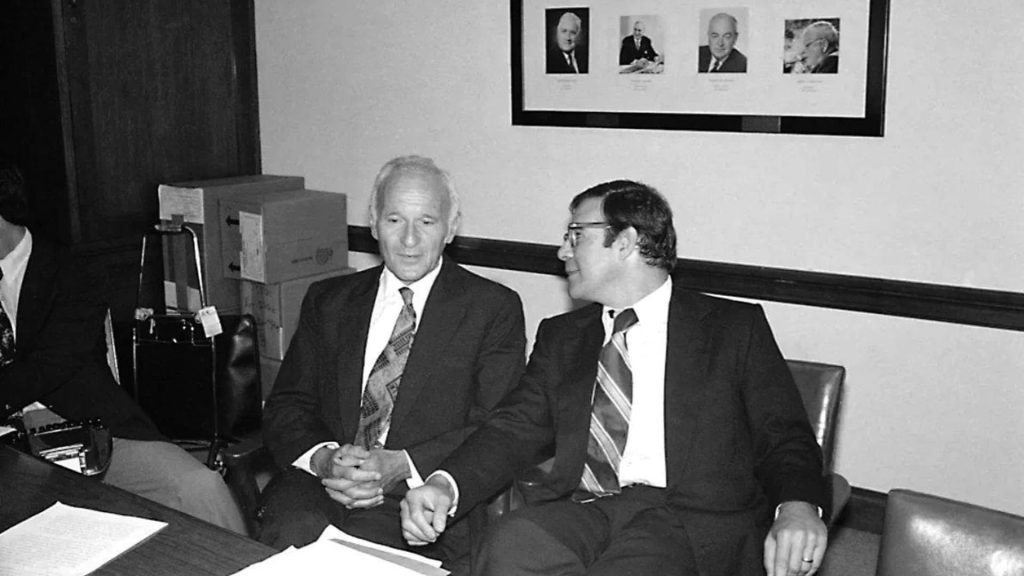
Gottlieb personally arranged for the CIA to buy the entire available supply of LSD from Sandoz Laboratories in the early 1950s, spending roughly $240,000 (worth well over $4 million today), so that the agency alone controlled how much of the drug reached the outside world. He also oversaw schemes to poison or otherwise eliminate foreign leaders, including repeated plots against Fidel Castro, work that ran in parallel with his mind-control research.
When Sidney Gottlieb retired in 1972, he ordered much of his personal file archive destroyed, and CIA director Richard Helms ordered the destruction of most remaining official records the following year. Gottlieb was interviewed by the Church Committee in 1975 but told investigators he had little memory of the specifics, a claim that later surfaced testimony, unsealed by the National Security Archive in 2025, has done little to soften.
Operation Midnight Climax
Operation Midnight Climax was one of the program’s most ethically indefensible subprojects, run out of CIA safehouses in San Francisco and New York during the 1950s and early 1960s. Federal narcotics agent George Hunter White, hired directly by Gottlieb, set up brothels where clients were dosed with LSD without their knowledge and observed from behind one-way mirrors.
The choice of setting was deliberate. Because many of the men involved had visited a brothel, the CIA calculated they would be too embarrassed to report the experience to authorities even if they suspected something unusual had happened to them.
Beyond San Francisco, other unwitting subjects were interrogated under bright lights while dosed with LSD, with agents threatening to extend the disorientating experience if the subject refused to answer questions. Long-term psychological harm and at least one death have been tied to these CIA LSD experiments, according to the History Channel’s account of Operation Midnight Climax.
Donald Ewen Cameron and the Montreal Experiments
If Gottlieb ran the program’s American operations, Donald Ewen Cameron ran its most infamous outpost abroad. A Scottish-born psychiatrist and former president of both the American and Canadian Psychiatric Associations, Cameron directed Subproject 68 at the Allan Memorial Institute, part of McGill University in Montreal, from 1957 to 1964.
Cameron believed he could cure schizophrenia and other conditions by erasing a patient’s existing memories and replacing them through a technique he called “psychic driving.” In practice, that meant placing patients into drug-induced comas for weeks at a time, in one case for three months, while looped audio recordings played the same statements thousands of times over.

Patients also received electroconvulsive therapy at unusually high intensities, along with high doses of LSD and paralytic drugs. Many of Cameron’s patients had checked in for ordinary anxiety or postpartum depression and left with permanent amnesia, incontinence, or an inability to recognize their own parents, according to journalist John Marks’s 1979 account in The Search for the Manchurian Candidate, one of the foundational accounts of this period.
Cameron’s funding came through a CIA front organization called the Society for the Investigation of Human Ecology, and internal CIA records indicate he himself did not know his research money originated with the agency. He died of a heart attack while mountain climbing in 1967, and his family destroyed his personal records shortly afterward, leaving Subproject 68 reconstructed almost entirely from CIA paperwork and patient testimony rather than his own account.
Key People at a Glance
| Person | Role | Fate/Outcome |
|---|---|---|
| Allen Dulles | CIA director who approved the program in 1953 | Died in 1969, never faced formal accountability for the program |
| Sidney Gottlieb | Chemist who ran the program from 1953 to 1972 | Retired 1972, destroyed personal files, died 1999 without criminal charges |
| Richard Helms | CIA director who ordered records destroyed in 1973 | Later convicted of a separate charge (lying to Congress about Chile), unrelated criminal exposure specifically for this program |
| Donald Ewen Cameron | Ran Subproject 68 in Montreal, 1957 to 1964 | Died 1967; his patients later won settlements from the Canadian government and, separately, the CIA |
| Frank Olson | Army scientist covertly dosed with LSD in 1953 | Died after a hotel-window fall in 1953; officially treated as accidental at the time, with the 1994 exhumation later leading a forensic examiner to classify the death as homicide.; no one charged |
| Frank Church | Senator who chaired the 1975 committee that exposed the program | Committee’s findings remain the primary public record of what happened |
The Death of Frank Olson: Fact, Allegation, and What Remains Disputed
Frank Olson’s death is the single most contested episode connected to this history, and it is worth walking through exactly what is documented versus what remains an open question.
Documented: Olson was a U.S. Army biochemist working on biological weapons at Fort Detrick, Maryland. In November 1953, at a retreat attended by CIA and Army scientists, Gottlieb secretly dosed Olson’s drink with LSD as an experiment, without his knowledge or consent. Nine days later, Olson fell from a 10th-floor window of a New York hotel room while under CIA supervision and died, according to President Ford’s own 1976 statement on the case; some later accounts describe it as the 13th floor, a discrepancy this article flags rather than silently picks a side on.
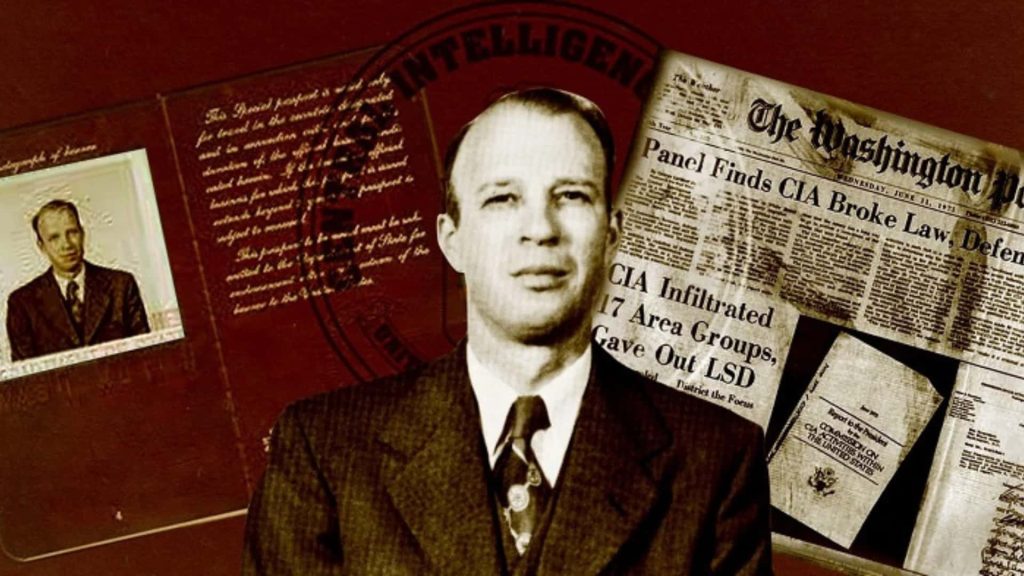
Documented: In 1975, after the Rockefeller Commission’s report referenced the case, President Gerald Ford and CIA director William Colby personally apologized to the Olson family at the White House, though that apology addressed only the lack of informed consent around the LSD dosing. The financial settlement came separately: on October 12, 1976, Ford signed Private Law 94-126, a special act of Congress awarding the family $750,000, less than the $1,250,000 his administration had originally sought.
Disputed: The CIA’s own account long held that Olson jumped during a drug-induced psychotic episode. When his body was exhumed in 1994, a forensic examiner found cranial injuries suggesting he may have been struck unconscious before he went through the window, and ruled the death a homicide. No one has ever been charged, and the Olson family’s 2012 wrongful-death lawsuit against the federal government was dismissed in 2013, in part because of the 1976 settlement.
How Many Subprojects Were There, and Why Were the Records Destroyed?
The precise number of subprojects depends on which government count you use. The Church Committee’s 1976 report and a related 1994 Senate Veterans’ Affairs review both put the figure at 149 distinct research subprojects between 1953 and 1964, though the number climbs higher once MKSEARCH, MKDELTA, MKOFTEN, and MKCHICKWIT are counted separately.
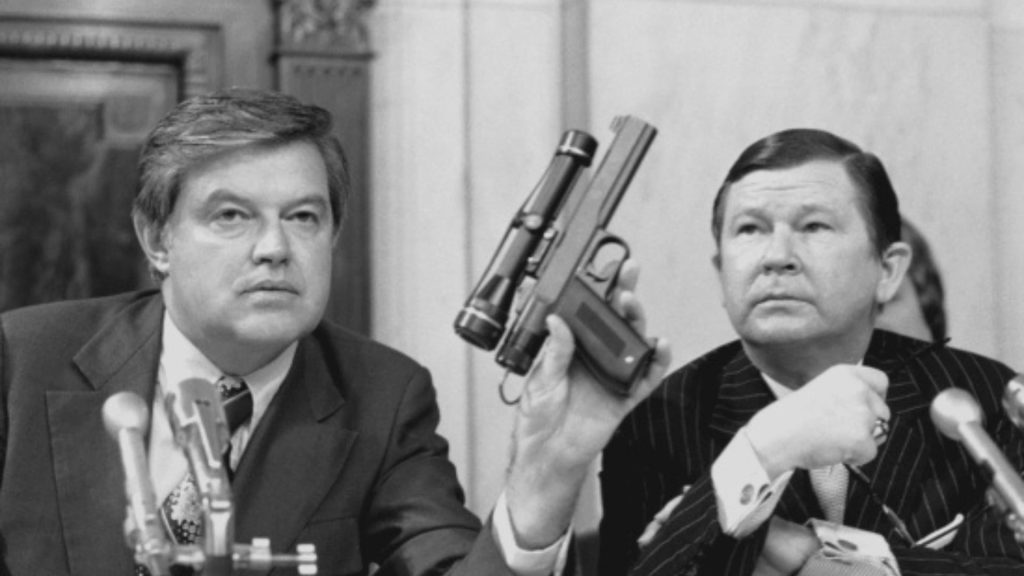
In 1973, amid the broader panic of the Watergate scandal, CIA director Richard Helms ordered nearly all of the program’s files destroyed. That decision is why investigators, then and now, have never been able to fully reconstruct what happened: entire subprojects exist today only as line items in old budget records, with no surviving description of what actually took place. What did survive is scattered across the CIA’s own FOIA Electronic Reading Room, thousands of individually declassified pages that historians still comb through subproject by subproject.
A stroke of bureaucratic luck partially undid Helms’s order. About 20,000 pages of financial documents had been misfiled in a records center normally used for unrelated material, and a 1977 Freedom of Information Act request turned them up. Those surviving pages, thin on detail but rich in funding trails, became the backbone of the 1977 Senate hearings and of nearly every book written about the subject since.
Timeline of Events
| Year | Event |
|---|---|
| 1950 | Project Bluebird launches under CIA director Walter Bedell Smith |
| 1951 | Bluebird renamed Project Artichoke |
| April 13, 1953 | Allen Dulles approves the CIA mind control program |
| 1953 | Frank Olson dosed with LSD without consent; dies days later |
| 1957 to 1964 | Donald Ewen Cameron runs Subproject 68 at the Allan Memorial Institute |
| 1964 | MKUltra formally closed out; ongoing work transferred to the successor program MKSEARCH |
| 1965 to 1971 | MKSEARCH continues the research under a new name, jointly with the U.S. Army Chemical Corps |
| July 10, 1972 | Gottlieb halts the last active drug testing tied to the program |
| 1973 | Richard Helms orders most records destroyed |
| 1975 | Rockefeller Commission investigates CIA abuses; the Church Committee begins its broader investigation. |
| 1976 | Church Committee publishes findings on intelligence abuses, including CIA activities. |
| 1977 | Senate holds dedicated MKUltra hearings after surviving records are recovered through FOIA. |
| 1988 | CIA reaches an out-of-court settlement with a group of Cameron’s former patients |
| July 31, 2025 | Quebec Superior Court authorizes a narrower class action over the Montreal experiments, naming only Canadian defendants after the U.S. was dismissed on sovereign immunity grounds |
| 2025 | National Security Archive publishes new Gottlieb testimony |
| June 30, 2026 | House Task Force on the Declassification of Federal Secrets holds a congressional hearing revisiting MKUltra for the first time in decades. |
What Happened to the Victims?
MKUltra victims have faced a narrow and slow road to legal accountability, and it is still not finished. In the United States, most lawsuits filed after the 1975 revelations failed outright. In United States v. Stanley (1987), the Supreme Court ruled 5 to 4 that Army sergeant James Stanley could not sue over being unknowingly dosed with LSD, citing the Feres doctrine that generally bars service members from suing the government over injuries tied to military service.
Former U.S. Marshal Wayne Ritchie fared no better. He alleged the CIA spiked his drink at a 1957 Christmas party, leading him to attempt a bungled robbery that night, but a federal judge dismissed his case in 2005 after ruling Ritchie could not prove the drugging was tied to any specific government experiment.
Canada tells a different story. In the 1980s, a group of Cameron’s former patients sued, and the case was later documented in a CBC Fifth Estate investigation into the settlements that followed. The Canadian government eventually paid roughly $100,000 CAD to each of 127 identified claimants, according to accounts of the settlement with a smaller group of claimants in 1988, one of the rare instances in which the agency reached a settlement connected to this history.
That was not the end of it, and the current case has a specific reason for only naming Canadian defendants. An earlier class action filed in 2019 tried to sue the U.S. government directly alongside Canada, McGill, and the Royal Victoria Hospital, but Canadian courts dismissed the claim against the U.S. on sovereign immunity grounds; the Quebec Court of Appeal upheld that dismissal in 2023, and the Supreme Court of Canada declined to hear a further appeal in May 2024, according to CBC News. That left the case to proceed against the Canadian defendants alone.
On July 31, 2025, a Quebec Superior Court judge authorized that narrower class action covering victims, family members, and estates connected to the Allan Memorial Institute experiments, with two of three original applicants, Julie Tanny and Lana Ponting, the latter admitted to the institute as a teenager, approved as representative plaintiffs, according to CBC News. The Educaloi legal-news summary confirms the case remains open and unresolved as of this writing, with the amount of compensation sought still undetermined.
The 2026 Congressional Hearing
On June 30, 2026, the House Oversight Committee’s Task Force on the Declassification of Federal Secrets held a hearing titled “Mind Control and Accountability: Uncovering the Truth of the CIA’s MKULTRA Project,” a congressional hearing revisiting MKUltra for the first time in decades.
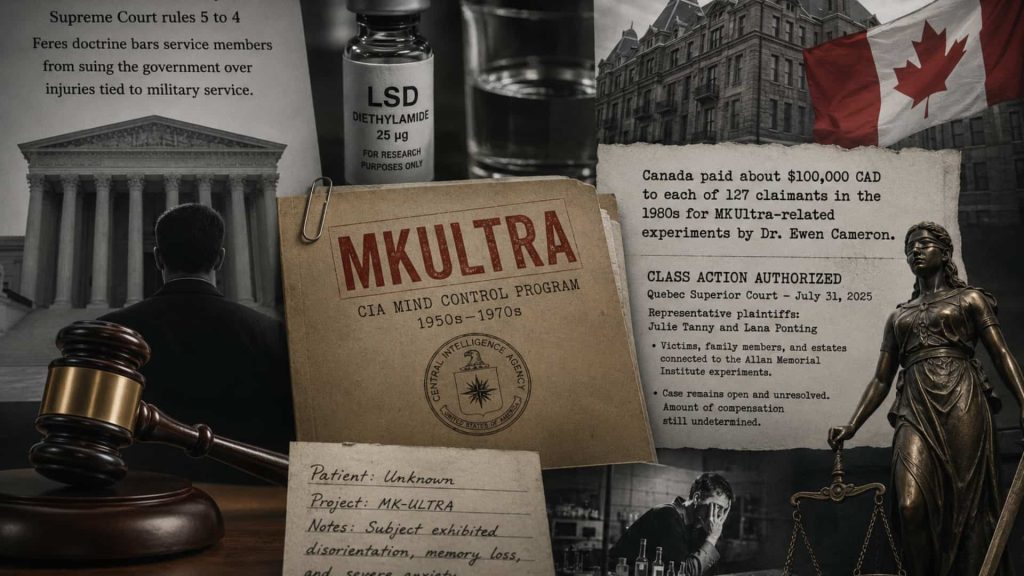
Task Force chairwoman Anna Paulina Luna opened by arguing the program “was not a policy failure or an overzealous program that got out of hand,” but a deliberate, decades-long operation that used American citizens, prisoners, and veterans as test subjects, according to her opening statement published by the House Oversight Committee. The witness list included historian Stephen Kinzer, investigative journalist Tom O’Neill, author of Chaos: Charles Manson, the CIA, and the Secret History of the Sixties, and Dr. Elizabeth Ginexi, a former National Institutes of Health program director who appeared as the hearing’s minority witness.
Much of the questioning focused on two things: whether additional records survive somewhere in agency archives despite the 1973 destruction order, and whether any living victims have ever received meaningful acknowledgment. As reporting from Military.com noted, the hearing did not surface dramatic new documents; its significance was that Congress formally revisited the question of accountability for the first time in nearly fifty years.
The timing was not coincidental. Just two months earlier, in April 2026, Newsweek reported that the National Security Archive and ProQuest had jointly published a collection of more than 1,200 related documents, the largest scholarly release of program records in years, which helped drive renewed congressional interest.
Fact, Allegation, and Fiction: Sorting the Claims
The real MKUltra history is disturbing enough on its own, but its notoriety and the destruction of most of its records have fed a wide range of MKUltra conspiracy theories that go well beyond what any document supports. The table below separates documented history from allegation, disputed interpretation, and outright fiction. For a sense of how unverified Cold War claims can grow around real but poorly documented research, see our separate investigation into the rumored Soviet Project D.O.L.L. program.
| Claim | Status | What the evidence actually shows |
|---|---|---|
| The CIA drugged and experimented on people without consent | Documented | Confirmed by Church Committee findings, surviving CIA records, and the government’s own settlements |
| Frank Olson was covertly dosed with LSD before his death | Documented | Confirmed in the CIA’s internal investigation, the 1975 Rockefeller Commission report, and the 1976 congressional settlement |
| Olson’s death was a homicide, not an accident | Disputed | 1994 exhumation found cranial injuries; no criminal charges were ever filed |
| Ted Kaczynski’s Harvard study was connected to this program | Alleged/Disputed | He took part in a Henry Murray-led psychological study at Harvard; a direct subproject link is argued by some researchers but not confirmed by declassified paperwork itself |
| Charles Manson had ties to CIA-funded behavioral research | Alleged/Unverified | Raised by journalist Tom O’Neill’s research; Wikipedia’s own sourcing flags the specific connection as failing independent verification |
| Sirhan Sirhan was under CIA mind control during the RFK assassination | Alleged/Unverified | Claim made by his attorney; never established as fact in any court proceeding |
| Ken Kesey and Allen Ginsberg were paid test subjects | Documented | Both took LSD in CIA-funded studies at Menlo Park and Stanford as consenting, paid volunteers |
| The program is still secretly running today | Unverified/Conspiracy theory | No CIA record, congressional finding, or credible reporting supports this; the documented effort ended in the 1970s |
| The CIA successfully created a real “Manchurian Candidate,” a programmable assassin acting against their own will | Documented goal, unproven outcome | Church Committee records confirm the CIA explored assassination-resistant conditioning and hypnosis as a goal; no declassified record shows the agency ever achieved a reliable, controllable version of it |
| The Montauk Project continued this work with time travel and psychic super-soldiers | Unverified/Conspiracy theory | Widely regarded by researchers as an unsubstantiated claim with no connection to any documented CIA program |
Did MKUltra Actually Achieve Mind Control?
No, not in the sense most people mean when they use the phrase. What the declassified record supports is narrower and, in its own way, more sobering: the CIA spent roughly two decades and dozens of subprojects trying to find a reliable way to alter behavior, extract information, or induce amnesia, and by its own internal assessments, it largely failed at the ambitious version of that goal.
Researchers did document real, if limited, effects. Drugs and sensory manipulation could disorient a subject, impair short-term memory, or make someone more suggestible for a short window. Cameron’s patients in Montreal experienced genuine, lasting amnesia from his electroshock and drug regimen, which is a form of harm, not evidence that his “psychic driving” technique could rebuild a mind to order the way he intended. None of that adds up to the popular idea of mind control: a subject who can be reliably reprogrammed, hypnotized into acting against deeply held values, or turned into an unwitting assassin on command.
The CIA’s own researchers reached a similar conclusion at the time. Church Committee testimony and later historical accounts, including Kinzer’s Poisoner in Chief, describe growing internal skepticism through the 1960s that LSD or hypnosis would ever produce dependable results, which is part of why funding shifted toward MKSEARCH’s narrower focus on incapacitating agents rather than the broader behavioral control ambitions of the original program. The honest answer to “did MKUltra work” is that it caused extensive, well-documented harm while never achieving the science-fiction outcome it was chasing.
Was Stranger Things Inspired by MKUltra?
Yes, and the real story behind Stranger Things turns out to be more grounded, and less supernatural, than most viewers assume. Creators Matt and Ross Duffer told Rolling Stone in 2016 that they wanted the show’s supernatural elements “grounded in science in some way,” and built Eleven’s backstory directly on the real CIA mind control history: her mother, Terry Ives, is depicted as a real test subject whose in-utero exposure to the program’s drugs and sensory-deprivation techniques left Eleven with her powers.
The show even names the program directly on screen. In season one, police chief Jim Hopper tracks down Terry Ives, who explicitly tells him she was part of “Project MKUltra” and never knew it at the time, according to ScreenRant’s breakdown of the connection. Hawkins Lab’s sensory-deprivation tank sequences also echo real techniques used on Cameron’s patients, so even the show’s fictional laboratory has a real-world source.
Where Stranger Things departs from real life is everything involving actual psychic ability, interdimensional portals, and the Upside Down itself. The real experiments behind Stranger Things never produced anything like that: no declassified document, congressional finding, or credible historical source supports the idea that the actual research created telekinesis or opened a gateway to another dimension. The Duffer Brothers have also drawn on a separate and far less credible claim called the Montauk Project, a conspiracy theory involving alleged psychic experiments and time travel at Camp Hero, New York, which researchers treat as unsubstantiated and unconnected to any documented CIA program.
Project: MKUltra, David Chase’s HBO Series
Cultural interest in this history grew again in October 2025, when The Sopranos creator David Chase optioned journalist John Lisle’s 2025 nonfiction book Project Mind Control: Sidney Gottlieb, the CIA, and the Tragedy of MKULTRA for a new HBO limited series titled Project: MKUltra.
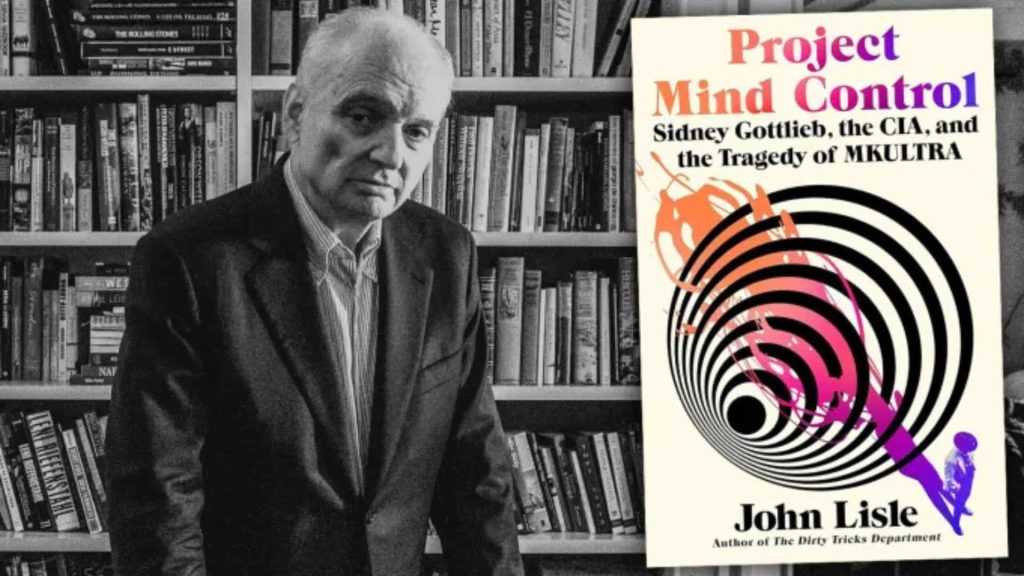
Described by HBO as a dramatic thriller centered on Gottlieb, “often known as The Black Sorcerer,” the series marks Chase’s first television project since The Sopranos ended in 2007, according to Deadline’s original report on the deal. Chase is writing the adaptation himself and executive producing through his Riverain Pictures banner alongside producer Nicole Lambert.
As of July 2026, the series remains in development with no confirmed release date, no announced cast, and no production start date. Speaking at the Karlovy Vary Film Festival that month, Chase said he is “in the story stage” and described researching the CIA’s own stated rationale for weaponizing LSD, according to The Hollywood Reporter’s coverage of the festival appearance.
In a separate interview, Chase floated one of this article’s own disputed claims as a story thread he’s exploring, saying “maybe Charles Manson was given LSD by MKUltra,” language that itself illustrates why this article treats the Manson connection as alleged rather than documented, as reported by MovieWeb. As of mid-2026, HBO has not announced a confirmed premiere date, trailer, cast, or production start date.
Is MKUltra Still Happening Today?
No credible evidence supports the idea that the program itself continues in any form. The documented effort wound down through the early 1970s, and its successor work, MKSEARCH among them, ended by 1971. What has continued is public interest, congressional scrutiny, and litigation tied to its aftermath, which is different from the research still operating.
What has genuinely continued, in a far more regulated and consensual form, is brain and neural-interface research itself, the kind now used in projects like DARPA-funded mind-controlled insect research, lab-grown brain organoids wired into a working computer, and the first commercially approved brain-computer implant restoring hand movement in paralyzed patients. These modern research efforts operate under ethical and regulatory frameworks that were absent or inadequate in many of the CIA’s documented human experiments.
The persistent “is it still happening” question comes largely from two real facts feeding genuine, reasonable suspicion: the CIA destroyed most of its own records, and the government has never fully disclosed everything it once funded. That combination, confirmed destruction plus incomplete disclosure, is exactly why the 2026 congressional hearing focused so heavily on declassification rather than on any claim of an ongoing program. It’s a different flavor of the same tension playing out in a separate 2026 story about scientists connected to classified research going missing or turning up dead, where federal review and public suspicion are again running well ahead of confirmed evidence.
Best Books About This History
For readers who want the full documented record rather than a single-article summary, three books form the core of serious research on this subject, each covering different ground.
The Search for the Manchurian Candidate: The CIA and Mind Control by John Marks (1979) is the original account, written after Marks successfully sued the CIA to release its surviving financial records. It remains the most restrained of the major books, largely avoiding speculation about whether the CIA ever succeeded in its goals.
Poisoner in Chief: Sidney Gottlieb and the CIA Search for Mind Control by Stephen Kinzer (2019) is the most accessible entry point for general readers, built around Gottlieb’s personal biography and drawing on document releases that postdate Marks’s original work.
Project Mind Control by John Lisle (2025) is the newest of the three and the basis for David Chase’s HBO series, incorporating testimony and depositions Lisle located that were not part of earlier accounts. Readers interested specifically in the Montreal experiments should also look for Anne Collins’s In the Sleep Room, still considered the most detailed account of what happened to Cameron’s patients.
Related Articles You May Like
- Scientists Missing or Dead: The Full 2026 Timeline — another government-secrecy story under active federal review in 2026, and a good companion piece for how to separate documented fact from unproven pattern.
- The Unbelievable Truth About Mind-Controlled Bees — a look at the government-funded neural-interface research happening today, decades after MKUltra’s far cruder attempts at the same basic goal.
- Brainoware: The Living Computer — lab-grown brain cells wired into a working computer, a legitimate, consent-based descendant of the kind of brain research MKUltra tried to force.
- China’s First Commercial Brain-Computer Interface — the first commercially approved brain implant, part of the same modern neuroscience story as Brainoware above.
- Project D.O.L.L.: The Hidden Soviet Nightmare — a speculative, unverified Cold War legend about an alleged Soviet mind-transfer program, worth reading as folklore rather than documented history, unlike the sourced record above.
- The Bell Island Boom — a different kind of Cold War-era mystery, a still-debated 1978 superbolt event that also drew in government scientists, for readers who like this site’s other “officials investigated something strange” stories.
Key Takeaways
- This was a real, CIA-funded program of human experimentation that formally operated from 1953 to 1964 before its work continued under the successor program MKSEARCH, confirmed by declassified records, congressional hearings, and government settlements.
- Sidney Gottlieb directed the effort and later destroyed his own files; CIA director Richard Helms ordered most official records destroyed in 1973.
- Documented subprojects include Operation Midnight Climax and Donald Ewen Cameron’s Montreal experiments; legal accountability has been limited and, in Canada, is still actively being litigated as of 2025 to 2026.
- Congress held its first hearing on the subject since 1977 on June 30, 2026, focused on declassification and victim accountability rather than new revelations.
- Claims connecting this history to Charles Manson, Sirhan Sirhan, an ongoing secret program, or the Montauk Project remain unverified or disputed, unlike the documented core of the research itself.
- Stranger Things and the upcoming HBO series Project: MKUltra both draw on the real record, but neither should be mistaken for a factual account of what the CIA actually achieved.
Frequently Asked Questions About Project MKUltra
What was Project MKUltra?
It was a CIA program that formally operated from 1953 to 1964 before its work continued under a successor program called MKSEARCH, testing drugs, hypnosis, electroshock, and sensory deprivation on human subjects, many without their knowledge, in an effort to develop mind-control and interrogation techniques.
Who was Sidney Gottlieb, and what happened to him?
Sidney Gottlieb was the CIA chemist who directed the program from its founding until his 1972 retirement. He was investigated by the Church Committee in 1975 but claimed little memory of the details, and died in 1999 without ever facing criminal charges.
Did the CIA actually experiment on people without their consent?
Yes. Declassified records, Church Committee findings, and multiple government settlements confirm this CIA human experimentation, part of the CIA mind control program that administered drugs and other treatments to unwitting subjects, including prisoners, mental patients, and members of the general public.
What was Operation Midnight Climax?
Operation Midnight Climax was a subproject in which the CIA set up brothels in San Francisco and New York to dose unwitting clients with LSD and observe their reactions from behind one-way mirrors.
Was Frank Olson murdered, or did he take his own life?
Frank Olson was covertly dosed with LSD by CIA officials in 1953 and died in a fall days later. A 1994 exhumation found injuries suggesting he may have been struck unconscious first, and a medical examiner ruled the death a homicide, but no one has ever been charged.
Is MKUltra still happening today?
No credible evidence supports that claim. The documented program ended by the early 1970s; what continues is public scrutiny and litigation over its historical aftermath, not the research itself.
Was Stranger Things based on a true story?
Stranger Things draws directly on this history for its premise, and even names the program on screen, but its psychic powers, portals, and the Upside Down are entirely fictional and have no basis in any documented research.
Has HBO announced a release date for David Chase’s series?
No. As of mid-2026, Project: MKUltra remains in development at HBO with no confirmed release date, cast, or production start.
Were Charles Manson or Sirhan Sirhan really connected to this program?
Both claims are alleged rather than documented. No declassified subproject record confirms either connection, and researchers generally treat both as unverified.
What happened at the Allan Memorial Institute under Donald Ewen Cameron?
Cameron ran Subproject 68 at Montreal’s Allan Memorial Institute from 1957 to 1964, using drug-induced comas, high-dose LSD, and repeated electroshock in an attempt to erase and rebuild patients’ memories, leaving many with permanent amnesia.
Where can I read the original declassified documents?
The most substantial public collections of MKUltra declassified documents are held by the National Security Archive and in the 1977 Senate Select Committee hearing record, which remain the most authoritative sources available to the public.
Source References (top sources used, with dates)
- National Security Archive, “The Top Secret Testimony of CIA’s MKULTRA Chief, 50 Years Later,” (2025)
- U.S. Senate Select Committee on Intelligence, “Project MKULTRA, the CIA’s Program of Research in Behavioral Modification,” (August 3, 1977)
- U.S. House Committee on Oversight and Government Reform, “Luna Opens Hearing on MKULTRA Project Transparency,” (June 30, 2026)
- CBC News, “Victims of CIA-linked Montreal brainwashing experiments cleared to sue in class action,” (July 31, 2025), and “Supreme Court won’t hear appeal in Montreal MK-ULTRA brainwashing case,” (May 2024)
- Newsweek, “What is MKUltra? CIA secret ‘mind control’ program records unsealed,” (April 30, 2026)
Author Bio
About the Author Evan Brooks writes for Strangehappen.com, where he researches and reports on declassified government programs, Cold War history, and the real stories behind popular culture’s biggest conspiracy theories. His articles draw on primary government records, congressional testimony, and reputable journalism, and aim to separate documented fact from allegation and speculation for readers.