
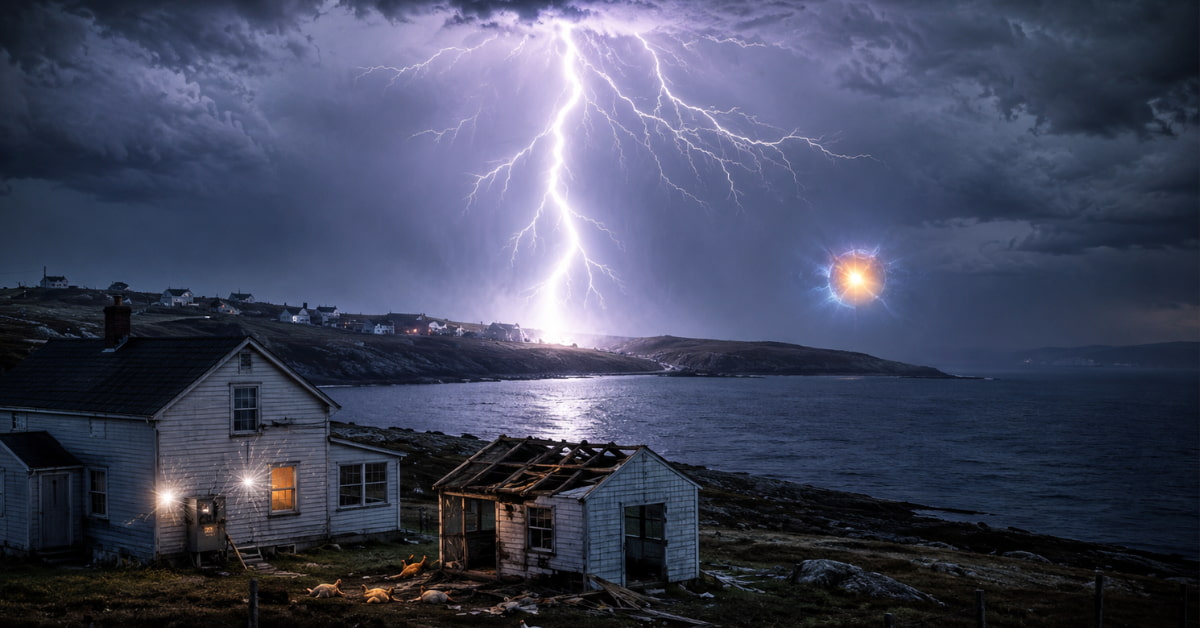
A quiet Newfoundland community had its fuses blown, its televisions knocked out, and several chickens killed in under five seconds. No bomb crater. No conventional thunderstorm was reported. No confession, ever, from anyone.
Nearly fifty years later, the Bell Island Boom 1978 has never received an official, government-confirmed cause. But it does have a leading scientific explanation, one more complete than almost anyone writing about it seems to realize, alongside a handful of details that still genuinely don’t fit.
Table of Contents
What Happened on Bell Island in 1978
On the morning of Sunday, April 2, 1978, residents of Bell Island, Newfoundland were going about an ordinary cold, drizzly Sunday. Around 11 a.m., without warning, a single deafening crack tore through the island. Witnesses as far away as Cape Broyle, roughly 55 kilometers off the island, reported hearing it, and some accounts place the audible range even further, toward 100 kilometers.
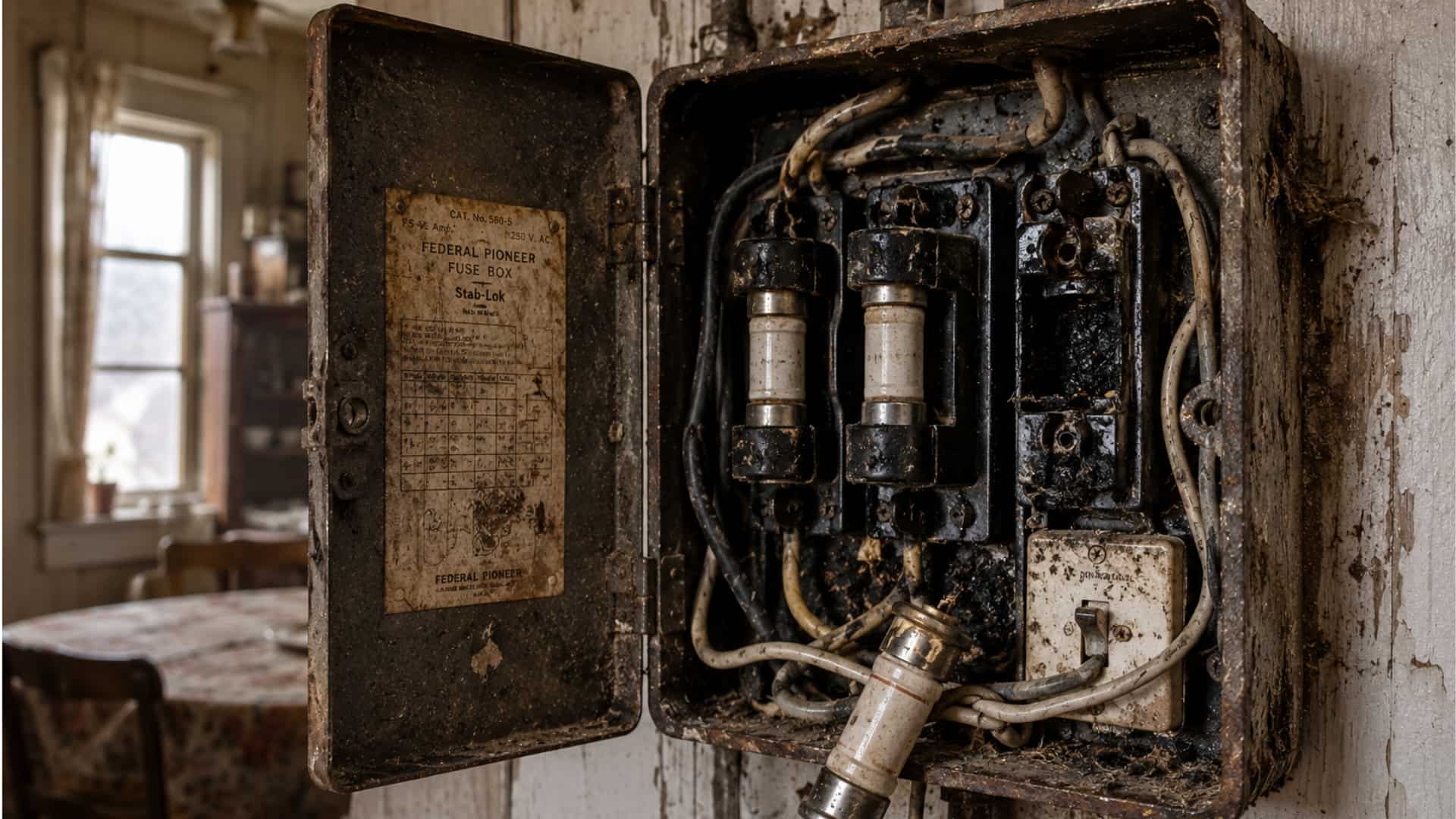
At the Bickford family farm in Lance Cove, the damage was immediate and physical. Fuses blew out of the household fuse box hard enough to lodge in a wall down the hallway, trailing a streak of blue flame behind them. The roof of the family’s chicken shed was torn off its frame, and five chickens inside were killed. Outside, two or three shallow holes appeared in the half-frozen ground near the shed, the kind of damage that made an RCMP officer on scene compare it to a thrown bomb, though digging into the holes turned up nothing buried.
Televisions and appliances across several nearby homes reportedly failed or sparked at the same moment. Twelve-year-old Darin Bickford, riding his bicycle back toward the house at the time, later told journalists that the birds and dogs on the property went completely silent just before the bang, followed by what he described as a hovering ball of blue, orange, and yellow light that vanished within seconds. A woman on the mainland side of Conception Bay separately reported a beam of light angling up from the island into the sky.
Quick Facts: The Bell Island Boom
- Date: Sunday, April 2, 1978, around 11 a.m.
- Location: Lance Cove / Bickfordville, Bell Island, Newfoundland and Labrador
- Reported range: Heard 55 to 100 kilometers away
- Damage: Blown fuses, destroyed electronics, a demolished chicken shed, small holes in the ground
- Injuries: No deaths or confirmed serious human injuries reported
- Official verdict: No official cause was ever confirmed, though a “freak lightning superbolt” is the leading scientific explanation
- Investigators on scene: RCMP, a local fire investigator, and two Los Alamos scientists
Where Bell Island Actually Is, and Why That Matters
Bell Island sits in Conception Bay, off Newfoundland’s Avalon Peninsula, measuring roughly 9.7 kilometers long and 3.5 kilometers wide with a population just over 2,000 as of the 2021 Canadian census. For most of its modern history, the island was known for one thing: iron. Rich hematite ore deposits discovered in the 1890s turned Bell Island into one of the largest iron ore producers on Earth, with underground mine tunnels extending out beneath the seabed of Conception Bay itself.
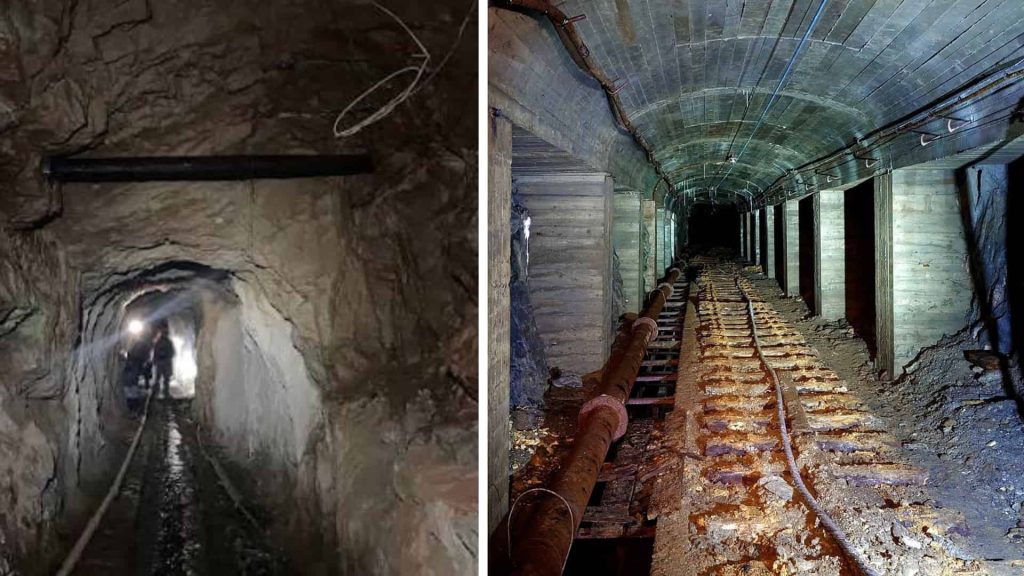
That mining history matters to the Boom for two reasons. First, it gave conspiracy theorists a magnetic-attraction angle to build weapons theories around, even though geologists have since pointed out that raw hematite ore isn’t strongly magnetic. Second, it means Bell Island wasn’t a stranger to strange electrical weather. Historic accounts also describe unusual lightning activity on Bell Island, showing that dramatic electrical events were reported there long before the 1978 Boom.
The mine closed in the 1960s after cheaper foreign ore made it unprofitable, and much of Bell Island’s population left over the following decade. By 1978, the communities on the island were a fraction of their mining-era size, which is part of why a boom loud enough to rattle houses in St. John’s, nearly 20 kilometers away, felt so wildly out of proportion to a place that quiet.
What Investigators Found Afterward
The RCMP’s first call went to a local fire investigator, who inspected the Bickford property and reported the physical damage as consistent with a lightning strike, even though the weather that morning didn’t match a typical thunderstorm. Contemporary newspaper accounts noted no conventional thunderstorm was reported anywhere else in the province that day, which is exactly the detail that kept the story alive instead of closing it.
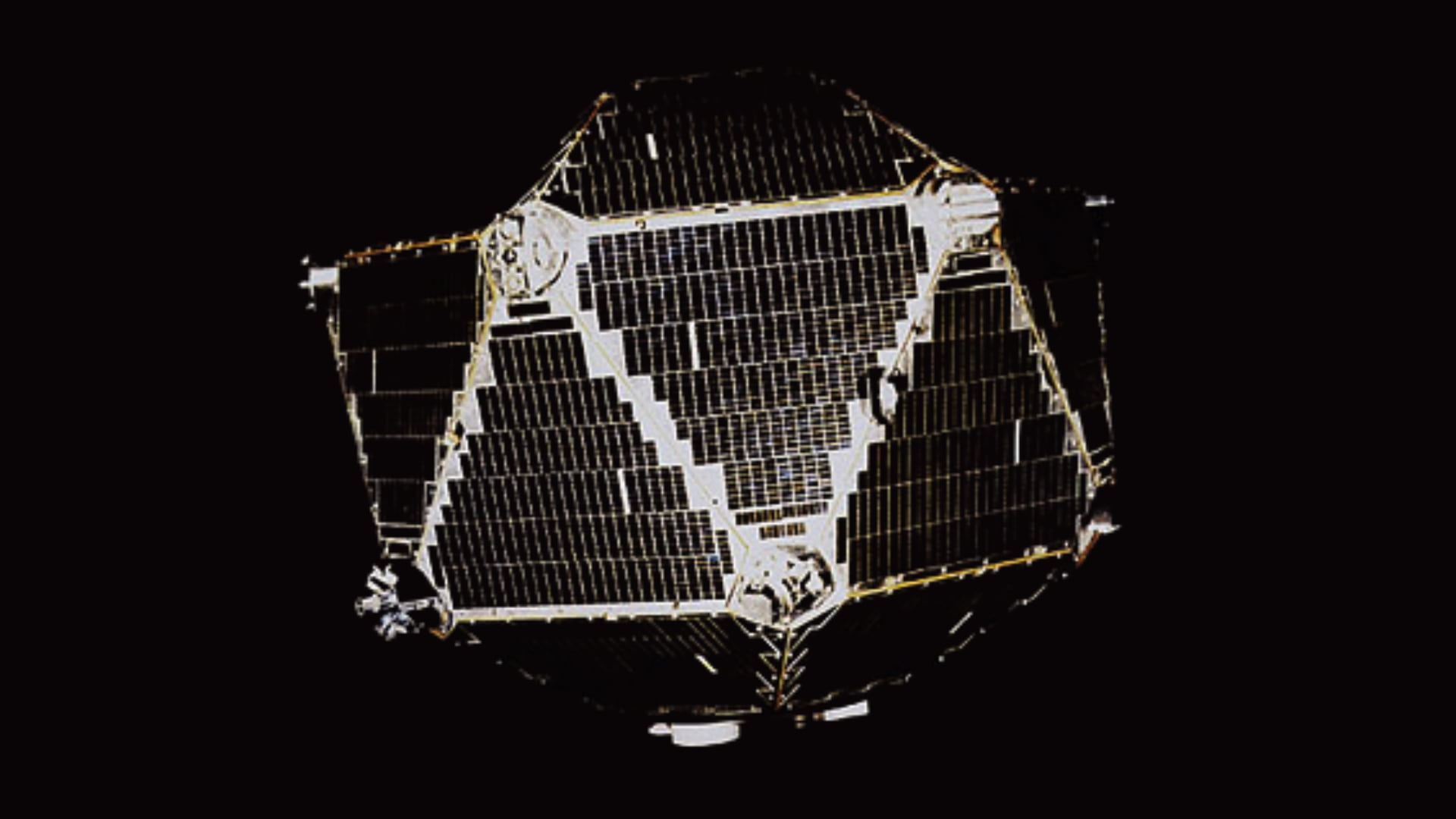
Within days, two scientists from the Los Alamos Scientific Laboratory (now Los Alamos National Laboratory) arrived on Bell Island: John Warren, a plasma physicist, and Robert Freyman, a specialist in radio-frequency propagation who later helped develop RFID technology. Because Los Alamos is a nuclear weapons facility, their presence alone fueled speculation that the government was investigating a secret weapons test, the same instinct that keeps government involvement fueling speculation in far more recent unexplained cases.
What actually brought them there was less dramatic and considerably more interesting. Los Alamos and Sandia National Laboratories had jointly built the Vela satellite program in the 1960s specifically to detect nuclear detonations from space, watching for the telltale x-ray, gamma-ray, and optical signatures of a bomb test in violation of the 1963 Limited Test Ban Treaty (Los Alamos National Laboratory). Along the way, the Vela satellites picked up something the designers hadn’t planned for: unusually bright natural lightning flashes, later named “superbolts,” first documented in a 1977 paper by researcher B.N. Turman.
Warren and Freyman had been tracking a wave of these superbolt signatures along the eastern seaboard since December 1977. According to contemporary CBC reporting, Warren and Freyman had been tracking superbolt activity along the eastern seaboard since December 1977 and linked the Bell Island event to a rare, unusually powerful strike over land. By their own account, they were surprised the destruction on the Bickford property wasn’t worse.
The Competing Theories Behind the Boom
No single theory has ever been proven with physical evidence, which is exactly why the Bell Island Boom cause is still debated decades later. Here’s what’s actually been proposed, roughly ordered from best-supported to weakest:
- Most plausible: superbolt lightning
- Possible but unconfirmed: ball lightning
- Historical / speculative: secret weapon, Soviet “Woodpecker” signal, EMP device
- Rejected or poorly supported: meteor strike, satellite debris, mine collapse, natural gas explosion
Superbolt Lightning (The Leading Theory)
A superbolt is a scientifically documented form of exceptionally powerful lightning: an exceptionally powerful lightning discharge that can release far more energy than an ordinary lightning strike, typically positively charged, and overwhelmingly likely to occur over open ocean rather than land. A 2019 global survey using the World Wide Lightning Location Network found that these extreme strokes make up only a tiny fraction of all recorded lightning worldwide, clustered in specific regions and seasons scientists still don’t fully understand (Holzworth et al., 2019, Journal of Geophysical Research: Atmospheres). Even ordinary lightning is more destructive than people assume, as tall, exposed targets keep finding out the hard way, and a superbolt is that same physics turned up by three orders of magnitude.
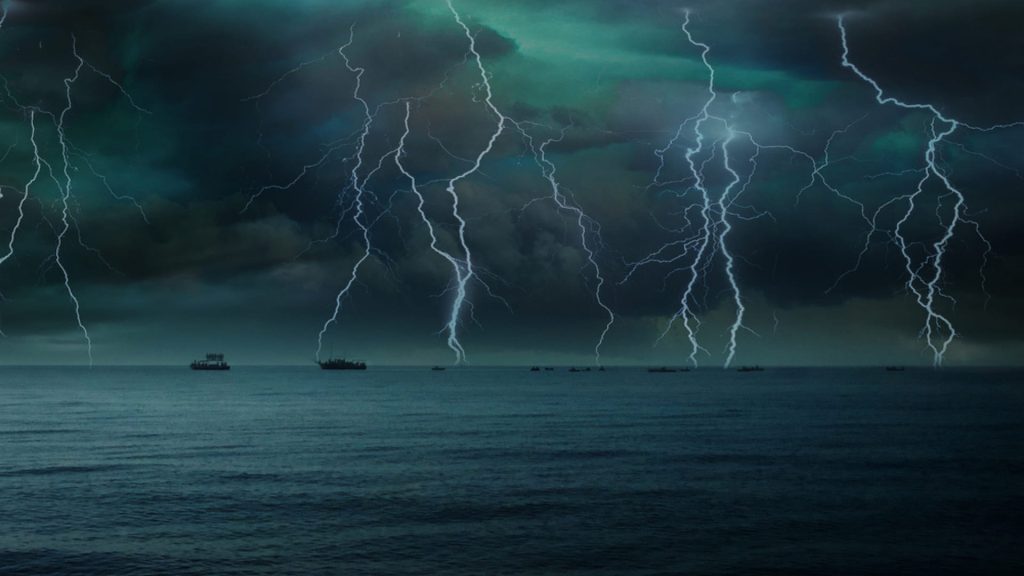
Positive lightning strikes, the type superbolts almost always are, originate high in a storm’s anvil cloud and carry a peak charge and duration far beyond a typical negative strike, which is exactly why they do disproportionate damage to buildings and electrical systems when they do hit the ground (NOAA). Warren and Freyman’s Bell Island lightning explanation provides a plausible explanation for the electrical damage and some of the physical effects reported at the site.
The shallow holes remain one of the details that makes the case difficult to close completely. It doesn’t fully explain the reported hovering ball of light, but Bickford’s account of that detail has always been treated as a separate, uncorroborated piece of the story rather than hard evidence against the lightning theory.
Ball Lightning
Some investigators leaned on ball lightning, a documented but still poorly understood atmospheric phenomenon in which a glowing, floating sphere appears briefly near the ground, often in the aftermath of a regular lightning strike (Britannica). It’s a tempting fit for Darin Bickford’s description of the light he saw. The problem is that ball lightning doesn’t typically leave holes in the ground the way an explosive event would, so on its own it explains the light but not the crater-like damage.
Secret Weapons and the Cold War Angle
Given the era, a Cold War weapons test was the obvious conspiracy leap, especially once word got out that Los Alamos had sent people. Two more specific versions of this theory circulated: that the Soviet Union’s “Woodpecker” over-the-horizon radar signal, associated with the massive Duga radar installation, had somehow interacted with Bell Island’s iron ore deposits, or that an Extremely Low Frequency (ELF) transmission from a Soviet station was responsible.
The Soviets did have a real history of ambitious, secretive electromagnetic engineering projects going back decades, which is part of why the theory felt plausible to people at the time. Neither theory has ever produced physical evidence, though, and geologists have noted that natural iron ore isn’t magnetically organized enough to attract or focus a directed beam of any kind.
An Electromagnetic Pulse Weapon
A 2004 documentary called The Invisible Machine proposed that the Boom was an early American EMP weapons test that had somehow been drawn toward Bell Island’s abandoned mine shafts. This theory runs into the same magnetism problem as the Soviet radio wave theories: raw hematite doesn’t behave like a magnet strong enough to bend a weapon’s path, and no declassified record has ever surfaced connecting an EMP test to Newfoundland. Genuine long-range wireless power and energy-beaming research does exist today, but nothing resembling it was operational in 1978.
The Concorde and the Wider “Mystery Boom” Wave
This is the piece almost every retelling of the Bell Island story leaves out entirely, and it’s one of the more concrete explanations available. Bell Island’s boom didn’t happen in isolation, and it isn’t even the only case of its kind: unexplained aerial booms, sometimes called skyquakes, have been reported worldwide for over a century. Starting in December 1977 and continuing into mid-1978, roughly 600 unexplained “mystery booms” were reported up and down the U.S. eastern seaboard, from South Carolina to New Jersey and beyond.
Physicist Dr. Gordon MacDonald investigated the wider wave of nearly 600 mystery booms and concluded that a substantial portion could be linked to sonic booms from supersonic aircraft, while many others remained unexplained.
Concorde flight paths were normally routed well out to sea to avoid populated areas, but under certain atmospheric conditions, sonic booms could refract through the stratosphere and travel up to 100 kilometers before reaching the ground. That still left close to 200 of MacDonald’s booms unexplained by aircraft, a gap Warren and Freyman’s atmospheric research was independently trying to close from the other direction.
Explanations That Did Not Fit the Evidence
Meteor strikes, satellite debris, an underground mine collapse, and a natural gas explosion were considered, but none provided a convincing explanation for the combination of electrical damage, physical damage, and the lack of a conventional impact site.
Bell Island Boom Explained: What the Evidence Actually Supports
Science writer and Skeptoid podcast host Brian Dunning reviewed the case in detail in 2010 and reached a clear conclusion: every piece of physical evidence, the fried electronics, the shed damage, the ground holes, is consistent with a lightning superbolt, and none of it requires a manmade weapon to explain (Skeptoid Episode 190). Engineering professor Karl Stefan reached a similar verdict when he reviewed the case for a television documentary in 2010, describing the event as consistent with a rare, positively charged super lightning bolt capable of turning ordinary house wiring into a projectile hazard.
The one detail that resists a clean explanation is the hovering ball of light Darin Bickford described. It’s the kind of anecdotal, single-witness detail that a careful investigation can’t confirm or rule out. It doesn’t overturn the physical evidence, but it’s also honestly the reason the story never quite closes the way a purely scientific explanation usually does.
What Still Isn’t Explained
No agency ever issued a final, official cause for the Bell Island Boom, and there’s no record of anyone ever formally retracting the superbolt explanation either. The hovering light, the preceding “ringing tone” some witnesses described, and the exact reason the damage was concentrated so tightly on one property rather than spread across the island all remain genuinely unresolved rather than manufactured mystery. If Bell Island’s superbolt reading still exists in the original Vela satellite archives, a modern re-analysis using today’s lightning-detection science could, in theory, finally settle the last unanswered piece.
Bell Island Boom in Pop Culture
The Boom has had a long afterlife on television. CBC produced an investigative documentary on the event later in 1978, still findable under the title “The Mystery Bell Island Boom, April 2, 1978.” It resurfaced decades later as a segment on the Discovery series Weird or What?, narrated by William Shatner, and again on the paranormal-investigation series Creepy Canada, which paired it with other Canadian unexplained phenomena. The 2004 documentary The Invisible Machine remains the most detailed pro-conspiracy treatment, even though its central EMP theory hasn’t held up under scrutiny.
What Bell Island Looks Like Today
The mines that once made Bell Island one of the world’s major iron producers have been flooded since operations stopped in the 1960s, and the underground workings have attracted technical cave-diving expeditions in later years. The above-ground communities are far smaller than they were during the mining boom, but Bell Island is still reachable by ferry from Portugal Cove, and the Bickford property and Lance Cove remain identifiable points on the map for anyone curious enough to go looking.

Why the Bell Island Boom Still Matters
The Boom endures for a reason that has nothing to do with aliens or secret weapons: it’s a genuinely rare, well-documented event for which a superbolt remains the leading scientific explanation close enough to houses that its damage could be photographed, measured, and investigated by actual scientists within days, not decades later from satellite data alone. Most of that research since has been statistical, built from years of satellite readings over open ocean. Bell Island is one of the few times this class of lightning strike hit an inhabited place and left a paper trail.
Related Topics
- The Taos Hum: Unsolved Mystery – another case where a government-backed team, including Los Alamos scientists, investigated a strange, localized phenomenon and still came up short.
- Why Do Dogs Jump Off Overtoun Bridge: Explained – a decades-old “unexplained” case where science eventually out-argued the paranormal theories, though not everyone has stopped asking questions.
- Why Is Surtsey Island Forbidden? The Real Reason Explained – another small island shaped by a single violent natural event and the restricted access that followed.
- Malaysia Airlines Flight MH370: What Investigators Still Can’t Explain – a much larger-scale case of an extensive, credible investigation still leaving real gaps.
- The Buga Sphere Mystery: The Strange Object That Left Scientists Baffled – another case where the physical evidence is real but the experts are split on what it means.
- Project D.O.L.L.: The Mystery Behind the Secret Experiment – a case where the absence of an official explanation ends up doing more work than the actual evidence.
Key Takeaways
- The Bell Island Boom struck Lance Cove, Newfoundland on April 2, 1978, destroying electronics, a chicken shed, and leaving shallow holes in the ground, with no official cause ever confirmed.
- Los Alamos scientists John Warren and Robert Freyman investigated using Vela satellite data and identified a rare, positively charged lightning “superbolt” as the most likely cause, though it was never made an official finding.
- Skeptic researcher Brian Dunning and engineering professor Karl Stefan both independently reached the same superbolt conclusion after reviewing the physical evidence.
- The Boom was part of a larger 1977-1978 wave of nearly 600 unexplained “mystery booms” along the eastern seaboard, roughly two-thirds of which were later traced to Concorde sonic booms.
- Weapons-test theories involving the Soviet “Woodpecker” signal or an American EMP device remain unproven and rely on a magnetism assumption about iron ore that doesn’t hold up scientifically.
- The one detail science still can’t fully account for is the hovering ball of light a young eyewitness described, which remains an open, honestly unresolved footnote.
Frequently Asked Questions About the Bell Island Boom
What was the Bell Island Boom?
The Bell Island Boom was an unexplained explosion-like event on Bell Island, Newfoundland, on April 2, 1978. It destroyed electronics and a chicken shed, left holes in the ground, and was heard tens of kilometers away, with no confirmed official cause.
Was the Bell Island Boom ever officially explained?
No government agency ever issued a final official cause. The leading scientific explanation, a lightning superbolt investigated by Los Alamos scientists, is the most evidence-backed theory, but it was never formally declared the confirmed cause.
Did the Bell Island Boom leave a crater?
Investigators found two or three shallow holes in the ground near the Bickford property, not a true crater. Digging into the holes turned up no debris or buried material.
Was the Bell Island Boom a secret weapons test?
There’s no physical evidence supporting a weapons test. The theory largely comes from the coincidence that Los Alamos scientists visited the island, but their own explanation was a natural lightning strike, not a weapons investigation.
What is a superbolt, and how is it different from normal lightning?
A superbolt is an extremely rare, positively charged lightning strike carrying roughly a thousand times the energy of an ordinary bolt. Superbolts occur overwhelmingly over ocean rather than land, which is part of what made a Bell Island strike so unusual.
Who investigated the Bell Island Boom?
The RCMP and a local fire investigator responded first. Days later, Los Alamos scientists John Warren and Robert Freyman arrived after Vela satellite data suggested the event matched a rare overland superbolt they had been tracking since late 1977.
What did witnesses see during the Bell Island Boom?
Witnesses described a sudden deafening bang, blown electronics, and in one case a hovering ball of blue, orange, and yellow light that appeared and vanished within seconds. One mainland witness separately reported a beam of light rising from the island.
Is the Bell Island Boom connected to other mystery booms?
Yes. It occurred during a wider wave of nearly 600 unexplained booms reported along the U.S. eastern seaboard between late 1977 and mid-1978, most of which were later traced to Concorde sonic booms.
Has anything like the Bell Island Boom happened since?
Yes, but not as a repeat of the 1978 event. On April 23, 2019, a large section of Bell Island’s northern cliff collapsed, producing a loud bang and shock wave heard and felt around Conception Bay. It was a rockfall, not another Bell Island Boom.
Where is Bell Island, Newfoundland located?
Bell Island sits in Conception Bay off Newfoundland’s Avalon Peninsula, roughly 20 kilometers from the provincial capital of St. John’s, and is reachable today by ferry from Portugal Cove.
Source References
- Historic Wabana. “Unusual Occurrences — The Bell Island Boom.” Historical material and contemporary newspaper references concerning the April 1978 event.
- Product of Newfoundland — Robert Hiscock. “What Was The Bell Island Boom?” Historical account referencing contemporary Newfoundland newspaper reports.
- Holzworth, R.H., McCarthy, M.P., Brundell, J.B., Jacobson, A.R., & Rodger, C.J. (2019). “Global Distribution of Superbolts.” Journal of Geophysical Research: Atmospheres.
- Los Alamos National Laboratory. “Cold War Watchmen.” Historical account of Project Vela and its detection systems.
- NOAA / National Weather Service. “The Positive and Negative Side of Lightning.” Background on positive lightning and its characteristics.
- Dunning, Brian (2010). “The Bell Island Boom.” Skeptoid, Episode 190.
- CBC / Rick Cera. Contemporary CBC reporting and interview material concerning the Bell Island Boom and the Los Alamos investigation.
- Historic Wabana. “Today in the History of Bell Island — The Bell Island Boom.” Historical record of the April 2, 1978 event and reported damage.
- Tourism Bell Island. “History of Bell Island.” Current information on Bell Island’s mining history and present-day community.
- Town of Wabana. “About Town of Wabana.” Current municipal information about Bell Island/Wabana and its history.
Author Bio
Author Mubashir Razzaq is a science and history writer for Strangehappen.com, specializing in archaeology, space exploration, ancient civilizations, and emerging scientific discoveries. His work focuses on translating complex research into engaging, evidence-based stories that help readers understand the mysteries of our world and beyond.