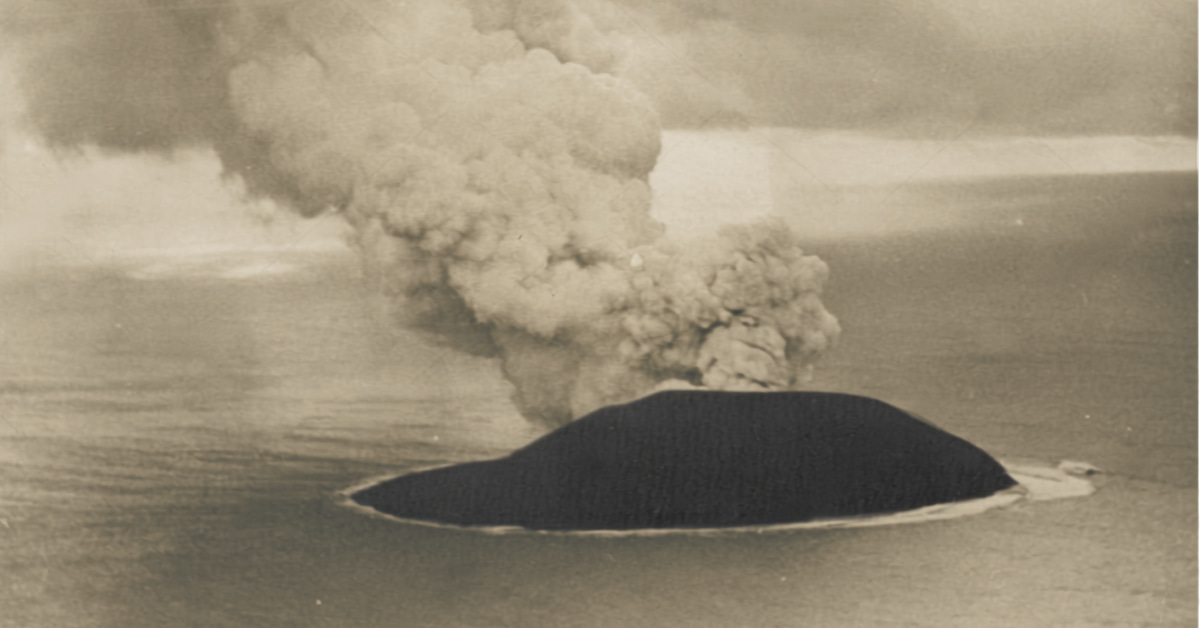


On the night of January 23, 1973, a fissure tore open on the edge of Heimaey, Iceland, and by sunrise a brand-new volcano was pouring lava straight at the town’s harbor. Almost the entire population, roughly 5,000 people, was off the island within hours, ferried across dark water by the local fishing fleet. Five months later, when the lava finally stopped, a third of the town lay buried under ash and stone, and the island itself was physically larger than before.
That single night is the loudest thing that has ever happened on Heimaey, but it is far from the only strange chapter in this small island’s history. The same seven square miles have survived a 17th-century pirate raid, adopted the world’s most famous captive orca, and grown a sea cliff that looks, from the right angle, exactly like an elephant drinking from the Atlantic.
Where Is Heimaey, Iceland?
Heimaey is the largest island in Iceland’s Vestmannaeyjar archipelago, sitting about seven kilometers off the country’s south coast. It is also the only inhabited one. The other fourteen named islands and dozens of skerries in the group belong to some of the world’s other forgotten places, left entirely to seabirds and the occasional hunting cabin.
The whole archipelago was built by underwater volcanic eruptions, and some of those eruptions are recent enough that people watched them happen. The youngest island in the group, Surtsey, rose out of the sea in a series of eruptions between 1963 and 1967, a birth so well documented that Surtsey is now protected as a natural laboratory for how life colonizes new land from scratch.
Heimaey’s human history goes back to the Viking Age. Local tradition holds that the first people to live there were two Irish thralls who killed the man holding them captive, a companion of Reykjavík’s founder Ingólfur Arnarson, and fled across the water to the island. Ingólfur eventually tracked them down; one was killed and the other was driven off a cliff still known today as Duffy’s Hill. That grim founding story is why the whole archipelago is called Vestmannaeyjar, “islands of the Westmen,” the Norse term for Irish and Scottish Gaels.
The Night a Volcano Tried to Erase the Town
The Eruption and the Evacuation
At around 1:55 a.m. on January 23, 1973, a volcanic fissure stretching more than one kilometer suddenly opened along Heimaey’s eastern side, cutting across the slopes of the older Helgafell volcano. The eruption began with powerful explosions along the crack, sending towering lava fountains into the air. Within a short time, these eruptions built Eldfell, a new cinder cone that would permanently reshape the island. Islanders had almost no warning: only a swarm of small earthquakes in the hours beforehand, a pattern that shows up again in Ethiopia’s 2025 volcanic eruption, decades later and a continent away.
The town’s entire fishing fleet happened to be sitting in the harbor that night because of bad weather offshore, which turned out to be a stroke of luck. Within about six hours, nearly the whole population had been carried to the mainland by boat, with stragglers following by plane. No one died in the eruption itself.
Fighting the Lava With Seawater
Over the following five months, the lava buried close to a fifth of the town and threatened to seal the harbor mouth entirely, which would have ended the island’s fishing economy for good. A U.S. Geological Survey field report on the eruption described what happened next as one of the first large-scale attempts anywhere to actively fight a lava flow: crews pumped seawater directly onto the advancing front, day and night, for months. The extraordinary effort also became an important scientific case study. According to the USGS, researchers examined the operation as an example of an unusual geological response, during which nearly 6.8 billion liters of seawater were pumped onto the lava before the eruption finally ended.
The lava never closed the harbor. If anything, the hardened rock now shelters it better from storms than before.
Eldheimar: The House the Volcano Swallowed
Roughly a third of Vestmannaeyjar town stayed buried under ash and lava for more than three decades. When archaeologists finally began excavating, one house, at Gerðisbraut 10, was dug out complete enough that a museum was built directly around its ruins, joining a short list of places where the past stayed buried until someone finally dug it up. The Eldheimar Museum’s own description says the exhibition brings to life, in visual and engaging form, the night more than 5,000 residents of Vestmannaeyjar fled their homes on January 23, 1973.
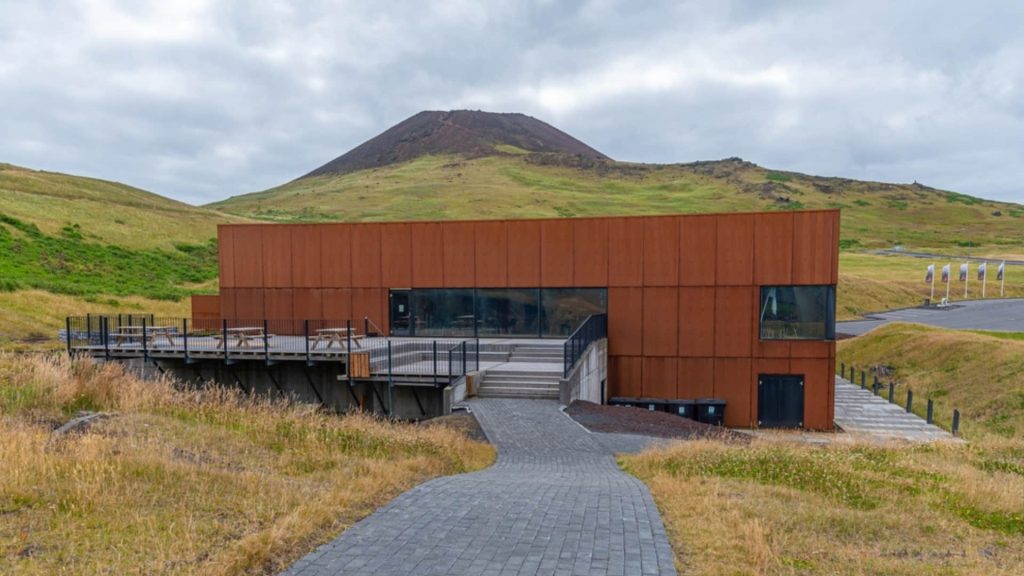
Walking through the excavated house, its furniture and belongings frozen in place under glass, is as close as anyone gets to experiencing the eruption from the inside rather than reading about it. The museum has earned a nickname it uses in its own marketing, the “Pompeii of the North,” and it now anchors most people’s understanding of what the eruption actually cost the town, beyond the geology.
Elephant Rock: The Cliff That Looks Back
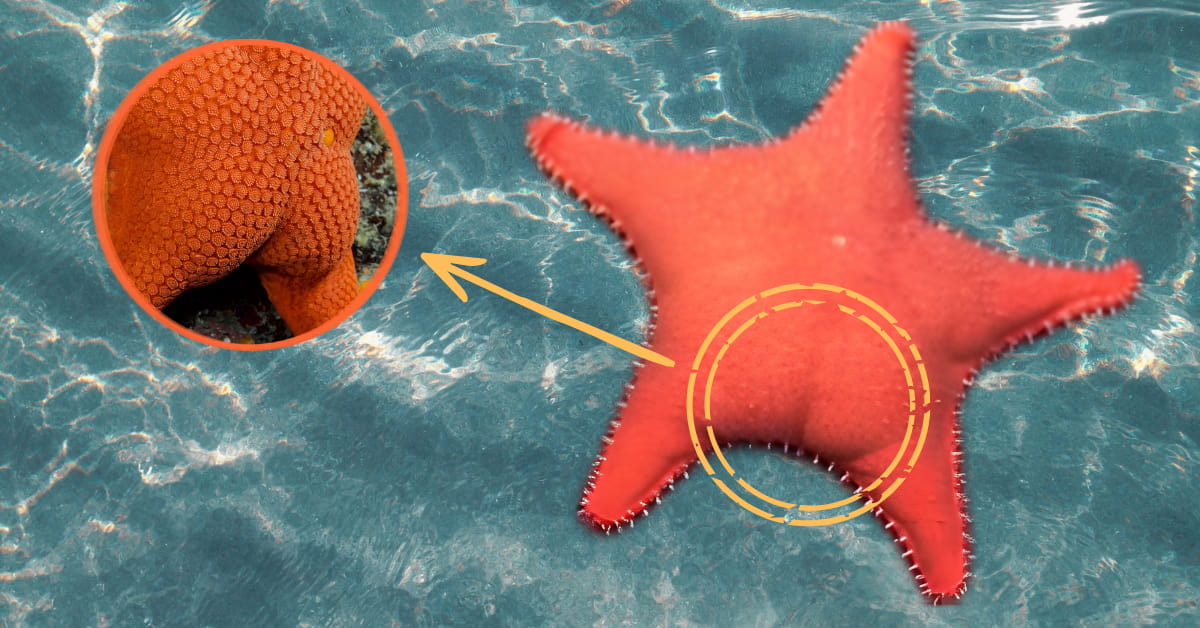
On Heimaey’s northwestern coast, a basalt sea cliff has weathered into a shape so precise that first-time visitors often assume the photo has been edited. From offshore, it reads unmistakably as a huge elephant’s head, wrinkled skin and all, its trunk dipping into the ocean. Icelanders call the formation Halldórsskora, loosely “Halldór’s Cliff,” though the elephant nickname is what almost everyone actually uses.
The wrinkled texture is columnar jointing, the same process behind Iceland’s famous hexagonal basalt columns elsewhere on the coast. As a thick lava flow cooled and contracted, it cracked into long polygonal columns running perpendicular to the cooling surface. Wikipedia’s entry on the formation notes that these columns, perpendicular to the cooling surface, contribute to the rock’s distinctive appearance, and that ocean surf has since carved caves and shapes into the rock face over time.
Most write-ups place the rock’s origin in older eruptions that built Heimaey over thousands of years, well before Eldfell existed, though no dedicated peer-reviewed dating study of the formation itself appears to have been published. That is worth being honest about: the “how old exactly” question is still open, even if the “how it formed” question (basalt, cooling, erosion) is settled science.
A few observers have compared the rock’s silhouette to Cthulhu, the fictional entity from H.P. Lovecraft’s stories, and the comparison genuinely fits better than “elephant” once you notice the scale and the way the shadows sit in its hollows at low tide. It is one of the only places online that draws that specific comparison, which says something about how quickly most visitors move past this rock on their way to the next stop.
It fits a pattern StrangeHappen keeps running into: ordinary geology and biology producing results that look deliberate. A tree whose seed pods explode with enough force to be heard nearby and a river that periodically turns blood red for entirely earthly reasons are two more cases of nature doing something that looks staged until you learn the mechanism behind it.
The Pirate Raid Iceland Still Talks About
The Raid on Heimaey
Three and a half centuries before the volcano, Heimaey suffered a very different catastrophe. In the summer of 1627, ships crewed by Barbary corsairs, commanded from Algiers and Salé, raided the Icelandic coast in what Icelanders still call Tyrkjaránið, the “Turkish raid,” even though the raiders were not ethnically Turkish at all. The label came from the fact that the raid was launched from areas under Ottoman sovereignty, even though the event is practically unknown outside Iceland itself.
On Heimaey specifically, the raiders killed dozens of islanders and captured roughly 240 more, marching them onto ships bound for the slave markets of North Africa. Among the captives was a fisherman’s wife named Guðríður Símonardóttir. She was one of 242 people abducted from the Westman Islands in the 1627 raid, and after being held as a slave and concubine for nearly a decade, she was one of the few captives ransomed by the Danish king.
Guðríður’s Return and Legacy
Guðríður’s story did not end with her return. She returned to Iceland and married the young theology student Hallgrímur Pétursson, who later became known for his poetry and hymns. Reykjavík’s largest church, Hallgrímskirkja, is named for him. Locals still refer to Guðríður by her old nickname, Tyrkja-Gudda, “Turkish Gudda,” a label that has outlasted almost everyone else connected to the raid.
A Firsthand Account
A minister named Ólafur Egilsson, taken captive alongside his wife and two sons, wrote one of the only firsthand accounts of the raid after his own release the following year. After returning to Vestmannaeyjar in 1628, he wrote a detailed firsthand account of the raid, describing how the pirates arrived in Iceland and kidnapped more than 300 people. Historians continue to rely on his writings as one of the most important primary sources for understanding the events of that summer, separate from the legends that developed later.
The World’s Most Famous Orca Lived Here Too
Heimaey’s most unlikely resident arrived by military cargo plane. On September 9th, 1998, Keiko the orca, star of the film Free Willy, was airlifted from his tank in Newport, Oregon and flown by a US Air Force C-17 transport jet directly to Klettsvik Bay in Vestmannaeyjar, Iceland, the same waters where he had been captured as a calf roughly two decades earlier.
The Free Willy-Keiko Foundation spent four years acclimating Keiko to open water and live fish before opening the pen. Keiko was released fully into the ocean on July 15, 2002, becoming the first captive orca ever returned to the wild. He spent weeks in Icelandic waters, briefly swimming alongside wild pods, before crossing the North Atlantic on his own toward Norway.
Keiko died of pneumonia in a bay in Norway on December 12, 2003, at the age of 27. Whether the release counted as a genuine success is still argued over by marine mammal researchers; some point out that he never fully rejoined a wild pod, while others note that he lived five free years in natural seawater after two decades in tanks, which was itself the entire point of the project. Either way, no other captive orca has ever been given the same chance, and Klettsvík Bay is where that particular experiment happened.
Puffins, Pufflings, and a Sport Called Spranga
The Puffling Rescue
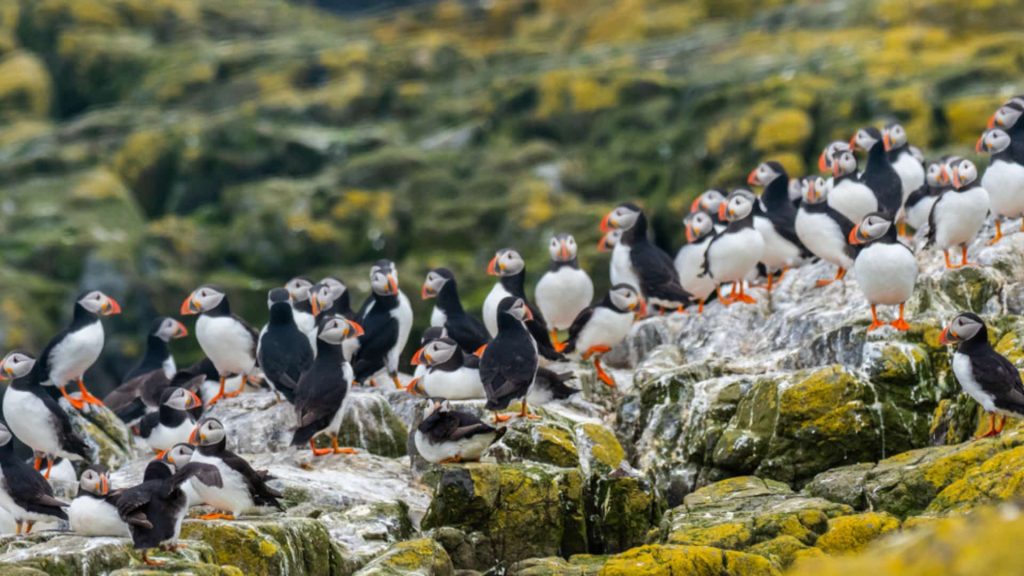
Heimaey’s cliffs host one of the largest Atlantic puffin colonies in the world, and the birds bring their own strange local tradition with them. Every late summer, when puffin chicks, known as pufflings, fledge and try to fly toward the ocean guided by moonlight, many instead get disoriented by the town’s streetlights and land in Vestmannaeyjar itself. Local children, some of them for four generations running, go out at night with flashlights and cardboard boxes to gather the lost birds and release them safely at the shore the next morning.
Birds that need extra care are brought to the Puffin Rescue Centre at the SEA LIFE Trust’s Beluga Whale Sanctuary, which has helped run the rescue effort since 2019 alongside the local community, working with Icelandic research institutions to track and support the colony. It is one of the few conservation efforts anywhere that runs almost entirely on children doing the fieldwork.
Spranga: An Old Skill Turned Sport
The island’s other local tradition is spranga, a cliff-swinging sport that grew directly out of the old, dangerous work of harvesting seabird eggs from Heimaey’s rock faces by rope. Locals still practice spranga at a place known as Sprangan, using ropes to swing between rocky ledges. Once an essential skill for gathering seabird eggs, it is now preserved as a traditional sport and demonstrated for adventurous visitors.

Why Heimaey’s Story Matters
Most volcanic disaster stories end with a town abandoned or a population permanently displaced. Heimaey’s does not, in the same stubborn spirit as Siberia’s villages that keep reappearing after being lost. Nearly all of Vestmannaeyjar’s evacuated residents chose to return once the eruption ended, rebuilding directly beside, and in places on top of, the same lava that had just destroyed their homes.
That decision is part of what makes the island’s other strange chapters, the pirate raid, the orca, the elephant-shaped cliff, feel less like a random collection of trivia and more like a pattern. Heimaey keeps absorbing catastrophe and unusual visitors alike, and keeps finding a way to fold them into daily life rather than being defined by any single one of them.
Getting to Heimaey
Heimaey is reached almost entirely by the Herjólfur car-and-passenger ferry, which the Icelandic Road and Coastal Administration lists as running multiple daily trips year-round between Vestmannaeyjar and Landeyjahöfn on the mainland. The crossing normally takes about 35 minutes; in poor winter weather the ferry occasionally reroutes to the more sheltered but longer route from Þorlákshöfn instead. A short scheduled flight from Reykjavík’s domestic airport is the alternative for anyone short on time.
Future Research: What’s Still Unsettled
Not everything about Heimaey is closed history. Researchers are still actively tracking the population of killer whales that frequent the waters around the island, work that grew directly out of the attention Keiko’s release brought to the region. Dr. Filipa Samarra of the Icelandic Orca Project has led seasonal fieldwork in Vestmannaeyjar since 2007, climbing to the island’s highest point each day to search for and photograph individual orcas, building a dataset that barely existed before Keiko made the area famous.
Surtsey, the newest island in the archipelago, remains under active scientific monitoring as one of the few places on Earth where researchers can watch an ecosystem assemble itself from nothing, plant by plant, insect by insect, with almost no human interference allowed. And Elephant Rock’s precise age is still, as far as public records show, an open question waiting for someone to actually study it properly instead of just photographing it.
Related Topics
- Why Do Dogs Jump Off Overtoun Bridge: Explained — for the pattern of a single location becoming the center of a strange, still-debated phenomenon, much like Elephant Rock or Eldfell.
- The Mum of Quetta: Pakistan’s Preserved Mystery — another case of something staying preserved and untouched for decades before anyone properly examined it, much like the house inside Eldheimar.
- Frozen Civilizations: Lost Cities Frozen in Time — the wider pattern Heimaey’s buried third of a town fits into, settlements that disaster paused rather than erased.
Key Takeaways
- Heimaey is the only inhabited island in Iceland’s Vestmannaeyjar archipelago, built entirely by underwater volcanic eruptions.
- The 1973 Eldfell eruption buried a fifth of the town but killed no one, thanks to a fishing fleet that happened to be in harbor that night.
- Elephant Rock (Halldórsskora) is a genuine basalt formation shaped by columnar jointing and centuries of wave erosion, not an edited photo.
- In 1627, Barbary corsairs raided Heimaey and abducted roughly 240 islanders, including Guðríður Símonardóttir, whose later marriage gave Reykjavík’s Hallgrímskirkja church its name.
- Keiko, the orca from Free Willy, lived in a sea pen in Heimaey’s Klettsvík Bay from 1998 to 2002 before becoming the first captive orca ever fully released into the wild.
- The island’s puffling rescue tradition and the cliff-swinging sport spranga both grew out of Heimaey’s older relationship with its seabird cliffs.
Frequently Asked Questions About Heimaey, Iceland
How do you get to Heimaey, Iceland?
Most visitors reach Heimaey on the Herjólfur car-and-passenger ferry from Landeyjahöfn, a crossing of roughly 35 minutes that runs multiple times daily year-round. Visitors who want to save time can also fly from Reykjavík Domestic Airport. Flights are quicker than the ferry, particularly during winter when rough weather can disrupt ferry schedules.
Is Heimaey worth visiting?
Yes. Few places combine an active volcano hike, the “Pompeii of the North” museum, one of the world’s largest puffin colonies, and the remarkable Elephant Rock, all easy to explore in a single day from Reykjavík.
Why did Eldfell erupt in 1973?
Eldfell erupted because a volcanic fissure opened along the flank of the older Helgafell volcano, part of the Vestmannaeyjar volcanic system that has produced at least ten eruptions on Heimaey in the past 10,000 years. The 1973 event came with only a few hours of warning earthquakes before lava began breaking the surface.
What does “Heimaey” mean in Icelandic?
Heimaey translates roughly to “home island,” a name that predates the town’s modern history and reflects its status as the only inhabited island in the Vestmannaeyjar archipelago.
Why does Elephant Rock in Iceland look like an elephant?
The formation, Halldórsskora, is a basalt cliff shaped by columnar jointing, the cracking pattern that occurs as thick lava cools and contracts into polygonal columns. Centuries of Atlantic wave erosion carved caves and hollows into those columns, softening them into a shape that reads unmistakably as an elephant’s head and trunk from the right angle.
Is Elephant Rock a real natural formation or edited?
It is entirely natural. The rock is genuine basalt shaped by volcanic cooling and ocean erosion, and its resemblance to an elephant is a well-documented case of pareidolia, the same effect that makes people see faces in clouds.
What happened to Keiko the orca after Free Willy?
Keiko was flown to a sea pen in Heimaey’s Klettsvík Bay in 1998, spent four years being acclimated to open water, and was fully released into the wild in July 2002, becoming the first captive orca ever returned to the ocean. He died of pneumonia in a Norwegian fjord in December 2003 at age 27.
How many people live on Heimaey today?
According to Statistics Iceland’s most recent figures, Heimaey itself has a population of about 4,414, while the wider Vestmannaeyjar municipality, which includes the same island plus its administrative area, counts closer to 4,639. Either way, the number has never fully returned to its pre-1973 peak.
What was the Turkish Abduction of 1627 in Iceland?
Tyrkjaránið was a series of slave raids by Barbary corsairs, commanded from Algiers and Salé, that struck several points on the Icelandic coast in the summer of 1627. On Heimaey alone, raiders killed dozens of islanders and captured roughly 240 more for sale into slavery in North Africa.
Can you see puffins on Heimaey in summer?
Yes, from roughly May through September, when Atlantic puffins return to nest on the island’s cliffs in one of the largest colonies in the world. Late summer also brings the puffling rescue season, when local children help lost baby puffins reach the sea.
Source References
- Smithsonian Institution, Global Volcanism Program, Vestmannaeyjar
- U.S. Geological Survey, Man Against Volcano: The Eruption on Heimaey, Vestmannaeyjar, Iceland
- Eldheimar Museum, official site, (2026)
- Wikipedia, Elephant Rock (Iceland)
- Wikipedia, Turkish Abductions
- SEA LIFE Trust, Puffling Season
- Statistics Iceland (Hagstofa Íslands), population by municipality
Author Bio
Author Mubashir Razzaq is a science and history writer for Strangehappen.com, specializing in archaeology, space exploration, ancient civilizations, and emerging scientific discoveries. His work focuses on translating complex research into engaging, evidence-based stories that help readers understand the mysteries of our world and beyond.