
The Mum of Quetta is a legendary creature said to have haunted the hills around Quetta, Pakistan. But the story has a very real object at its center: a sphinx-shaped memorial that once stood in the city’s Christian cemetery. The statue was associated with the Gloucestershire Regiment, and over time its unfamiliar form became linked to stories of a mysterious creature known locally as the Mum.
So, was the Mum of Quetta real? There is no reliable evidence that a lion-bodied, human-headed creature ever existed. What can be investigated, however, is the real statue, the regiment it commemorated, the folklore surrounding it, and what happened to the memorial in 1992.
What Is Fact and What Is Legend?
| Claim | What the evidence shows |
|---|---|
| The Mum was a real creature | No reliable evidence |
| A sphinx statue existed in Quetta | Documented |
| The statue was associated with the Gloucestershire Regiment | Documented |
| The statue stood in a Christian cemetery | Documented |
| The Mum lived in caves | Folklore |
| Soldiers encountered the creature | Unverified legend |
| The statue was destroyed in 1992 | Reported historical event |
| The Mum’s disappearance was caused by the statue | Folklore |
No reliable evidence shows that the Mum of Quetta was a real creature. The strongest historical evidence points instead to a real sphinx-shaped memorial in Quetta that became associated with local stories about a mysterious monster. The statue was connected to the Gloucestershire Regiment and was destroyed in 1992, but the legend survived.
What Is the Mum of Quetta?
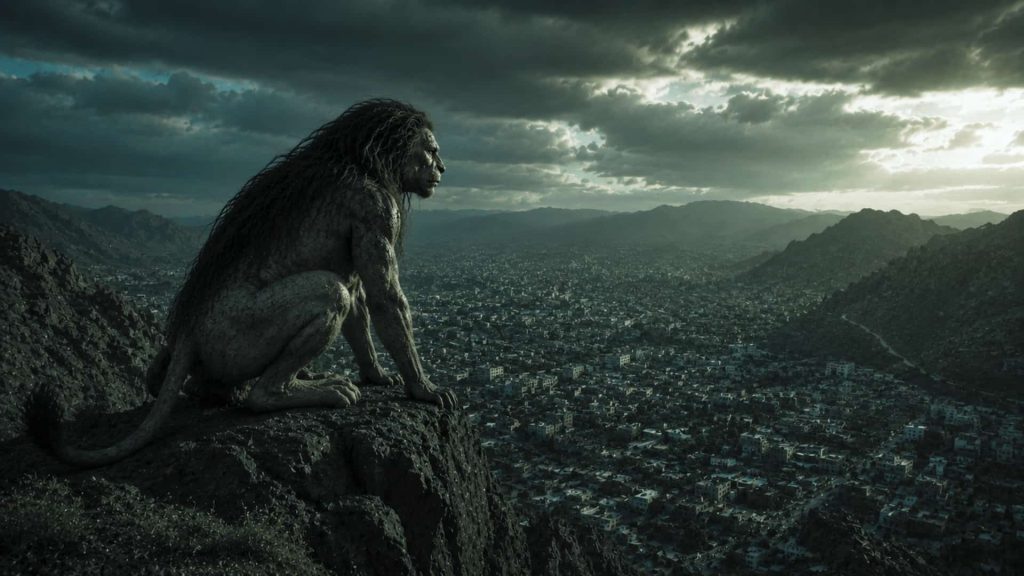
The Mum of Quetta is one of Balochistan’s most enduring folklore figures, a supposed sphinx-like creature with a human female head, a lion’s body, sharp claws, and a long tail. Locals described her living in caves across the Koh-e-Murdar range and the Hanna Valley outside the city. Some claimed to see it walking on two legs, others on four. It was blamed for missing goats, missing shepherds, and eerie howling that carried down from the mountains at night.
There is no reliable evidence that the Mum existed as a documented creature before the late 19th century. The earliest surviving accounts are closely associated with the Quetta Sphinx, suggesting that the statue may have played an important role in shaping the legend.
What Does “Mum of Quetta” Mean?
The Mum of Quetta is the name given to a legendary creature said to have appeared around Quetta, Pakistan. Stories describe it as a strange human-headed creature with the body of a lion, although descriptions vary between different retellings.
The legend is mainly connected with the hills around Hanna Valley and the Koh-e-Murdar range, as well as a sphinx-shaped memorial that once stood in Quetta’s Christian cemetery.
The exact origin of the word “Mum” is unclear. Some accounts use Mumh or simply Mum, but there is no reliable historical evidence establishing a specific local-language meaning for the name. What is clearer is the connection that later stories made between the mysterious creature and the old Quetta Sphinx.
Why the Legend Took Hold in Quetta
Quetta sits at a crossroads of British colonial history and Baloch tribal tradition, a setting where misunderstood foreign symbols could easily be reinterpreted through local fears. The British and Russian empires were competing for influence over Afghanistan in what became known as the Great Game, and that tension is the reason a British regiment was garrisoned in Quetta at all. Combined with genuine predator activity in the surrounding hills, the conditions were ideal for a single statue to become the anchor of a citywide quetta sphinx legend.
Is the Mum of Quetta Real? What History Actually Says
The evidence points to a legend rather than a living creature. The Mum of Quetta was associated with a real stone memorial, a sphinx-shaped monument connected to the Second Battalion, Gloucestershire Regiment. The statue and its documented history provide a much more likely explanation for how the legend developed.
What Historians Found: The Quetta Sphinx Statue
According to records held by the British Association for Cemeteries in South Asia and the Families in British India Society (FIBIS), a stone memorial resembling a sphinx, a human female head set on a lion’s body, was erected in Quetta’s colonial-era Christian cemetery on what was then Lytton Road, now Zarghoon Road. This is the Quetta sphinx statue at the center of every version of the legend.
Erected for the Second Battalion, Gloucestershire Regiment
The FIBIS wiki records the memorial specifically as a tribute to the Second Battalion of the Gloucestershire Regiment, honoring men who died in Baluchistan and Southern Afghanistan between October 1880 and January 1883. It was a formal Gloucestershire regiment memorial, built in a style the British had brought back from their campaigns in Egypt, where the sphinx had already become a recognized military emblem of strength and remembrance.
Source: Quetta: Monuments and Inscriptions by Susan Farrington (BACSA, 1992), a 270-page survey of the city’s colonial cemeteries, churches, and historical monuments, cross-referenced with the FIBIS wiki archive on Quetta.
Why It Matters
Confirming the regiment and date matters because it moves the Mum of Quetta out of pure folklore and into documented military history. Few urban legends anywhere in the world can be traced this precisely to a named unit, a specific war, and a surviving published source.
Why a Sphinx? The Badge’s Real Origin
The choice of a sphinx was not a random colonial flourish, and it did not originate with this specific war. The sphinx traces back to the 28th (North Gloucestershire) Regiment of Foot, which received the emblem for its conduct at the Battle of Alexandria in Egypt in March 1801. The National Army Museum’s collection record for the Gloucestershire Regiment’s cap badge confirms the sphinx design, resting on a pedestal inscribed “Egypt,” was awarded to the 28th Foot for gallantry at Alexandria.
By the time the Second Battalion built its Quetta memorial roughly eighty years later, the sphinx was already the regiment’s defining symbol, worn on every cap badge and carried into every campaign. The Soldiers of Gloucestershire Museum still uses the emblem today to tell the story of that 1801 battle to visitors. Quetta’s version was not a new design choice for the Anglo-Afghan War. It was the regiment bringing its oldest badge of honor to a new grave.
How a War Memorial Became the Quetta Sphinx Legend
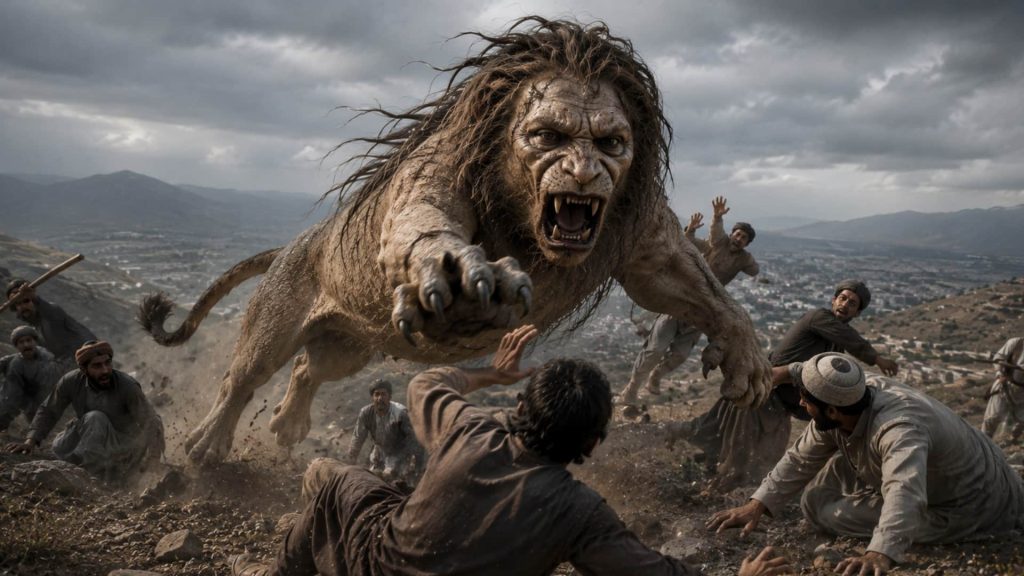
To British officials, the statue was a marker of honor. To Baloch villagers who had no context for Egyptian sphinx iconography, it was something else entirely: an unfamiliar, unsettling half-human figure standing watch over a graveyard. Over decades, the statue’s static face-by-day, faceless-by-night presence gave locals a name and a shape for every unexplained disappearance in the surrounding hills. That name was the Mum, and the quetta sphinx legend that grew around it eventually eclipsed the memorial’s original purpose almost entirely.
The Sphinx-to-Mum Transformation
The transformation followed a familiar pattern seen in urban legends worldwide: an unexplained object, paired with unexplained danger, eventually merges into a single explanation. Later retellings of the legend describe people avoiding the area around the cemetery and surrounding roads at night for decades after the memorial’s original purpose had faded from local memory. What began as a Gloucestershire regiment memorial became, in local telling, the monument of the monster itself.
Stories and Accounts Behind the Mum Legend
The Vanishing Soldier of Hanna Valley
The most-repeated version of the legend, retold across Pakistani blogs and local oral history, involves a Pakistani military patrol near Hanna Valley. One soldier is said to have gone missing during a routine patrol. His unit tracked him to a cave in the Koh-e-Murdar caves system, was ambushed by a shadowy creature, and opened fire until it stopped moving. Inside the cave, accounts split: one version says the missing soldier was found alive but unconscious, another says he was found badly mauled. Evidence suggests this specific story cannot be traced to any documented military incident, and no regimental record has surfaced to confirm it. It functions as balochistan folklore, not verified history, but it is the version most Quetta residents actually grew up hearing.
An Unverified Local Account
A separate story, recorded on a Pakistan Defence forum by someone recalling their own family’s memory of the statue, claims a British officer shot the creature near the cemetery and was buried beside the memorial itself. Some versions of this account add that the Mum immobilized her captives before killing them.
There is no corroborating burial record in the BACSA or FIBIS archives for this claim, and it should be read the same way as the vanishing-soldier story above: as oral tradition passed through families, not as verified history. It is included here because it remains one of the most specific and most repeated versions of the legend still circulating among people who grew up in Quetta before 1992.
Missing Livestock and the Rational Explanation
Long before wildlife had been pushed out of the hills around Quetta by expanding settlement, the region supported striped hyenas and black bears, both scavengers capable of taking goats, sheep, and, in rare desperate cases, unwary humans. Local writers researching the Mum of Quetta have pointed out that reports of missing livestock dropped off sharply as regional wildlife populations declined, which lines up far better with a predator explanation than a supernatural one. One possible natural explanation is that predators such as striped hyenas contributed to stories about missing livestock. However, there is no evidence proving that a particular animal was responsible for the Mum legend.
The Destruction of the Quetta Sphinx Statue in 1992
The quetta sphinx did not survive the 20th century. In 1992, during a period of political and religious unrest connected to the destruction of the Babri Masjid in India, a mob destroyed the statue, according to multiple Pakistani accounts of the event. Some in the crowd reportedly saw it as a relic of colonial rule; others believed they were finally destroying the source of the Mum’s power. Either motive ended the same way. The Quetta sphinx statue was gone, but the legend it had inspired did not disappear with it.
Future Research: What Remains Unexplained
No archaeological survey has been conducted at the original memorial site since its destruction, and no photographic archive of the statue has been fully digitized and made public. Whether additional regimental records exist describing the memorial’s construction, and whether any fragments of the original stone survived the 1992 destruction, remains unexplained. Future research into the BACSA and British Library archives could confirm additional details buried for centuries in colonial cemetery records that have never been cross-referenced with local Quetta oral history.
Mum of Quetta Timeline
- 1801: The 28th Foot became associated with the sphinx emblem after the Battle of Alexandria in Egypt.
- 1880–1883: Soldiers of the Second Battalion, Gloucestershire Regiment died during campaigns in Baluchistan and southern Afghanistan.
- 1880s: A sphinx-shaped memorial was erected in Quetta’s Christian cemetery.
- Later decades: Stories about the mysterious Mum of Quetta became connected with the statue and surrounding hills.
- 1992: The Quetta Sphinx was destroyed during unrest.
- Today: The original statue is gone, but photographs, historical records and stories about the Mum remain.
Why the Mum of Quetta Legend Still Persists Today
The Mum of Quetta survives today mostly in the memories of residents who grew up before 1992 and in the retellings passed down since. Without the statue itself as a landmark, younger generations increasingly encounter the story secondhand, through blog posts, forum threads, and family retellings rather than a physical reminder standing in the cemetery. That shift from lived experience to secondhand story is exactly how pakistan urban legends fade, and exactly why documenting the real history now matters. The Mum of Quetta is a rare case where the myth’s origin point, the statue, the regiment, the exact stretch of road, can still be verified against archival record before the last living memory of it disappears.
Similar Legends Around the World
The Mum of Quetta belongs to a broader category of unexplained mysteries where a real object or event gets transformed by fear and retelling into something stranger than its origin. Readers drawn to this kind of story may also want to look into the disappearance of the SS Ourang Medan, the unresolved skyquake phenomenon reported in multiple countries, and the vanishing of Malaysia Airlines Flight MH370 — all cases where documented facts and persistent folklore sit side by side.
The Mum also fits into a much older mythological pattern found across world folklore: part-woman, part-lion beings sometimes grouped under the lamia tradition, stretching from ancient Greek myth through South Asian storytelling.
Related Articles
- The Buga Sphere Mystery: Scientists Are Still Searching for Answers
- The Village of Whispering Walls: The Place Where the Walls Are Said to Speak
- The Whispering Statues of Tell Brak: The 7,000-Year-Old Mystery No One Can Explain
- Project D.O.L.L.: The Disturbing Mystery Behind the Internet’s Creepiest Experiment
- The Ghost Ship SS Ourang Medan, another unresolved case where documented facts and persistent legend sit side by side
Frequently Asked Questions About The Mum Of Quetta
Is the Mum of Quetta a true story?
The creature itself was never real. The statue that inspired it was real: a sphinx-style Gloucestershire regiment memorial built in the 1880s. No reliable evidence shows that the Mum was a real creature. The documented part of the story is the sphinx-shaped memorial that became associated with the legend.
What is the significance of the Quetta sphinx statue?
It is one of the few urban legends in South Asia with a fully documented historical origin, naming an exact regiment, war, and construction period.
What was the Quetta sphinx statue actually built for?
It was a British colonial war memorial erected in Quetta’s Christian cemetery to honor soldiers of the Second Battalion, Gloucestershire Regiment who died in Baluchistan and southern Afghanistan between 1880 and 1883.
How old is the Quetta sphinx statue?
It dated to the 1880s and stood for just over a century before it was destroyed in 1992.
What happened to the Quetta sphinx statue?
It was destroyed by a mob in 1992 during a period of civil and religious unrest connected to events in India that year.
Why did locals believe the statue was a monster?
British sphinx-style memorials were unfamiliar to Baloch villagers, and the statue’s location near a graveyard, combined with genuine wildlife predation in the surrounding hills, gave the community a single explanation for a string of unrelated disappearances and livestock losses.
Could a real animal explain the Mum of Quetta legend?
Researchers who have looked into the story point to striped hyenas and black bears, both known scavengers in the region, as the most plausible explanation for missing livestock historically blamed on the Mum.
Does the Quetta sphinx statue still exist anywhere?
No. It was destroyed in 1992 and never rebuilt. Only photographs and written descriptions from before that date survive.
Could future research reveal more about the Mum of Quetta?
Yes. Digitized BACSA and British Library records, along with any surviving photographs, could confirm further details about the memorial and how the legend spread.
Why is this considered one of Pakistan’s most documented urban legends?
The legend traces back to documented history rather than pure oral tradition, which puts it in a small category of pakistan urban legends with a verifiable paper trail.
Why did the Gloucestershire Regiment use a sphinx at all?
The sphinx was awarded to the regiment’s predecessor, the 28th Foot, for gallantry at the Battle of Alexandria in Egypt in 1801. It had been the regiment’s badge for eighty years before the Quetta memorial was built.
Key Takeaways
- The Mum of Quetta legend is closely associated with a real 1880s sphinx-style war memorial in Quetta.
- The Quetta sphinx statue honored soldiers of the Second Battalion, Gloucestershire Regiment who died in Baluchistan and southern Afghanistan.
- The sphinx emblem itself dates back further, to the 28th Foot’s conduct at the Battle of Alexandria, Egypt, in 1801.
- It stood in Quetta’s colonial Christian cemetery on what is now Zarghoon Road until it was destroyed by a mob in 1992.
- Predators such as striped hyenas may help explain some historical stories about missing livestock, but there is no proof that they caused the Mum legend.
- Among pakistan urban legends, the Pakistan urban legends is unusually well documented, with a named regiment, a dated construction, and a surviving published source.
About the Author
Mubashir Razzaq is a science and history writer for Strangehappen.com, specializing in archaeology, space exploration, ancient civilizations, and emerging scientific discoveries. His work focuses on translating complex research into engaging, evidence-based stories that help readers understand the mysteries of our world and beyond.
Sources & Further Reading
- Voice of Balochistan : The Mum of Quetta – A popular myth of town
- The Express Tribune : Mum’my dearest legend
- Flickr : THE QUETTA SPHINX” LOCALLY MORE WELL KNOWN AS THE “MUM” (QUETTA BALOCHISTAN)
- Booksie : Legend of the Mumh
- National Army Museum, London — Gloucestershire Regiment cap badge record: https://collection.nam.ac.uk/detail.php?acc=2008-12-211-6
- Soldiers of Gloucestershire Museum — The Sphinx Trail: https://soldiersofglos.com/the-sphinx-trail/