
Five hundred million years ago, before trees existed, before any animal had crawled onto land, before fish had jaws, something was already building with glass on the ocean floor. It had no brain. No eyes. No nervous system to speak of. And yet it was constructing intricate lattice skeletons out of pure silica, the same material that makes up window glass, at the bottom of a cold and lightless sea.
That animal is still doing it today.
Glass sponges are real, living creatures that build their entire skeletal structure from biogenic silica. They are not rocks. They are not plants. They are not some kind of mineral formation that got mistaken for life. They are animals, classified right alongside jellyfish and corals, and their lineage has persisted through every mass extinction the planet has thrown at life, including the one that wiped out the dinosaurs. Somewhere off the coast of British Columbia, there are glass sponge reefs that have been quietly growing, undisturbed, for over 9,000 years.
This article covers what glass sponges actually are, how they get food and nutrients without a mouth, how their bodies break basic rules of animal biology, and why engineers are now studying their skeletons to build better bridges and fiber optic cables. Along the way, we’ll get into the strangest part of all: a species that houses a pair of shrimp inside its glass body for life, in a relationship so poetic that it became a traditional Japanese wedding gift.
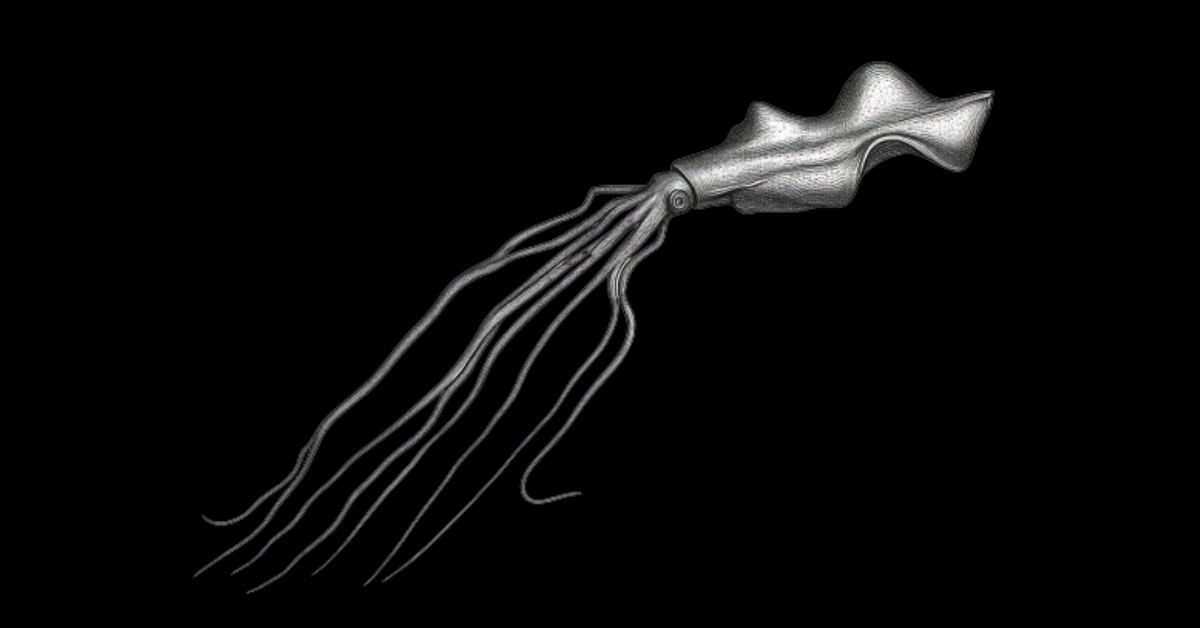
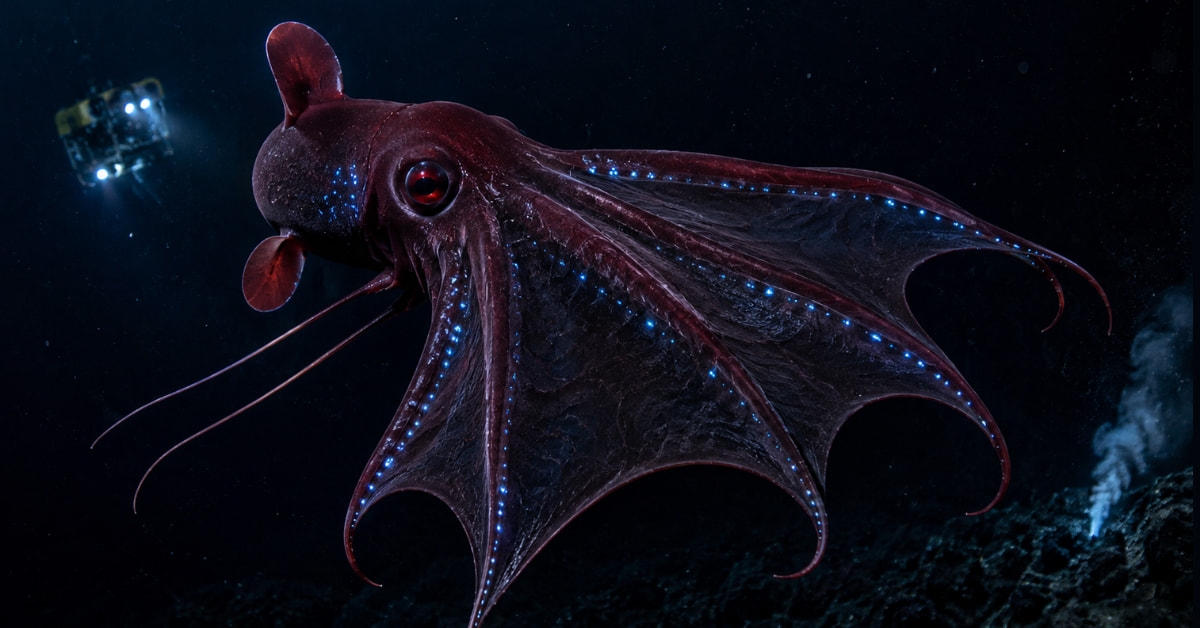
They are not the only deep sea animal that looks like it shouldn’t exist. The glass octopus is another creature that seems built to disappear, with a body so transparent you can see its organs through its skin. Glass sponges take a different approach to the same theme. Instead of disappearing, they turn themselves into architecture.
What Exactly Are Glass Sponges
Glass sponges belong to the Kingdom Animalia, Phylum Porifera, Class Hexactinellida. Like every other sponge on Earth, they are invertebrates, animals without a backbone, and they represent one of four recognized sponge classes that make up the phylum Porifera. That class name, Hexactinellida, comes from “hexactine,” meaning six-rayed, which describes the shape of their skeletal needles. Each one looks like a tiny glass snowflake with six points radiating outward.
The Simplest Complex Animal on Earth
Sponges in general are among the simplest animals on Earth. No brain. No nervous system. No stomach, lungs, or heart. Just cells, working together, filtering water. Most people think of sponges as squishy bath items, and those actually belong to a different class entirely, called Demospongiae, built from a flexible protein called spongin. Of the different types of sponges found in the ocean, glass sponges are the ones that skipped soft materials altogether. They build with something closer to structural glass.
There are several hundred known living species of glass sponge, commonly cited at around 600, and that number keeps climbing. The deep ocean remains largely unexplored, so the real number of species is anyone’s guess. Researchers at institutions like MBARI continue to document new specimens using deep sea remotely operated vehicles, and new ones are still being found in places nobody thought to look.
A Life Spent in One Spot
Glass sponges are sessile, meaning once a larva settles onto a hard surface, that spot becomes home for the rest of its life. No moving. No relocating if conditions change. The one exception happens early on. Before settling permanently, every glass sponge passes through a brief, free-swimming larval stage, essentially the only point in its entire existence when independent movement is possible. Once that stage ends, it just sits there, sometimes for centuries, filtering water and slowly growing its glass body one microscopic spicule at a time.
They’re not the only animal that survives on stubborn persistence rather than mobility or complexity. Tardigrades are famous for surviving conditions that should kill almost anything, from the vacuum of space to being frozen solid for decades. Glass sponges play a longer game. They don’t need to survive a single catastrophic event. They need to survive doing almost nothing, for thousands of years, in total darkness.
The Glass Skeleton
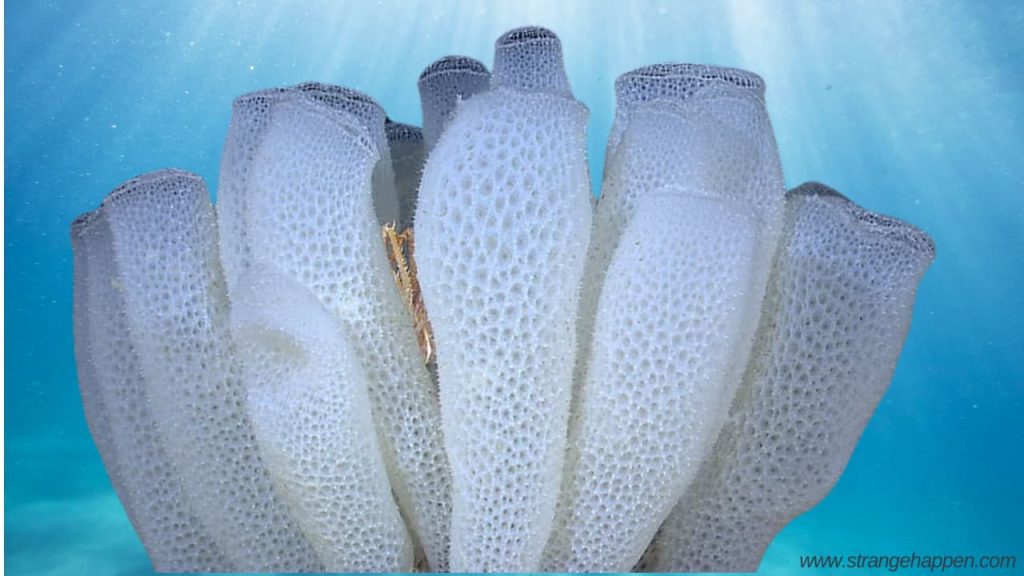
Here’s where the “real glass” claim gets its proof, and where the anatomy of a glass sponge starts to look genuinely strange. Most sponges build skeletons from soft spongin fibers or calcium carbonate. Glass sponges use silica, chemically written as SiO2, extracted directly from seawater. It’s the exact same base compound used to manufacture window glass, just built by a living organism instead of a furnace.
How the Lattice Is Built
The sponge pulls dissolved silica out of the water around it and deposits it, layer by layer, into microscopic spicules. These aren’t scattered randomly through the body. They interlock into a precise three-dimensional lattice, and that lattice determines the sponge’s shape. There are three general types: megascleres, the large structural spicules that form the main framework, microscleres, the small ones that fill in gaps and add reinforcement, and dermal spicules, which form a kind of outer skin layer.
The resulting shapes vary wildly. Some species grow into tall, elegant vases. Others form branching tubes, wide fans, or dense clusters that look like frozen cauliflower. The Venus Flower Basket builds a nearly perfect cylindrical cage, so symmetrical it looks manufactured rather than grown.
What Engineers Discovered About It
Here’s the part that should genuinely surprise you. In 2015, researchers published a study in Nature Materials analyzing the skeletal lattice of Euplectella aspergillum, the Venus Flower Basket. They found that the diagonal reinforcement pattern woven through the sponge’s glass structure closely mirrors the bracing principles used in the Eiffel Tower and early skyscraper frameworks. A soft-bodied, brainless animal at the bottom of the ocean had already solved a structural engineering problem that humans wouldn’t figure out until the 1800s. It had a 500 million year head start.
The Fiber Optic Connection
It gets stranger. Certain glass sponge spicules can transmit light along their length, functioning in a way that closely parallels man-made fiber optic cables. The spicule has a dense inner core with a higher refractive index, surrounded by an outer layer with a lower one, the same basic design principle used in telecommunications fiber optics, except the sponge builds it through biological self-assembly at cold ocean temperatures, without the extreme heat or harsh chemical processing that industrial glass and fiber manufacturing typically require. Researchers studying this process, including work published through the Smithsonian Institution, are hoping it can lead to cleaner, more sustainable ways to manufacture optical fiber.
The glass octopus isn’t the only strange thing built from materials you’d never expect an animal to use. Even something as familiar as a starfish hides a surprisingly complex internal structure once you look closely. And silica isn’t only used for skeletons. Some marine creatures, like the rock-eating worm Lithoredo abatanica, have found entirely different, equally strange uses for hard mineral material in their bodies.
The Syncytium: A Body Without Cell Membranes
This is the part of glass sponge biology that even most marine biology enthusiasts have never heard explained clearly.
One Continuous Sheet of Living Tissue
Almost every animal on Earth is built from individual cells, each one wrapped in its own membrane, like separate bricks stacked together to form a wall. Glass sponges break that rule entirely.
Their main tissue layer is something called a syncytium. That means it’s one continuous sheet of cytoplasm containing thousands of nuclei, but with no individual cell membranes separating them. Instead of bricks in a wall, imagine a sheet of bubble wrap where every individual bubble has fused into one seamless surface. There are no walls between the rooms. It’s all one open floor plan.
Why This Actually Matters
This kind of tissue is almost unheard of anywhere else in the animal kingdom. And it solves a very specific survival problem. Because the tissue has no internal membrane barriers, nutrients, water, and even electrical signals can move through the sponge’s body almost instantly, without having to cross from cell to cell. It functions like a biological highway system built directly into the flesh.
In the nutrient-poor deep ocean, where food particles are microscopic and scattered thin, efficiency is everything. A syncytium lets a glass sponge move captured nutrients through its entire body with almost no energy wasted. It’s the difference between slow starvation and quiet, patient survival across centuries.
Where Glass Sponges Live
Glass sponges are deep, cold water specialists, and their habitat requirements are surprisingly specific. Most species live somewhere between 450 and 3,000 meters below the surface, in water that typically hovers between 2 and 4 degrees Celsius, though some populations, including certain Antarctic and British Columbia fjord communities, thrive in far shallower water where local conditions happen to mimic the deep sea. What they need, at almost any depth, is a steady current bringing a constant supply of dissolved silica and floating food particles, along with a hard surface to anchor themselves to for the rest of their lives.
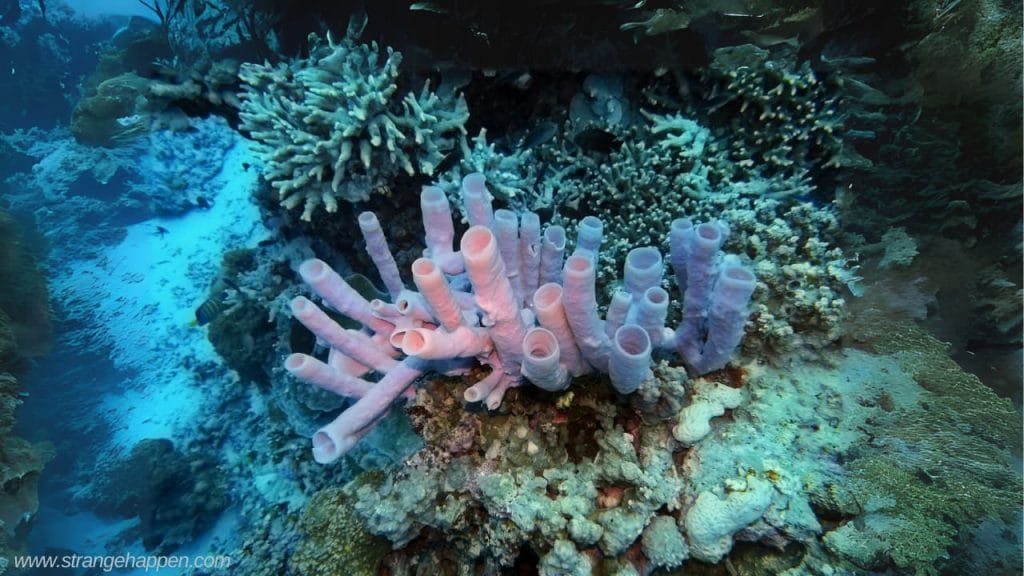
Key Locations Around the World
They show up in a handful of key locations worldwide:
British Columbia, Canada. Home to the largest known glass sponge reefs on the planet, stretching across roughly 700 to 1,000 square kilometers in the waters of Hecate Strait and the Strait of Georgia, according to research compiled by NOAA.
Antarctic waters. The Ross Sea and Weddell Sea support dense, diverse glass sponge communities that have adapted to some of the coldest ocean water on Earth.
Western Pacific. Deep waters near the Philippines and Japan are home to the Venus Flower Basket, among other species.
Nazca and Salas y Gómez Ridge. In 2024, expeditions from the Schmidt Ocean Institute mapped new glass sponge species living along this underwater mountain chain off the coast of Chile, proof that the deep ocean is still full of things nobody has catalogued yet.
The Discovery That Shocked Marine Biology
The British Columbia reefs deserve their own story, because it’s genuinely one of the strangest discoveries in modern marine biology and almost nobody tells it well.
In the late 1980s, researchers were mapping the seafloor of Hecate Strait using sonar. The readings showed something unexpected: enormous structures, stretching across hundreds of square kilometers, rising up to 20 meters off the seabed. The team’s first assumption was geology. Maybe an ancient rock ridge, some kind of underwater formation left behind by shifting sediment or old volcanic activity. That explanation made sense on paper. It also happened to be completely wrong.
When researchers sent equipment down to investigate directly, they found something that had been considered impossible. The structures weren’t rock at all. They were alive, built entirely from the fused glass skeletons of Aphrocallistes vastus, the Cloud Sponge, layered on top of generation after generation of dead sponge remains, growing slowly upward over thousands of years.
Here’s why that discovery shook the marine biology world. Fossil sea sponge reefs in the geological record show similar structures dating back more than 100 million years, to the Jurassic period, when reefs built by hexactinellid sponges were common across ancient seas. Scientists had long assumed the organisms responsible for building them had gone extinct alongside the rest of that ancient world, the same way we assume dinosaurs are gone. Finding living, actively growing versions of these reefs was the ecological equivalent of finding a living dinosaur wandering through a forest. Something that was supposed to only exist in the fossil record turned out to be quietly building an underwater city the entire time, unseen, undisturbed, for thousands of years.
Deep sea environments keep producing this kind of surprise. The yeti crab, discovered near hydrothermal vents, went undocumented by science until 2005 despite living in an ecosystem humans had barely explored. Antarctic waters hold their own oddities too, including the strange, alien-looking Antarctic feather star, a reminder that the coldest, darkest parts of the ocean tend to hide the weirdest biology.
Named Species Worth Knowing
Not every glass sponge looks alike, and getting familiar with a few named species is the easiest way to understand just how varied this group of ocean animals really is.
Venus Flower Basket (Euplectella aspergillum)
The most famous glass sponge in the world, and for good reason. Found in deep waters off the Philippines and Japan, it grows into a cylindrical basket shape with a lattice so fine and geometrically regular that Victorian-era naturalists mistook preserved specimens for man-made glasswork. In Japanese tradition, the sponge became a symbolic wedding gift, tied directly to the strange relationship it hosts inside its walls, which we’ll get to shortly.
Cloud Sponge (Aphrocallistes vastus)
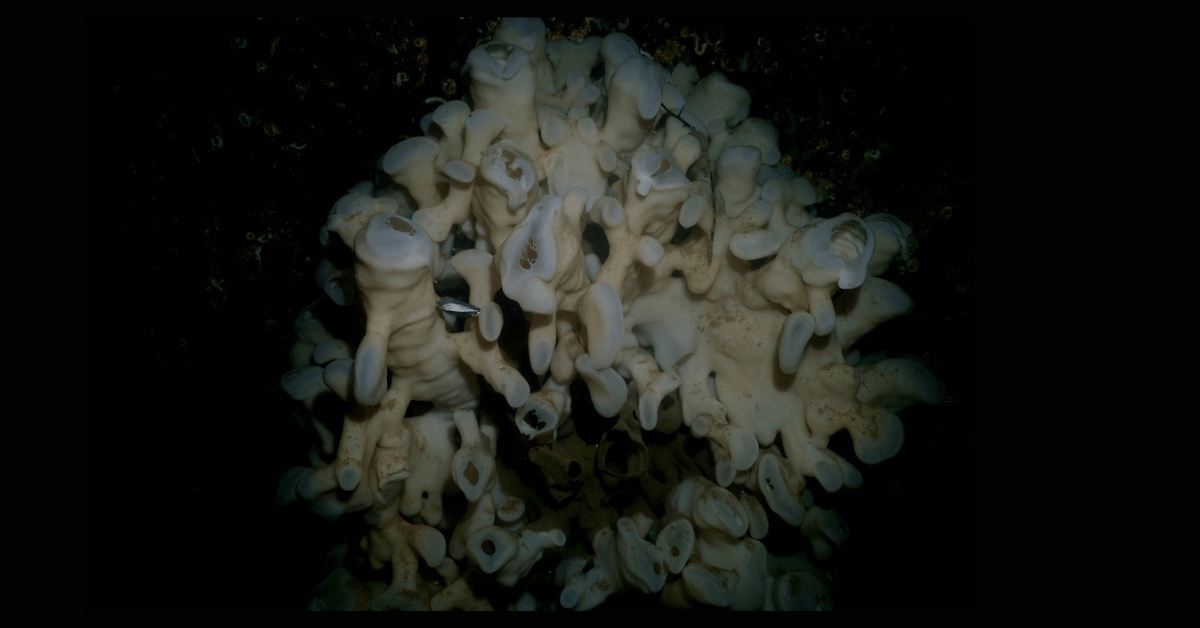
The primary reef-building species behind the British Columbia sponge reefs. It grows in massive, branching clusters that resemble white cauliflower heads scattered across the seafloor. When researchers first spotted these formations on sonar in the late 1980s, they mistook them for geological features, which tells you something about how convincingly this animal builds structures.
Goblet Sponge (Heterochone calyx)
Named for its cup-shaped body, this species often grows alongside Cloud Sponges in the same reef systems, contributing to the same massive glass structures that stretch across the seafloor of the Pacific Northwest.
Strange, memorable species names are half the fun of deep sea biology. If you enjoy that kind of thing, the Chinese giant salamander is another animal whose name and biology are just as unusual as its appearance.
The Venus Flower Basket and Its Shrimp
This is the part of glass sponge biology that tends to stop people mid-scroll.
A Partnership Sealed in Glass
Inside the hollow lattice of the Venus Flower Basket sponge, researchers consistently find a pair of small glass sponge shrimp, Spongicola venusta, living together in the sponge’s central cavity. The traditional explanation goes like this: a young male and female shrimp swim inside while they’re still small enough to slip through the gaps in the lattice. Over time, as they grow larger, they become too big to leave the way they came in. They spend the rest of their lives inside, feeding on particles that drift through the sponge’s internal water current, mating, and eventually dying within the same glass walls they entered as juveniles.
In Japan, dried Venus Flower Basket specimens, complete with the resident shrimp pair still sealed inside, were given as traditional wedding gifts. The symbolism wasn’t subtle. Once you’re inside, you stay together. Forever. A cage made of glass, delicate to look at, but permanent.
Trapped, or Simply Content?
There’s a wrinkle in that romantic story worth knowing, even if it isn’t fully settled science. It’s genuinely difficult to say just how strictly the lattice confines the shrimp once they’ve matured. What is clear is that they have very little reason to want out even if they could manage it. The sponge offers a steady supply of food, physical protection from predators, and a stable home in an environment that offers few of either.
So the real story may not be pure captivity. It might be closer to two animals discovering, half a mile below the surface, that staying together is simply the better option, whether or not they’re actually able to leave.
It’s not the only strange partnership hiding in the ocean or the wider animal kingdom. The tongue-eating louse replaces a fish’s tongue entirely and continues functioning as one, in a relationship that’s considerably less romantic. And zombie ant fungus takes control of its host’s body from the inside out. Compared to those, a pair of shrimp settling into permanent glass housing starts to look downright peaceful.
How Glass Sponges Eat
Glass sponges don’t hunt. They don’t chase. They don’t even have a mouth in any conventional sense. So how do sponges get food without any of the tools most animals rely on? The answer is filtration, aided by an internal current the sponge generates entirely on its own.

The Filtering Process
Water enters through tiny pores on the sponge’s outer surface, called ostia. Once inside, it flows past specialized cells called choanocytes, sometimes referred to as collar cells. Each choanocyte has a whip-like flagellum surrounded by a ring of microvilli that forms a sticky collar. As the flagella beat in unison, they generate a current that draws water steadily through the sponge’s internal chambers. Bacteria and organic particles drifting through the water get caught on the sticky collar surface and are engulfed directly by the cell.
A single large glass sponge can filter thousands of liters of seawater every single day. Its diet is entirely microscopic: bacteria, tiny phytoplankton, dissolved organic matter, and fine floating debris that most animals wouldn’t even register as food.
That syncytial tissue we covered earlier is really how glass sponges get nutrients once a particle has been captured. Rather than digesting one large meal, the sponge distributes an enormous number of microscopic ones through its connected tissue network, with almost no energy lost along the way. In an environment as nutrient-poor as the deep sea, that kind of efficiency isn’t a luxury. It’s the reason these animals can survive at all.
Reproduction and Life Cycle
Glass sponges are hermaphroditic, meaning each individual carries both male and female reproductive material, though self-fertilization typically doesn’t occur.
From Larva to Permanent Resident
During sexual reproduction, sperm is released through an opening called the osculum and carried away by ocean currents until it reaches another sponge. There, it gets captured by choanocytes and transported internally to fertilize eggs. The resulting embryos develop into free-swimming sponge larvae, equipped with tiny hair-like cilia that let them drift and search for a suitable place to settle. This larval stage is essentially the only time in a glass sponge’s life when it can move under its own power.
Once a larva finds a stable, hard surface, it attaches permanently and begins secreting silica, slowly building the skeleton that will define the rest of its life. There’s no going back after that point.
Sexual reproduction is the best documented pathway for glass sponges. Budding and fragmentation, the kind of asexual regrowth seen readily in many soft-bodied sponges, appear far more limited in Hexactinellida. Their syncytial tissue, the same feature that makes them such efficient feeders, seems to make repair and regrowth after physical damage difficult. This may be part of why a broken or crushed glass sponge reef doesn’t simply heal itself the way some coral reefs can. Once part of the structure is destroyed, it tends to stay that way.
A Lifespan Measured in Millennia
Growth is agonizingly slow. Many species add only a few millimeters per year, and reaching sexual maturity can take decades. Individual sponges are believed to live for centuries, and the reef structures built by entire colonies working together can persist for thousands of years. The British Columbia reefs are estimated to be up to 9,000 years old, meaning they were already ancient before the pyramids existed.
Extraordinary longevity like this isn’t unique to glass sponges. The immortal jellyfish takes a completely different approach to cheating death, reverting back to an earlier life stage instead of aging normally. Between the two of them, it’s worth wondering what “old age” even means for an animal without a fixed lifespan.
What Eats Glass Sponges
Not much, and that’s by design. The sharp, needle-like silica spicules that make up a glass sponge’s body are genuinely unpleasant to try to eat. Predators that attempt it risk internal injury from the glass-like structures embedded throughout the sponge’s tissue.
A small number of specialized predators manage it anyway. Certain sea stars, including species documented preying on hexactinellid sponges in Antarctic waters, are able to work their way past sections of the lattice. Some deep sea urchins and nudibranchs, both broadly known for grazing on sponge tissue when little else is available, will occasionally target glass sponges too, though they tend to prefer softer-bodied species when given the choice.
Because predation is so limited, glass sponges are free to invest their energy into slow, steady growth instead of defense or reproduction speed. That low predation pressure is part of what allows entire reef systems to accumulate, layer by layer, over thousands of years without being disturbed.
Why Glass Sponges Matter
Glass sponges aren’t just a curiosity sitting quietly on the ocean floor. They function as full-blown ecosystem engineers, and losing them would have consequences that ripple through the entire deep sea food web.
The Services They Provide
Water filtration. Glass sponge reefs process enormous volumes of seawater daily, stripping out bacteria and organic particulates. That filtration effectively cleans the surrounding water column, benefiting every other organism living nearby.
Carbon cycling. As sponges feed, they process enormous amounts of organic carbon drawn from the water column. Much of that carbon becomes sponge tissue and waste material, and when the sponge dies or sheds cellular debris, it can settle into the seafloor sediment below the reef. Over thousands of years, that steady rain of organic material contributes to long-term carbon burial in the deep sea, a process separate from the mineral silica skeleton itself, which is not made of carbon and does not store it directly.
Habitat creation. The three-dimensional structure of a glass sponge reef provides shelter, nursery grounds, and feeding territory for rockfish, prawns, crabs, and countless smaller invertebrates. Strip the reef away, and those species lose critical habitat that took millennia to form.
What Would Happen If They Disappeared
Picture it disappearing. Thousands of square kilometers of British Columbia’s seafloor, currently a towering glass metropolis packed with rockfish, prawns, and crabs, reduced to flat, empty mud. The filtration services gone. The carbon burial process interrupted. The nursery grounds for entire fish populations wiped out in an afternoon by equipment that took seconds to do damage a reef spent 9,000 years building. Marine biologists sometimes compare these reefs to the deep ocean equivalent of the Great Barrier Reef. The difference is almost nobody knows they’re there to lose.
The Threats They Face
The threats are real and already active. Bottom trawling drags heavy fishing gear across the seafloor, capable of flattening reef structures instantly. Deep sea mining operations targeting seafloor mineral deposits threaten sponge habitats clustered around seamounts. Climate change is warming ocean currents in ways that stress species adapted to near-freezing water. And because sponges filter such enormous volumes of seawater, they’re also accumulating microplastics and chemical pollutants, which may be quietly damaging their health and reproductive success.
Conservation Efforts Already Underway
Some protection is already in place. In 2017, Canada established the Hecate Strait and Queen Charlotte Sound Glass Sponge Reefs Marine Protected Area, covering roughly 2,410 square kilometers and banning bottom-contact fishing within its boundaries, according to NOAA. Antarctic glass sponge habitats fall under protections managed through the Commission for the Conservation of Antarctic Marine Living Resources. Continued mapping expeditions from organizations like the Schmidt Ocean Institute are helping researchers understand exactly how much is still out there, and how much of it remains unprotected.
Fascinating Facts Worth Remembering
- Glass sponges belong to a lineage that stretches back more than 500 million years, predating every land vertebrate that has ever lived.
- Their skeletons are made of real biogenic silica (SiO2), chemically identical to window glass.
- The Venus Flower Basket was traditionally given as a Japanese wedding gift because of the shrimp pair sealed inside its lattice.
- Certain glass sponge spicules can transmit light along their length, functioning in a way that closely resembles man-made fiber optic cable.
- The lattice structure of Euplectella aspergillum mirrors engineering principles used in the Eiffel Tower, according to a 2015 study published in Nature Materials.
- Living glass sponge reefs off British Columbia were discovered in the late 1980s. Scientists had assumed similar reef-building organisms went extinct alongside the Jurassic seas they once dominated.
- Those reefs span an estimated 700 to 1,000 square kilometers and tower up to 20 meters off the seafloor.
- A single large glass sponge can filter thousands of liters of seawater every day.
- Glass sponges have no muscle cells. They cannot move, contract, or reshape their bodies in any way.
- Their tissue is a syncytium, one continuous mass with no individual cell membranes, a structure almost unheard of anywhere else in the animal kingdom.
- New glass sponge species were still being discovered as recently as 2024, along Chile’s Nazca Ridge.
You May Also Like
10 Heartless Creatures — Animals that survive perfectly well without an organ most of us assume is essential
Glass Octopus — Another deep sea creature with a body built to disappear
The Immortal Jellyfish — An ancient ocean animal with a bizarre trick for cheating death
Yeti Crab — Discovered near hydrothermal vents, another creature science barely knows
Antarctic Feather Star — A strange, alien-looking animal from the coldest ocean waters on Earth
Barreleye Fish — A deep sea fish with a completely transparent head
Frequently Asked Questions
Are glass sponges made of real glass?
Yes, functionally. Their skeletons are built from biogenic silica, the same chemical compound (SiO2) used to manufacture window glass. The difference is that a sponge grows it biologically, while a factory melts and shapes it with heat.
Are sea sponges alive?
Yes. Sponges are living animals, not plants, rocks, or coral-like minerals. They eat, grow, reproduce, and respond to their environment, even though they lack a brain or nervous system.
Are sponges invertebrates?
Yes. All sponges, including glass sponges, are invertebrate animals belonging to the phylum Porifera. They have no backbone and no internal organs in the traditional sense, yet they are still classified firmly within the animal kingdom.
Can sea sponges move?
Adult sponges cannot. Once a glass sponge attaches itself to a hard surface, it stays there permanently. The only mobile stage in its entire life is the larval stage, a brief, free-swimming period before it settles down for good.
Are glass sponges dangerous to humans?
Not at all. They’re sessile, immobile, and have no way to attack anything. The sharp spicules that deter predators could theoretically cause a minor injury if handled carelessly, but glass sponges pose no real threat to people. Compare that to something like the box jellyfish, whose sting is genuinely one of the most dangerous in the ocean.
Are glass sponges extinct?
No, they’re very much alive. For a long time, scientists believed the reef-building species behind ancient fossil formations had gone extinct millions of years ago, until living reefs were discovered off British Columbia in the late 1980s.
What do glass sponges eat?
They filter bacteria, tiny plankton, and organic debris directly from seawater as it passes through their bodies. They don’t hunt or actively pursue food of any kind.
How do sponges get food and nutrients?
Glass sponges pull water through tiny pores using specialized collar cells called choanocytes. As water moves through the body, bacteria and organic particles get trapped and absorbed, then distributed through the sponge’s connected tissue with very little energy lost along the way.
How do glass sponges reproduce?
Primarily through sexual reproduction. Sperm is released into the water and carried to another sponge, fertilizing eggs internally and producing free-swimming larvae. Asexual reproduction through budding or fragmentation, common in other sponge groups, appears far more limited in glass sponges.
Can sponges regenerate?
It depends heavily on the species. Many soft-bodied sponges regenerate readily from fragments. Glass sponges appear far more limited in this ability, likely because of their unique syncytial tissue, which may explain why damaged glass sponge reefs struggle to recover.
How long do glass sponges live?
Individual sponges are believed to live for centuries. Entire reef colonies, built up gradually over generations, can be thousands of years old, with some British Columbia reefs estimated at up to 9,000 years.
Where do glass sponges live?
In cold, deep ocean water worldwide, typically between 450 and 3,000 meters down, though some populations exist in much shallower fjord and Antarctic waters. Notable locations include British Columbia, the Antarctic Ross and Weddell Seas, and seamount chains like Chile’s Nazca Ridge.
Can I keep a glass sponge as a pet?
No. They require extreme cold, high pressure, and very specific water chemistry that’s impossible to replicate in a home aquarium. They’re also incredibly slow growing and would not survive outside their natural deep sea habitat.
What is the difference between a glass sponge and a regular sponge?
Regular bath sponges belong to a different class, Demospongiae, and use a soft, flexible protein called spongin for structure. Glass sponges belong to Hexactinellida and build rigid, glass-like skeletons from silica instead.
Are sponges animals or plants?
Animals. Despite their plant-like appearance and lack of movement, sponges are classified in the Kingdom Animalia. They lack chlorophyll and cannot produce their own food through photosynthesis, which immediately rules out any classification as a plant.
Conclusion
Glass sponges are proof that the most extraordinary animals on Earth are often the ones we never see. A lineage that has outlasted every mass extinction the planet has thrown at life, including the one that ended the dinosaurs, spent quietly building with glass in complete darkness the entire time. Creating sprawling reef ecosystems that support hundreds of other species, entirely by accident, just by sitting still and filtering water for millennia.
Their skeletons have already taught engineers something about structural bracing that took humans until the industrial age to figure out on our own. Their reefs rewrote what scientists thought they understood about extinction and survival. And somewhere in the deep waters off Japan and the Philippines, a pair of shrimp is still living out its entire life inside a lattice of glass, in a partnership that might not even be forced captivity at all, just two creatures that found somewhere worth staying.
The deep ocean still holds discoveries nobody can predict. Glass sponges are proof that the strangest life on this planet isn’t hiding somewhere in space. It’s hiding in plain sight, on the ocean floor, quietly built out of glass.
AUTHOR BIO
Mubashir Razzaq is a researcher and writer for StrangeHappen.com, focusing on strange wildlife, marine life, natural phenomena, science, and history. He researches every topic using trusted scientific journals, government agencies, museums, and academic institutions before writing, with the goal of presenting accurate, evidence-based information in a clear and engaging way. His approach is to let verified facts tell the story while clearly separating scientific evidence from myths and speculation.