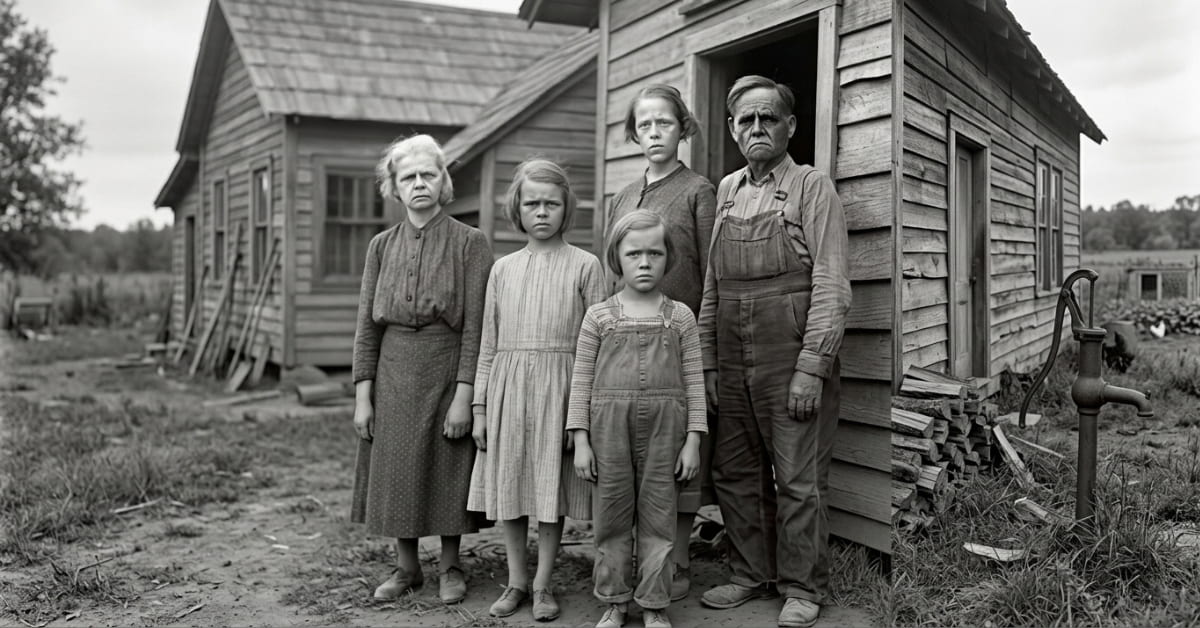
Somewhere in your feed, you likely met the Fowler Clan mystery the same way most people do now: a black and white thumbnail, a narrator’s voice dropping low, and a title promising something no laboratory should ever be able to say. The Fowler Clan’s Children, the story claims, were found in 1976 in the hills of eastern Kentucky.
A root cellar. A government file, sealed for decades. And the claim that made the video impossible to scroll past: their DNA did not match human DNA.
That is a specific, checkable claim, not a vibe. So the question worth answering isn’t whether the Fowler Clan story is scary. It’s is the Fowler Clan story true? We treated it like any other checkable claim and tried to verify it, piece by piece: the story, the claim, the source, the science, and the verdict.
Table of Contents
What Is the Fowler Clan Story?
The Fowler Clan story is the name attached to a viral video and article cycle that began appearing online in late 2025, with uploads and reposts across YouTube and content farm sites. It centers on a family said to have lived in Appalachian isolation for generations near Harlan, Kentucky, avoiding contact with the outside world until 1976, when a social worker’s visit allegedly uncovered three children living beneath the property.

The Fowler Clan legend claims their DNA results came back with findings investigators could not explain, and that the file was sealed rather than released. Multiple video titles use nearly identical language, including “The Fowler Clan’s Children Were Found in 1976,” “Their DNA Did Not Match Humans,” and “What Their DNA Revealed Was Unthinkable.” That repetition across titles, all pointing back to the same Fowler Clan 1976 premise, is itself a clue we return to below.
The Fowler Clan’s Children: What the Story Claims
According to the viral version, the Fowler family had lived on a remote property in eastern Kentucky near Harlan since before the Civil War, deliberately cut off from neighboring towns. The story claims local residents knew of the family but rarely interacted with them, and that rumors of unseen children had circulated for years before anyone investigated.
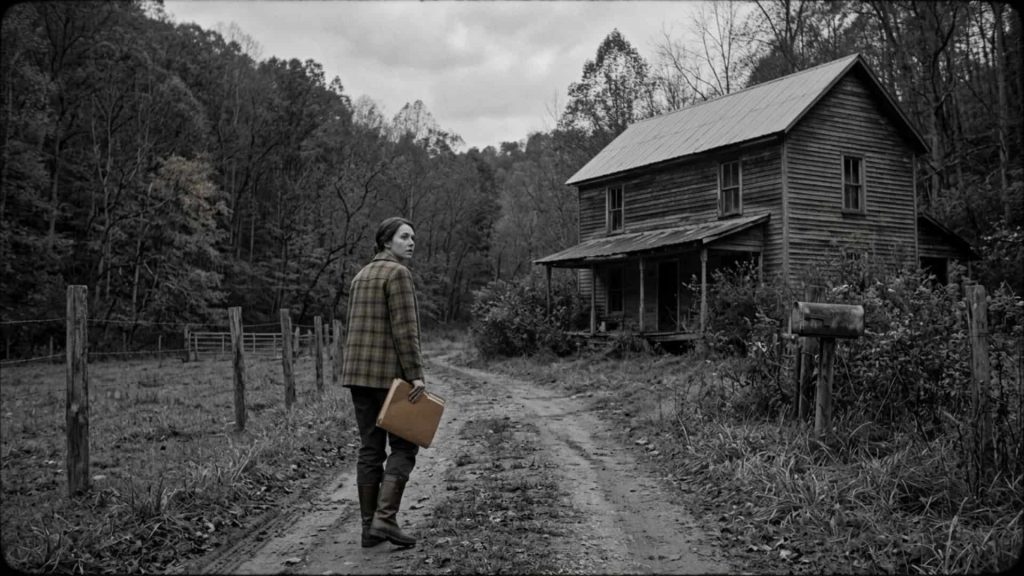
The circulating account says a social worker, named in the story as Margaret Vance, followed up on those rumors and found the Fowler Clan’s children, three of them, living beneath the house in a root cellar. The story claims they had no birth certificates, no medical records, and no documented existence at all. From there, the narrative adds that blood samples were drawn for what would become the Fowler Clan DNA test, sent for genetic analysis, and returned with a result someone allegedly chose to bury.
The first step is to understand exactly what the Fowler Clan story is claiming. Everything above is presented only as what the viral story says, an allegation from the video and article cycle, not as something this investigation has confirmed. A social worker named Margaret Vance does not appear in any public record we could locate tied to a 1976 Kentucky child welfare case, and neither does a lab technician named in some versions as Patricia Gomes. Neither name is verified as a real person, and both should be read as unverified elements of the viral narrative, not established facts.

So what happened to the Fowler Clan children, according to the available evidence?
As far as documented, verifiable history goes: nothing, because there is no confirmed record that these specific children ever existed. Named characters with no traceable identity are common in fiction; they are unusual in documented history. Their absence is one more reason the Fowler Clan’s Children story reads as constructed rather than reported.
Fowler Clan 1976: Did the Kentucky Story Really Happen?
Short answer: there is no evidence the Fowler Clan Kentucky story happened as described. A case matching these unusually specific details would be expected to leave some documentary trace, such as newspaper coverage, court records, or child welfare documentation.
We found no credible newspaper, court, or state-agency record supporting the 1976 Kentucky event described in the viral story. Our searches of publicly accessible newspaper archives, Kentucky historical and genealogical resources, and general web records did not locate a matching case.
Absence of a record is not automatically proof an event never happened. Some 1970s rural welfare cases genuinely went unreported outside a local paper that may not be digitized. But the absence of a traceable report, agency record, laboratory result, or named investigator leaves the central claim unsupported.
This pattern isn’t unique to the Fowler Clan. It shares real structural similarities with other unsolved mysteries that have resisted decades of investigation, where the key difference is that those cases have actual documentation trails, even when the underlying phenomenon remains unexplained.
Where Did the Fowler Clan Story Come From?
This is where the Fowler Clan legend origin trail actually goes somewhere. Among the earliest versions we could locate were YouTube uploads from November 2025, through a channel called Dark Roots of America, which describes itself as running a black and white series through history’s darker and more unusual tales. We can say this is the earliest version we located; we cannot confirm it is the absolute first upload anywhere, and we found no earlier candidate in our search. Several near-identical uploads followed within weeks, on that channel and others, with titles cycling through minor variations on the same premise, a pattern typical of how a viral urban legend spreads once one version catches on.
Who actually made the Fowler Clan story?
No creator, writer, or channel claims authorship anywhere we found, and no version credits a source. That absence of a claimed author is itself informative for a story marketed as a real, sealed government case.
The written versions arrived slightly later. One version, published on a general content site called btuatu.com, tells the story as a first person dramatized narrative, complete with invented crime scene details never mentioned in the video titles: a locked room, carved symbols, preserved specimens.
Critically, that page carries a line most readers scroll past entirely. At the bottom of the piece, a disclaimer states plainly: “This story is fictional and created for entertainment purposes only. This article examines a circulating story and does not treat every name, detail, or event in the account as independently verified fact.
That is not this investigation’s conclusion. That is the publisher’s own disclosure, sitting on one published version of the story that we examined. Further Fowler-related versions appeared on content sites in August 2026, with details changing substantially between versions, neither carrying that disclosure, and neither tracing the story back to its origin. Comparing all three written versions side by side, the core plot beats match closely enough to indicate a shared source, while specific details, the alleged government agency involved, what happened to the property, whether the children were ever found again, shift from version to version in ways a single documented event would not.
The visual style and repeated narration pattern across the video uploads, one voice, one tone, minor script variation between channels, is consistent with the broader wave of AI-narrated horror videos that has become common on YouTube and Facebook since 2024. We are not asserting a specific creator used AI tools; no version we reviewed credits its production method.
What we can say is that the pattern, rapid reposting with small title tweaks across unrelated channels, matches how a viral urban legend typically spreads, not how a single true story typically gets reported. It is the same spread pattern seen in another viral maritime legend with a similarly murky origin, where decades of retelling blurred the line between the earliest sourced account and everything that came after.
Fowler Clan DNA: Did the Children’s DNA Really Not Match Humans?
A legitimate human genetic test would not ordinarily report a person as having “non-human DNA.” Human genetic testing compares DNA sequences with appropriate human reference data and can identify whether a sample is human, non-human, mixed, contaminated, or unsuitable for analysis, depending on the test and laboratory. If a sample from a person produced an unexpected or uninterpretable result, a laboratory would normally investigate possibilities such as contamination, sample mix-up, degradation, or insufficient DNA rather than declare that the person was outside the human species.
Can DNA really not match human DNA?
In the sense the viral story means it, classifying a sample as belonging to a non-human species, no. Human DNA is defined by shared genetic markers found consistently across our species, the same reference points labs use in every routine test, from paternity cases to ancestry kits to forensic identification. A real laboratory comparing a sample against that reference either finds a match, within expected human variation, or it doesn’t get a usable result at all, typically because the sample was degraded, contaminated, or too small to sequence properly.
No standard human genetic test produces the kind of “not human” result described in the viral story; an unexpected or unusable sample would normally require further analysis rather than a declaration that the person was outside the human species. If a lab genuinely could not identify a sample, the honest result is “inconclusive” or “insufficient sample,” not a dramatic finding that the subject falls outside the human species.
A claim that the Fowler Clan children’s DNA did not match human DNA, worded and understood the way the story frames it, is the kind of extraordinary claim that would require extraordinary, verifiable evidence: a named lab, a published or leaked report, an identifiable researcher willing to be named. None of that exists here.
Could Genetic Chimerism Explain the Fowler Clan DNA Claim?
This is the one place real science does overlap with the premise, and it is worth explaining properly rather than dismissing outright. One form, tetragametic chimerism, can occur when two separately fertilized embryos fuse early in development, leaving a person with two genetically distinct cell lines. It is a real example of a DNA test result mismatch, just not the kind the viral story describes, and it does not verify or explain the Fowler Clan claim.
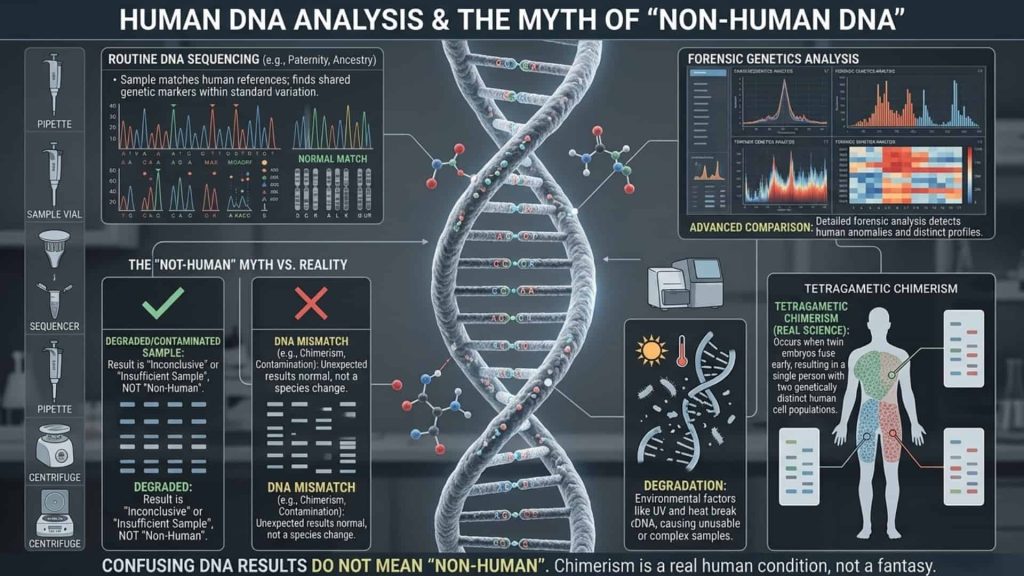
The clearest real-world case is Lydia Fairchild, a Washington state woman who in 2002 was nearly prosecuted for fraud after a routine paternity test appeared to show she was not the biological mother of her own children. Investigators eventually discovered that the DNA in her blood and skin differed from the DNA in her cervical tissue, exactly the signature of chimerism, and her case is documented by ABC News and referenced through the earlier, foundational case of Karen Keegan, published in the New England Journal of Medicine in 2002.
Chimerism is real, and it genuinely can make a DNA test appear contradictory or confusing. It has never, in any documented medical case, produced a result described as non-human. It explains why the kind of DNA surprise described in the viral story is scientifically plausible in the abstract as a genre of claim. It does not, on its own, lend any support to the specific claims made about the Fowler Clan’s Children. For a look at a different, fully documented human anomaly case, see the Pam Reynolds case, which shows what it actually looks like when an extraordinary medical claim comes with real, verifiable evidence attached.
Fowler Clan and Appalachian Folklore
The Fowler Clan Kentucky story borrows its setting from something real: the long, complicated history of Appalachian isolation, and the Kentucky folklore outsiders have built around isolated mountain communities for well over a century.
The clearest documented example is the Melungeons, a group of mixed ancestry families found in the mountains along the Tennessee, Virginia, and Kentucky border. Beginning in the early 1800s, outside observers speculated the Melungeons descended from shipwrecked Portuguese sailors, lost colonists, or other exotic origins, speculation fueled largely by unfamiliarity and the era’s rigid racial categories rather than evidence.
Genetic research added important evidence to a much older historical and genealogical debate about Melungeon ancestry. A 2012 study published in the Journal of Genetic Genealogy, led by researcher Roberta Estes with co-authors Jack Goins, Penny Ferguson, and Janet Crain, found that the core Melungeon families descended from sub-Saharan African men and European women, a mixed ancestry population formed generations before the families themselves had a documented explanation for their own heritage. NPR covered the study’s reception, including how it unsettled long held family beliefs.
The relevant lesson for the Fowler Clan story isn’t that Appalachian isolation is inherently mysterious. It’s the opposite: real isolated families in this exact region were mythologized for generations by outsiders speculating without evidence, and the actual answer, when it came, was ordinary human history, not a hidden species. Respecting that history means not repeating the same pattern with a fictional Fowler Clan Kentucky family invented a century and a half later.
Why Does the Fowler Clan Story Sound So Convincing?
Take the legend apart piece by piece, and it uses a specific, recognizable toolkit, one shared with many hidden family legend and feral child stories told as true crime over the decades. A named official who can never be located in any record. A real town used as an anchor point: Harlan, Kentucky is a real place, which lends the fictional property a sense of geographic weight it hasn’t earned. A vague government agency responsible for “sealing” the results, never named specifically enough to check. A decades-later reveal, framed as recently uncovered rather than recently written.
These are the standard true crime storytelling techniques, useful and legitimate when a story is actually true, and just as effective when it isn’t. A hidden room. Children who can’t speak clearly. A researcher who went quiet and never spoke of it again. None of these details individually prove fabrication, but stacked together with zero traceable source, they describe a genre, not an event.
Repetition does real work here too. When the same premise appears across half a dozen channels and three separate articles within months, each one treating the others as if they confirm the story, it creates an illusion of independent verification. It isn’t independent. It’s the same unverified claim, copied forward. It is the same pattern behind other geography anchored legends, including a mysterious village story built on the same isolation trope, where a real region lends borrowed credibility to an invented event.
Fowler Clan Story Real or Fake? What the Evidence Shows
Here is the direct breakdown, claim by claim, answering the core question: is Fowler Clan real or fake?
| Claim | Evidence | Assessment |
|---|---|---|
| The Fowler Clan’s Children were discovered on an isolated Kentucky property in 1976. | No newspaper, court record, or state agency document found for this event. No named official (social worker, lab technician, investigating agency) can be verified as a real person. | Unverified |
| The Fowler Clan’s Children’s DNA results were sealed by the government. | No leaked, published, or referenced report exists anywhere. “Sealed government file” is unfalsifiable by design and appears in nearly every version of this content genre. | Unverified |
| The Fowler Clan DNA results showed the children were not fully human. | No scientific test produces this category of result; the claim contradicts how genetic testing and species identification actually work. | Unsupported / false as stated |
| The story is a work of fiction. | A publisher’s own disclaimer, attached directly to one version of the story, states this explicitly. This is the single piece of direct, sourced evidence in the entire investigation. | Confirmed for that version |
Taken together, the available evidence supports classifying the viral Fowler Clan story as internet fiction rather than a documented historical event, with the clearest confirmation coming directly from one of the story’s own publishers.
What Is Actually Known About the Fowler Clan?
It’s worth separating this viral legend from the real Fowler surname, since search results for “Fowler Clan” and “Fowler family” pull in unrelated genuine history. Fowler is a common English and Scottish surname, derived from an Old English occupational term for a bird catcher, with documented families across England, Scotland, and North America going back centuries. There is also a real Scottish clan adjacent Fowler tartan and heraldic tradition sold by heritage retailers, and at least one unrelated, legitimately published family memoir titled “Fowler Family History,” documenting five generations of an African American family from Georgia.
None of these real, documented Fowler families or histories have any connection to the Fowler Clan 1976 story. This investigation found no evidence linking any actual historical Fowler family to the viral urban legend, and readers researching genuine Fowler genealogy should treat the viral story as an entirely separate, unrelated piece of internet fiction.
Why the Story Became Viral
This legend spread through a now familiar viral urban legend pipeline. A short form horror video, styled with dramatic narration and a real sounding premise, gets uploaded to a channel built around similar hidden family legend content. It gets reposted, lightly reworded, across other channels chasing the same engagement pattern. Content farm sites then convert the video’s script into an article, sometimes copying the plot closely, sometimes rewriting it with a more skeptical tone, in both cases usually without disclosing where the Fowler Clan story originated.
None of the versions we reviewed name a documentary source, a book, a journalist, or a primary interview. That absence is itself informative. Legitimate investigative stories, even strange ones, cite where the information came from. Viral horror content built for engagement typically doesn’t need to, because the goal is a reaction, not a documented record.
The Real Science Behind the Fowler Clan DNA Claim
Beyond the chimerism example above, it helps to understand what real DNA testing can and can’t establish, since several genuine scientific limitations get exaggerated into the story’s central twist. Contamination, mixing a sample with outside genetic material, can produce a confusing or unusable result. Degraded samples, common with old or poorly stored blood, can fail to sequence at all rather than returning a clear answer either way. Sample mix-ups between two people’s specimens are a documented, if rare, real world lab error.
Mitochondrial DNA, inherited only from the mother, and nuclear DNA, inherited from both parents, measure different things and can produce apparently conflicting results if compared incorrectly, without either result being “wrong.” Ordinary human genetic variation, the natural range of difference between unrelated people or ethnic populations, is sometimes misunderstood by non-specialists as more dramatic than it is. Every one of these is a real, documented phenomenon. None of them, individually or combined, produces a result meaning human DNA “did not match” the human species.
Final Verdict: Is the Fowler Clan Story True?
There is currently no reliable evidence establishing the viral Fowler Clan story as a documented historical event. No credible record located in our research supports the alleged 1976 Kentucky case, and the central “non-human DNA” claim is inconsistent with standard human genetic testing. At least one published version of the story explicitly identifies itself as fiction. Based on the available evidence, the viral Fowler Clan story is best classified as internet fiction rather than a documented historical event.

What is confirmed is narrower and, in a way, more interesting: the visual and narrative pattern matches a broader wave of viral “shocking family DNA” horror content, and the Fowler Clan Kentucky setting borrows real Appalachian history, the Melungeons especially, whose ancestry has been investigated through historical records and genetic research rather than legend.
The fiction disclaimer applies to the version carrying it; it does not by itself prove every retelling of the story is fabricated, only that the story fits a well established pattern of viral internet fiction. The real history sitting underneath the setting deserved better than being used as a backdrop for a story with no named source, no verifiable location, and a disclaimer its own publisher already wrote.
Key Takeaways
- The Fowler Clan story began appearing in viral video and article versions online in late 2025, centered on a claim that three children’s DNA “did not match humans.”
- No newspaper, court, or state agency record supports the 1976 Kentucky event described in the story.
- At least one published version of the story carries an explicit disclaimer from its own publisher stating it is fictional.
- No legitimate genetic test can return a result classifying a person as “not human”; the phrase misuses how DNA testing and species identification actually work.
- Genetic chimerism is real and documented, including the Lydia Fairchild case, but does not support or explain the Fowler Clan’s specific claims.
- The story’s Appalachian setting borrows from the real, well documented history of the Melungeons, whose ancestry has been investigated through historical records and DNA research, including a 2012 genetic study.
Frequently Asked Questions About Fowler Clan
Is the Fowler Clan story real?
No reliable evidence supports it as a real event. No newspaper, court, or government record documents the 1976 Kentucky case.
Is the Fowler Clan story from 1976 true?
There is no verified historical record of the event. The claim cannot be traced to any newspaper archive, court filing, or state agency document from that year.
Did the Fowler Clan exist?
No documented evidence confirms a Fowler family matching this specific 1976 Kentucky account. The viral story cannot currently be tied to any real, verifiable family, though the surname Fowler itself is common and unrelated Fowler families do exist, as noted below.
Were the Fowler Clan children real?
No verifiable identity, birth record, or welfare case file has been located for any children matching this story. Without a traceable name, agency, or document, their existence cannot be confirmed.
Where was the Fowler Clan found?
The viral story places the events near Harlan, Kentucky, a real town used as the story’s setting. No property, address, or specific site tied to the account has been verified, and no record confirms anything was actually found there.
Did the Fowler Clan DNA test really happen?
There is no evidence a real DNA test was ever conducted. No lab, technician, or agency named in any version of the story can be verified, and no test result, leaked or published, has surfaced anywhere.
What happened to the Fowler Clan children?
There is no confirmed record that these children existed. The named officials associated with them, including the social worker described in the account, do not appear in any public record this investigation could locate, so their fate cannot be established beyond the viral story itself.
Did the Fowler Clan children really have non-human DNA?
The viral story provides no verified laboratory evidence showing that a human child was genetically classified as non-human. That kind of result is not how standard human genetic testing works, and no lab, report, or researcher backing the claim has been identified.
Can DNA really not match human DNA?
A test can identify non-human biological material when that’s genuinely what’s in the sample, that part is real. What it doesn’t do is take a sample from an actual human being and return a classification of “not human.” In the way the viral story frames it, a real test on a human sample matches known human genetic markers, comes back inconclusive, or fails technically. There is no recognized lab result that reclassifies an actual person as outside the human species.
Where did the Fowler Clan story originate?
Among the earliest versions we could locate were YouTube uploads from November 2025, including from the channel Dark Roots of America, followed by written articles on general content sites, one of which explicitly discloses the story as fiction.
Who made the Fowler Clan story?
No creator or author claims authorship in any version we reviewed. The earliest identifiable upload came from the Dark Roots of America channel, but no original source or writer is credited anywhere.
Is Fowler Clan real or fake?
Weighed claim by claim against the available evidence, every specific detail comes back unverified except one: at least one published version carries its publisher’s own disclaimer stating the story is fiction.
Is Fowler Clan a true story?
Despite being framed with the trappings of a real case file, it doesn’t hold up as one. No verified event, official, or record underlies it, and it fits the broader pattern of viral internet fiction dressed up as a true story.
What is the Fowler Clan story?
It’s a viral story claiming three children were found isolated on a Kentucky property in 1976 with DNA results authorities allegedly sealed. It began appearing in video and article form online in late 2025.
Related Topics You May Also Like
- The Buga Sphere Mystery: another viral “is it real” investigation with the same anatomy of unverifiable claims and murky sourcing.
- The Ghost Ship SS Ourang Medan: a decades old legend with no confirmed documentation, much like the Fowler Clan case.
- The Taos Hum: Unsolved Mystery: a real phenomenon that stayed genuinely unresolved instead of being fabricated.
- Pam Reynolds Case: a documented, verifiable human anomaly, useful contrast to an unverifiable one.
- Children Who Remember Past Lives: another investigation into extraordinary human claims and what evidence actually supports them.
- The Skyquake Mystery: an unexplained phenomenon examined the same real or fake way.
About the Author
Evan Brooks, author at StrangeHappen.com, writes about strange events, unexplained mysteries, unusual wildlife, ancient discoveries, and the science behind stories that seem almost too strange to be true. He enjoys digging through old reports, forgotten cases, and unusual claims to uncover what really happened.
His work looks beyond the mystery without taking away the sense of wonder. From eerie encounters and unexplained phenomena to bizarre creatures and ancient secrets, he separates documented facts from rumors, legends, and internet fiction.
Sources to Verify
- Yu N, Kruskall MS, Yunis JJ, et al. “Disputed Maternity Leading to Identification of Tetragametic Chimerism.” New England Journal of Medicine. 2002;346:1545–1552.
- “She’s Her Own Twin.” ABC News, August 15, 2006.
- Estes, R., Goins, J., Ferguson, P., Crain, J. “Melungeons: A Multi-Ethnic Population.” Journal of Genetic Genealogy, 2012.
- “For Some People Of Appalachia, Complicated Roots.” NPR, July 11, 2012.
- The Fowler Clan’s Children Were Found in 1976 (fiction disclaimer, one published version we examined), btuatu.com. (cited only as the primary artifact under investigation, not as an authority for any factual claim)
- Dark Roots of America, YouTube channel (earliest identifiable video source, not confirmed as the original creator).