
She Was Clinically Dead for 45 Minutes…
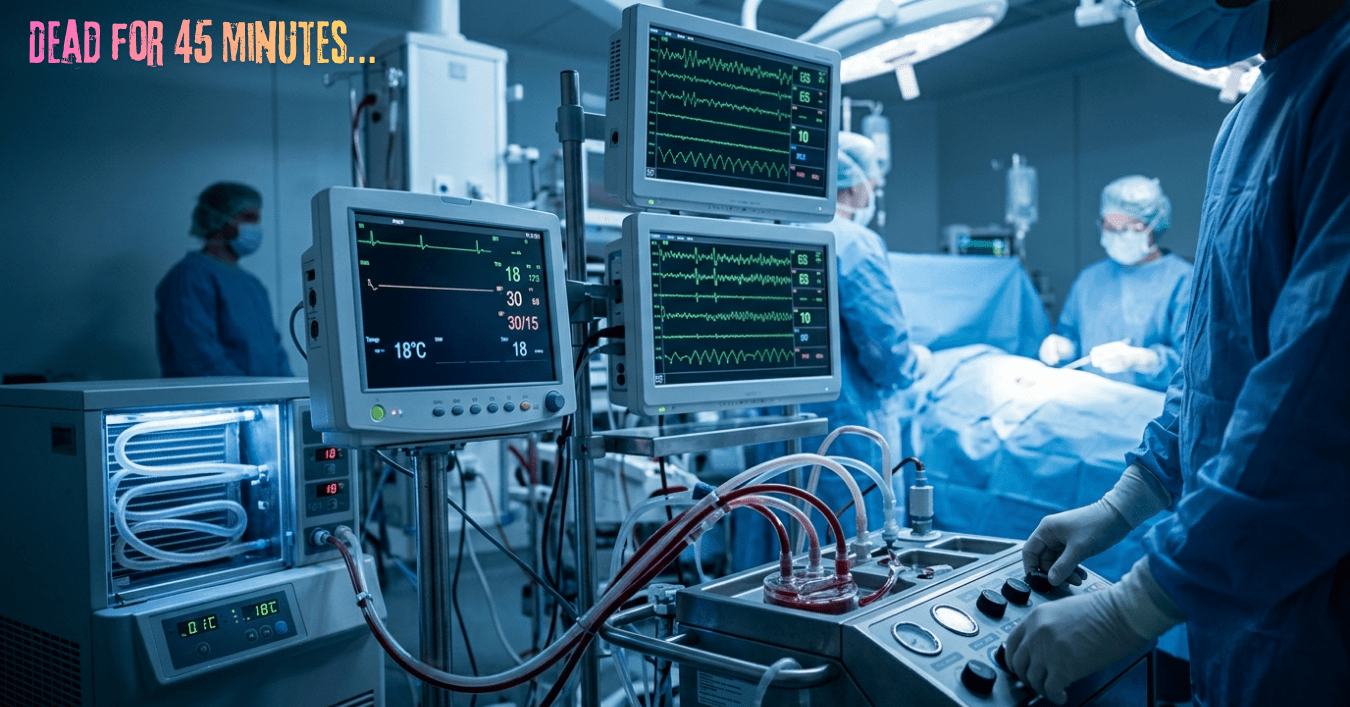
For 45 minutes in August 1991, Pam Reynolds had no heartbeat, no breathing, and no measurable brain activity. Surgeons at the Barrow Neurological Institute in Phoenix had cooled her body to roughly 60°F, drained the blood from her brain, and stopped her heart on purpose, the only way to safely remove a giant aneurysm wrapped around her brain stem. (Wikipedia’s account puts the figure closer to 50°F; Sabom’s original 1998 account and most secondary retellings, including this one, use 60°F, so the exact number varies slightly depending on which telling you read.) It is the opening scene of the Pam Reynolds case, and it still divides experts more than three decades later.

After the surgery, Reynolds recalled looking down at the operation from somewhere above her own body, able to describe a surgical instrument she claims she’d never laid eyes on and to recount a conversation that, by any normal measure, she shouldn’t have been able to hear. That account became known as the Pam Reynolds near-death experience, and it remains one of the most cited cases in near-death studies today. Almost no one, believer or skeptic, disputes that the medical documentation is real. What it actually means is a different question entirely.
It is one of the clearest real-world tests of a question we explore across our mindscape coverage: whether consciousness is strictly a product of brain activity, or something the brain merely channels. Believer and skeptic keep returning to this single case because so much of what happened in that operating room was measured, not assumed.
Table of Contents
What Was Actually Wrong With Her
Understanding what makes the Pam Reynolds case medically remarkable starts with her diagnosis. Reynolds went to her doctor in Atlanta with dizziness, slurred speech, and trouble controlling parts of her body. A scan found the cause: a giant basilar artery aneurysm, a swollen, weakened section of the artery feeding blood to the brain stem.
It was already large enough that a standard surgical approach risked rupturing it before doctors could even reach it. Her physician referred her to Robert F. Spetzler, a neurosurgeon at the Barrow Neurological Institute known for pioneering high-risk vascular procedures. Spetzler concluded that Reynolds’ only real chance was a rarely used technique called hypothermic cardiac arrest, sometimes called a standstill operation.
What Is Hypothermic Cardiac Arrest? Inside the Standstill Operation
The idea behind hypothermic cardiac arrest is counterintuitive: to save the patient, doctors deliberately shut down nearly every system that keeps a person alive. It raises an obvious question before any subjective experience even enters the picture: what happens when you flatline, medically speaking, in a controlled operating room rather than an emergency?
That distinction between a planned, monitored flatline and a chaotic one is at the center of the Pam Reynolds case.
What a Standstill Operation Actually Involves
During hypothermic cardiac arrest, surgical teams:
- Lower the patient’s body temperature to roughly 60°F (about 15.6°C), slowing metabolism enough that brain cells can survive without oxygen far longer than normal
- Stop the heart and switch off the cardiopulmonary bypass machine, so no blood is circulating at all
- Drain the blood out of the head and upper body, collapsing the aneurysm so surgeons can safely cut it away
- Monitor brain stem function continuously using small earpieces that emit repeated clicking sounds, checking for any electrical response, the same category of real-time brain monitoring that has since evolved into technology like commercial brain-computer interfaces
- Once brain activity flatlines and blood flow stops, surgeons have a narrow window to finish the repair before restarting circulation and slowly rewarming the body
For Reynolds, that window opened on August 8, 1991. The full operation lasted roughly seven hours.
A Rough Timeline of the Operation
The exact clock times below come from Sabom’s account and Spetzler’s own operative report, both laid out in detail on the Society for Psychical Research’s Psi Encyclopedia:
- 7:15 a.m.: Reynolds is wheeled into the operating room still awake, then anesthesia is induced; more than 20 doctors, nurses, and technicians are present for the procedure
- Mid-morning: Surgeons open the skull, the window Woerlee argues her most detailed perceptions occurred in, under anesthesia but before full hypothermic arrest began
- 10:50 a.m.: Hypothermic circulatory arrest formally begins as blood is drawn out through the femoral vessels and chilled
- 11:25 a.m.: The heart-lung machine is switched off and blood is fully drained from her body, the period when EEG and brain stem monitors record no activity at all
- Noon: Warmed blood is reinfused and the heart is restarted with a defibrillator after rewarming alone fails to restart it
- 2:10 p.m.: Reynolds is transferred to the recovery room, still intubated but stable, roughly seven hours after the operation began
This timeline is the crux of the whole debate. Sabom locates Reynolds’ most striking observations inside the 11:25 a.m.–noon flatline window. Woerlee locates them earlier, before monitoring confirmed she had no measurable brain activity at all.
The Pam Reynolds Near-Death Experience: What She Reported Seeing
Pam Reynolds: NBC interview about her Near Death Experience
The Pam Reynolds near-death experience unfolded in stages. Reynolds herself described it in stages, an account cardiologist Michael Sabom later documented in his book Light and Death and one the Society for Psychical Research’s Psi Encyclopedia has since corroborated in detail. It started, she said, with a tone resembling a natural D note that seemed to draw her out of her own body and upward. From that position above the table, she recalled watching the surgical team at work on her skull.
She described the bone saw used to open her skull not in surgical terms, but by comparing it to an electric toothbrush, both in appearance and sound. That specific, checkable detail is part of why the case gained traction: it came from someone who, by the monitoring equipment’s own readings, should not have been able to see or hear anything.
Later in the operation, Reynolds said she became aware of a presence and felt pulled toward a light, where she began to make out figures: her grandmother, an uncle, and other relatives who had died. By her own account, the longer she remained there, the harder it became to want to leave, until her uncle finally led her back. Re-entering her body, she said, felt like being pushed into ice water.
There’s a fourth detail that gets less attention than the toothbrush comparison but is just as central to the case. As the surgical team closed her incisions, Reynolds said she heard the Eagles’ “Hotel California” playing in the operating room, and specifically recalled the line about never being able to leave, which she later called an oddly insensitive thing to be playing on a patient. NPR’s own reporting on the case confirms Sabom verified the detail the same way he verified the bone saw: by contacting the manufacturer directly, who sent him photos confirming her description matched the actual instrument.
Why It Matters: Is There Evidence for Near-Death Experiences?
This is where the science gets genuinely contested, and where the Pam Reynolds case splits sharply into two camps, both worth taking seriously. To believers, this looks like evidence for near-death experiences that mainstream physiology hasn’t fully caught up to explaining.
The Case for Something Extraordinary
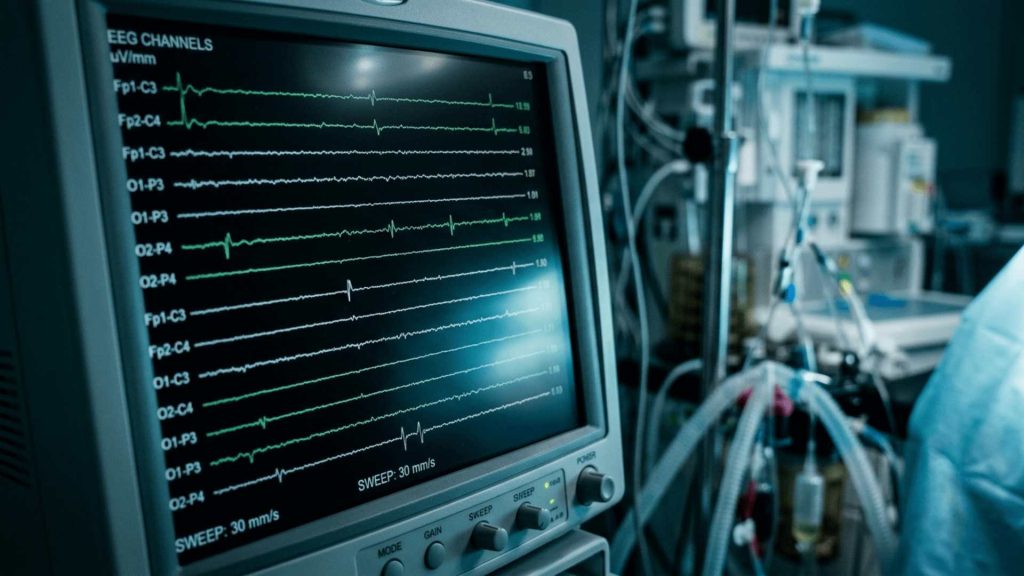
Proponents, most notably cardiologist Michael Sabom, argue Reynolds’ account is unusually strong precisely because of how well-documented the surgery was. Unlike most near-death cases, where “no brain activity” is inferred from a patient’s general condition, Reynolds’ flatline was measured continuously with EEG and brain stem auditory monitoring, instruments built to detect any flicker of response.
Sabom treats her case as some of the clearest evidence for near-death experiences available, precisely because it wasn’t just assumed, it was recorded. It sits alongside other cases researchers struggle to fully explain, including children who report detailed memories of past lives, where the debate over consciousness and its limits plays out in a very different setting.
There’s also a quantified side to this most articles skip. Researchers score reported NDEs against the Greyson NDE Scale, a standard psychometric tool developed by psychiatrist Bruce Greyson with a maximum possible score of 32. Reynolds scored 27, well above the 15-point average Greyson found in his own subject pool and the 13.3-point average across Sabom’s broader patient sample, making hers one of the most intense NDEs on record by that measure alone.
Spetzler himself weighed in publicly on the accuracy question, telling reporters that what Reynolds described to him after surgery was remarkably precise given the conditions of the operation. Coming from the surgeon who performed the procedure, not a researcher reconstructing it after the fact, that’s a rare instance of a primary medical witness going on record about a case like this.
Is the Pam Reynolds Case Debunked? The Skeptical View
Anesthesiologist Gerald Woerlee, in a detailed 2011 analysis published in the Journal of Near-Death Studies, reaches a different conclusion. His argument centers on timing: he contends Reynolds’ most detailed perceptions, including the sound of the saw and the operating room conversation, likely occurred while she was under general anesthesia but before hypothermic arrest began, a period when some patients experience partial awareness despite appearing fully sedated.
This phenomenon, known as anesthesia awareness, is a recognized, non-paranormal occurrence in surgical medicine. It’s the strongest version of the skeptical argument, though whether it fully settles the case is where opinions split hardest.
Psychologist Chris French, former editor-in-chief of The Skeptic magazine, echoed this reading in his own 2005 review of cardiac-arrest NDE cases, noting Reynolds only described her experience after regaining consciousness, which gave her time to fold sensations together with things she already understood about the procedure. He also points out that a surgical saw resembling a dental drill isn’t especially remarkable, since most adults have heard that sound before.
How Woerlee Explains Each of the Four Sounds She Heard
Most coverage of the skeptical case stops at “anesthesia awareness” as a label. Woerlee’s actual 2011 paper goes further, walking through all four things Reynolds reported hearing and proposing a distinct physical mechanism for each:
- The drill and the bone saw, he argues, were never heard through her ears at all. Sound from a tool touching the skull travels straight through bone to the inner ear, a path called bone conduction, which no earplug or clicking stimulus can block
- Her comment about the surgeon’s remark on her blood vessels and the “Hotel California” lyric, by contrast, were ordinary airborne sound reaching her ears. Woerlee calculated that the clicking stimuli used to monitor her brain stem occupied only about 12 percent of each second of listening time, leaving most of the second free to hear speech and music at normal volume
- The rate of anesthesia awareness generally, citing published anesthesiology data, runs between roughly 1 and 9 cases per 1,000 general anesthetics, rare but well-documented and non-paranormal
- He also points to a mechanical wrinkle: connecting a patient to a cardiopulmonary bypass machine dilutes the blood, and with it the concentration of the anesthetic drugs already in her system, by an estimated 20 to 50 percent, which could explain why full EEG suppression didn’t arrive until after her heart had already stopped
Woerlee even went so far as to publish a downloadable audio test recreating the precise clicking and masking-noise levels from Reynolds’ operation, letting skeptics and believers alike listen for themselves and decide whether normal speech and music would still come through under those conditions.
The Detail Almost No One Talks About
Here’s a piece of the story that rarely makes it into popular retellings. Nine days after her first operation, Reynolds underwent a second procedure to repair a separate aneurysm. Hypothermic cardiac arrest wasn’t needed this time; she stayed under standard general anesthesia throughout, with brain stem and cerebral monitors showing normal, well-maintained responses the entire time.
She reported no near-death experience during that second surgery. If the Pam Reynolds near-death experience were simply a predictable byproduct of anesthesia or major brain surgery, some version of it might reasonably be expected to recur. It didn’t.
Skeptics and believers read that fact differently. Skeptics see it as evidence the first episode was tied to the unique physiological extremity of the standstill procedure rather than anything transcendent. Believers see it as evidence that whatever happened during the first surgery was specifically tied to the flatline window, not to surgery or anesthesia in general.
Sabom vs. Woerlee: The Claims Side by Side
Most writing on the Pam Reynolds case settles on one interpretation and sticks with it. But broken down point by point, the gap between Sabom and Woerlee’s positions is smaller than it looks at first glance, which helps explain why the debate keeps coming back around instead of ever getting put to rest.
On timing: Sabom places Reynolds’ most detailed observations during the period when EEG and brain stem monitoring recorded no activity. Woerlee places the same observations earlier, during induction, when anesthesia awareness is medically documented as possible.
On memory reliability: Sabom treats Reynolds’ account, given to him directly, as a faithful record. Woerlee notes she only described it after extubation, hours later, leaving room for her to unconsciously fill in details from things she’d overheard.
On the toothbrush comparison: Sabom points to it as a striking, verifiable detail, one he argues would be a hard thing for anyone to guess by chance. Woerlee counters that a small pneumatic surgical saw genuinely resembles, in sound and appearance, tools most adults have encountered at a dentist’s office.
On what would settle it: Neither side calls the disagreement resolved. Sabom’s position rests on the medical monitoring being taken at face value; Woerlee’s rests on anesthesia awareness being common and hard to rule out after the fact. Both readings are argued in good faith by credentialed professionals, which is exactly why the case keeps getting cited on both sides rather than settled by either.
A Third Voice: The 2007 Academic Reckoning
Sabom and Woerlee aren’t the only credentialed figures who’ve argued this case in print. In 2007, the Journal of Near-Death Studies devoted an entire issue to a set of papers by philosopher Keith Augustine, who questioned whether any veridical NDE, Reynolds’ included, holds up as evidence once ordinary explanations are exhausted. Augustine argued her out-of-body perceptions likely began and ended outside the true flatline window, and that three years passed between her surgery and her first interview with Sabom, long enough for memory to drift or absorb details she’d since learned.
The same issue carried direct rebuttals from Sabom, from Greyson, and from NDE researchers Kenneth Ring and Raymond Moody. Parapsychologist Charles Tart pushed back specifically on the memory-drift argument, pointing to research showing NDE accounts tend to stay consistent over time rather than growing more elaborate. It’s a genuine, still-unresolved academic exchange between named specialists, not a two-person standoff, and it rarely makes it into shorter treatments of the case.
What Larger Research Says About Near-Death Experiences
The Pam Reynolds case doesn’t exist in isolation. Physician Sam Parnia has spent the past twenty years leading some of the largest structured investigations into near-death and death-adjacent experiences, including the AWARE study out of the University of Southampton, and its successor AWARE II, widely regarded as the strongest structured evidence for near-death experiences collected under controlled hospital conditions.
Earlier research in this area, cited in the Southampton team’s own materials, found that roughly 10 to 20 percent of cardiac arrest and clinical-death survivors report lucid, well-structured thought during the period they were clinically unresponsive. A much smaller fraction report detailed, verifiable perceptions of their surroundings, comparable to what Reynolds described, but rare even in a large sample.
AWARE II added something the Pam Reynolds near-death experience never had: real-time EEG monitoring during actual cardiac arrest in ordinary patients, not a controlled surgical setting. An initial 2022 conference presentation from the 567-patient AWARE II study reported roughly one in five survivors describing a lucid experience; the peer-reviewed follow-up published in Resuscitation in September 2023 refined this to four in ten survivors recalling some degree of consciousness during CPR, with the 85 patients who had EEG monitoring showing bursts of gamma, delta, theta, alpha, and beta brain wave activity, patterns associated with conscious thought, appearing in some patients up to an hour into resuscitation, well past the point most clinicians would assume the brain had gone silent.
That doesn’t prove any single patient’s subjective account. It does undercut the simplest counterargument to cases like Reynolds’: that a flatlined or arrested brain is definitionally incapable of any electrical activity worth measuring. That’s part of why AWARE II is treated as important evidence for near-death experiences generally, even though it doesn’t confirm Reynolds’ account specifically.
Parnia’s team has also found brain electrical activity can show signs of recovery further into resuscitation than previously assumed, a reminder of how much is still unknown about what a dying brain actually does, a question we explore separately in our look at how the brain behaves under extreme stress. That finding doesn’t settle the debate around the Pam Reynolds case. It does explain why researchers on both sides keep returning to it.
Where Pam Reynolds Case’ Story Ended
Reynolds recovered fully from both surgeries and lived nearly two more decades, working in the Atlanta music industry. She died of heart failure on May 22, 2010, at Emory University Hospital, nine days short of her 54th birthday.
By that point, the Pam Reynolds case had already earned a place as one of the most-referenced cases in near-death studies, turning up in academic journals, books, and the BBC documentary The Day I Died. Nobody credible disputes that the events happened as documented. Whether her subjective experience is what she believes it was remains the open question.
Future Research: What’s Still Unresolved
The Pam Reynolds case raises questions current science still can’t fully answer:
- Whether isolated instances of detailed perception during flatlined brain activity reflect a measurement gap, undetected activity, or something monitoring equipment simply isn’t built to capture
- Why only a small fraction of cardiac arrest and near-death survivors report detailed, checkable perceptions, while most report vaguer sensations or nothing at all
- Whether more advanced, more sensitive brain monitoring, extending Parnia’s resuscitation research, will eventually account for cases like Reynolds’ through ordinary physiology, or only deepen the mystery instead
None of these questions have a settled answer as of 2026, which is part of why the case is still being written about more than three decades later, and why it keeps surfacing in our coverage of scientific mysteries researchers still haven’t cracked.
Related Topics
- Mindscape: our broader hub for consciousness-and-mystery coverage the Pam Reynolds case belongs to
- Children Who Remember Past Lives: another case set researchers can’t fully explain within standard models of memory and consciousness
- Brainoware: The Living Computer: lab-grown brain tissue research relevant to how scientists now study consciousness outside a living human brain
- How the Brain Behaves Under Extreme Stress: context for what a dying or stressed brain is actually doing physiologically
- The Taos Hum: a different kind of unresolved perception mystery, for readers who want more unexplained-phenomena coverage
Key Takeaways
- The Pam Reynolds case centers on a rare 1991 hypothermic cardiac arrest procedure at the Barrow Neurological Institute, during which her body was cooled, her heart stopped, and her brain monitored as flatlined
- She later reported an out-of-body experience, including details about surgical instruments and conversations medical staff said were accurate
- Cardiologist Michael Sabom cites the case’s precise monitoring as some of the strongest evidence for near-death experiences on record, and Reynolds’ NDE scored 27 out of 32 on the standard Greyson NDE Scale, well above average
- Surgeon Robert Spetzler himself went on record calling her account remarkably precise, and philosopher Keith Augustine’s 2007 critique, plus the rebuttals it drew from Sabom, Greyson, and others, add a third major thread to the debate beyond Sabom versus Woerlee
- Skeptics Gerald Woerlee and Chris French argue anesthesia awareness before the flatline window offers a conventional explanation, though the question is not conclusively settled
- A second surgery nine days later, under standard anesthesia, produced no near-death experience, a detail rarely covered but central to both sides’ arguments
- Sam Parnia’s AWARE research adds further evidence for near-death experiences generally; the peer-reviewed 2023 AWARE II results found four in ten studied cardiac arrest survivors recalled some degree of consciousness during CPR
- Reynolds died in 2010, having lived nearly 19 years after the surgery that made the Pam Reynolds near-death experience famous
Frequently Asked Questions About the Pam Reynolds Case
Was Pam Reynolds actually clinically dead during her surgery?
By clinical measures, yes. Her body temperature was lowered to roughly 60°F, her heart was stopped, blood was drained from her brain, and monitors recorded no brain wave activity, the standard clinical marker of that state.
What happened during the Pam Reynolds near-death experience?
The Pam Reynolds near-death experience included floating above the operating table, watching the surgical team, describing a bone saw resembling an electric toothbrush, hearing staff conversation, and later encountering deceased relatives before returning to her body.
What is hypothermic cardiac arrest?
Hypothermic cardiac arrest, also called a standstill operation, cools the body, stops the heart, and drains blood to allow surgeons to safely operate on otherwise inaccessible aneurysms, with circulation restored once the repair is finished.
Has the Pam Reynolds case been debunked?
Not conclusively either way. Anesthesiologist Gerald Woerlee offers anesthesia awareness as a conventional explanation, but proponents argue the timing and specificity of her account are hard to fully explain that way. The question remains actively contested rather than resolved.
What happens when you flatline?
Medically, a flatline means no measurable electrical activity in the brain or heart. What happens when you flatline biologically is well understood; what some patients, like Reynolds, report experiencing during that window is what science hasn’t fully explained.
Is there scientific evidence for near-death experiences generally?
Large studies, including Sam Parnia’s AWARE research, found the peer-reviewed 2023 AWARE II results put the figure at four in ten cardiac arrest survivors recalling some degree of consciousness during CPR, though detailed, verifiable perceptions like Reynolds’ are far rarer. It counts among the best current evidence for near-death experiences as a real, if poorly understood, phenomenon.
Did Pam Reynolds have another near-death experience during her second surgery?
No. Nine days after her first operation, she underwent a second aneurysm repair under standard general anesthesia and reported no near-death experience, a detail central to the debate over what triggered the first one.
Is the Pam Reynolds story real?
There’s no dispute the surgery and medical monitoring happened as documented. Whether her subjective experience reflects genuine perception during clinical death or a reconstructed memory from partial anesthesia awareness is what’s still contested.
How did Pam Reynolds die?
Pam Reynolds died of heart failure on May 22, 2010, at Emory University Hospital in Atlanta, Georgia, at age 53, nearly 19 years after the surgery that made her case famous.
What is the AWARE II study, and how does it relate to the Pam Reynolds case?
AWARE II is Sam Parnia’s study monitoring real-time brain activity in cardiac arrest patients using EEG. It found bursts of conscious-associated brain activity well into resuscitation in some patients, complicating the assumption that a flatlined brain produces no electrical activity at all, though it doesn’t confirm Reynolds’ account specifically.
What song was playing during Pam Reynolds’ surgery?
Reynolds said she heard the Eagles’ “Hotel California” as her incisions were being closed, specifically the line about never being able to leave. Sabom verified the detail by contacting the manufacturer of the surgical equipment and confirming the timeline matched.
What is the Greyson NDE Scale, and how did Reynolds score?
The Greyson NDE Scale is a standard 32-point tool researchers use to measure the depth of a reported near-death experience. Reynolds scored 27, well above the roughly 15-point average found in Bruce Greyson’s own research and the 13.3-point average in Sabom’s broader patient sample.
What happened to Pam Reynolds?
Reynolds underwent a rare hypothermic cardiac arrest procedure in 1991 to remove a brain aneurysm, later described a detailed near-death experience during the operation, recovered fully, and went on to work in the Atlanta music industry. She died of heart failure in 2010, nearly 19 years after the surgery that made her case famous.
What is the 7 minutes theory of death?
It’s a widely circulated online claim that the brain stays active for about seven minutes after death, replaying memories. Reynolds’ own case ran far longer than that: she was without measurable brain activity for a full 45 minutes, not seven. There’s no single study behind the specific seven-minute number, but the underlying idea isn’t baseless: AWARE II researchers recorded genuine bursts of gamma, delta, theta, alpha, and beta brain wave activity in some cardiac arrest patients up to an hour into resuscitation, evidence that a dying brain can stay electrically active far longer than either the viral number or older assumptions suggest.
Source References
- Sabom, Michael. Light and Death: One Doctor’s Fascinating Account of Near-Death Experiences. Zondervan, 1998.
- French, Christopher C. “Near-Death Experiences in Cardiac Arrest Survivors.” Progress in Brain Research, Vol. 150, 2005, pp. 351–367.
- Woerlee, G.M. “Could Pam Reynolds Hear? A New Investigation into the Possibility of Hearing During This Famous Near-Death Experience.” Journal of Near-Death Studies, 30, 2011. (full paper) https://digital.library.unt.edu/ark:/67531/metadc461684/m2/1/high_res_d/30-1%20F%20Woerlee.pdf
- NYU Langone Health. “Lucid Dying: Patients Recall Death Experiences During CPR.” November 7, 2022.
- University of Southampton. “World’s Largest Near-Death Experiences Study.” October 7, 2014.
Conclusion
More than three decades on, the Pam Reynolds case still won’t settle into a tidy answer. What happened in that operating room is documented down to the minute, verified by more than one credentialed source, and argued over by researchers on every side who take the evidence seriously rather than dismissing it out of hand. That’s rare for a case this old, and it’s exactly why it keeps getting cited.
Whether her account points to something science hasn’t caught up to yet, or to a well-understood gap in how anesthesia works, is a question this article won’t resolve either. What it can offer is the fullest, most carefully sourced version of both sides, laid out so readers can weigh the timing, the mechanisms, and the gaps in each argument for themselves. That, more than a verdict, is what a case like this deserves.
About the Author
Evan Brooks is a science and history writer for Strangehappen.com, specializing in archaeology, space exploration, ancient civilizations, and emerging scientific discoveries. His work focuses on translating complex research into engaging, evidence-based stories that help readers understand the mysteries of our world and beyond.