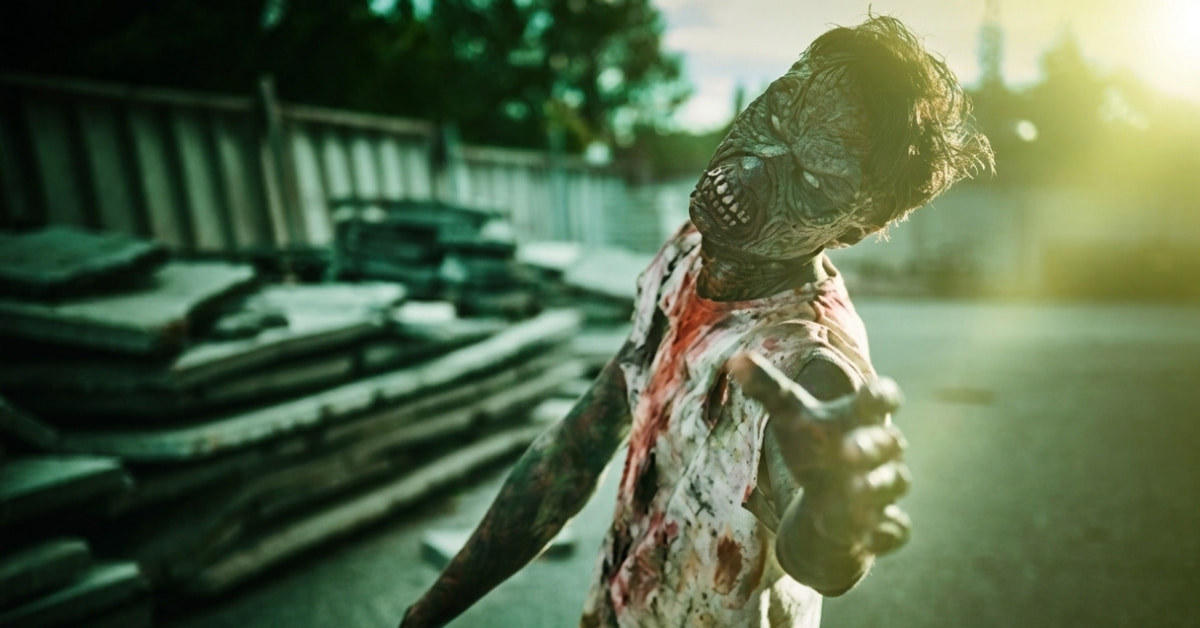
No, zombies are not real, and no known virus can turn a dead human into the flesh-eating undead of horror films. But the science behind zombification gets surprisingly close in a few real, documented ways, and there’s a scientific answer to whether a zombie apocalypse could ever actually happen.
Rabies attacks the brain and changes behavior. A prion disease is spreading through deer herds under the nickname “zombie deer disease.” A fungus really does hijack the body of a living ant. None of it adds up to a real zombie, but each piece is worth understanding on its own, and together they form the actual, evidence-based science behind zombification.
Table of Contents
Are Zombies Real?
No. There is no evidence that a dead human body can return to functioning life and become an aggressive, contagious zombie. That much is settled, whether the question is about a single human zombie or a full-scale outbreak.
What’s genuinely true is that several real conditions produce isolated symptoms that overlap with parts of zombie fiction, without adding up to zombification itself. A rabies infection can cause the aggression and confusion associated with a “rage” state. Chronic wasting disease can cause infected animals to show altered behavior and a stumbling gait that people may associate with zombies. Chronic wasting disease is often called zombie deer disease because of the unusual behavior and physical symptoms it can cause in infected deer. Cotard syndrome can leave a person genuinely convinced they are already dead.
Each is a real, documented phenomenon; none of them involves a corpse coming back to life, and none of them make zombies real in the way fiction imagines. The gap between resemblance and reanimation is exactly where zombie fiction and zombie science part ways, and it’s a genuinely interesting gap worth asking questions about.
Is There a Real Zombie Virus?
No virus, bacterium, fungus, or parasite has ever been shown to reanimate dead tissue or create the coordinated aggression and contagious spread seen in zombie fiction. What does exist are several unrelated real diseases, most notably rabies and chronic wasting disease, that produce isolated symptoms resembling parts of the zombie archetype: altered behavior, aggression, or a blank, unresponsive state. Scientists sometimes borrow the word “zombie” informally to describe these effects, but “zombie virus” is not a recognized medical or scientific category.
What Does “Zombie Virus” Actually Mean?
The phrase “zombie virus,” sometimes written as “viral zombies,” gets used in three fairly different ways, and mixing them up is where a lot of confusion starts.
The first is the fictional zombie virus of movies, games, and novels: a pathogen that kills a person and then reanimates the body into something hostile and contagious. This version has no basis in real biology.
The second is real diseases or organisms that scientists and journalists sometimes describe as “zombie-like” because of a specific symptom or behavior, not because they create movie zombies. Rabies, chronic wasting disease, and the ant-controlling fungus Ophiocordyceps all fall into this category.
The third is a media shorthand: ancient viruses recovered from permafrost after being frozen for thousands of years. Researchers sometimes use the term “revived” for these viruses, and headline writers turned that into “zombie virus.” It is a description of the virus’s history, not a claim about what the virus does to a living host.
None of these three uses describes an actual disease category recognized in medicine or virology.
The Science Behind Zombification
Strip away the flesh-eating and the moaning, and fictional zombification rests on a specific combination of biological demands. A real pathogen would need to alter brain function and behavior, impair judgment, disrupt motor control, spread reliably between hosts, and keep an infected body moving and functional well past the point most infections would end things.
Each of those demands has a real, documented analog somewhere in biology or medicine on its own. Rabies alters behavior through direct nervous system invasion. Chronic wasting disease destroys brain tissue through misfolded prions.
Ophiocordyceps can manipulate an infected ant’s behavior through effects on its muscles and surrounding tissues while largely sparing the brain. The zombie ant fungus is a fascinating example of how nature can alter an animal’s behavior without turning it into a fictional zombie. What no known pathogen does is combine all of these traits into a single organism that spreads easily, controls behavior precisely, and keeps its host alive and mobile indefinitely.

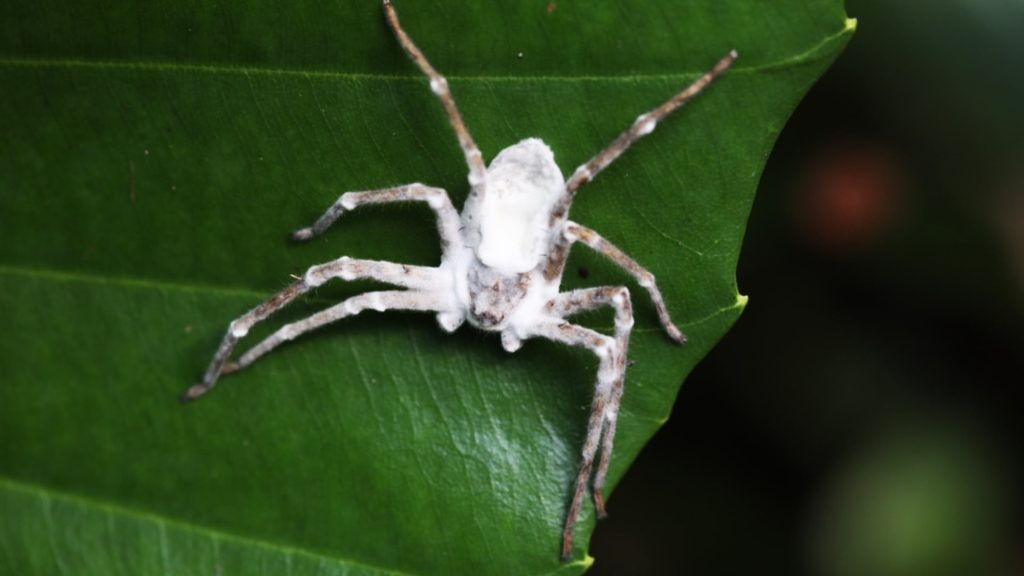
That combination, not any one piece of it, is what the science behind zombification keeps running up against. The individual mechanisms are real. The full fictional package is not, and understanding why requires looking at each real mechanism on its own. Fungal behavior manipulation is not limited to ants. The zombie spiders of Ireland provide another example of how fungi can alter an animal’s behavior.
Could a Zombie Virus Infect Humans?
No known pathogen currently infects humans in the way fiction imagines. Real diseases tend to trade off between the traits a fictional zombie virus would need. Diseases that spread easily, like the flu, typically don’t cause targeted behavioral control. Diseases that do meaningfully alter behavior, like rabies, are not especially good at spreading between humans and are almost always fatal once neurological symptoms begin, not survivable-but-mobile the way zombie fiction requires.
What Would the Symptoms of a “Zombie Virus” Be?
There is no medically recognized “zombie virus,” so there is no official symptom list for one. What genuinely exists are symptoms from real diseases that get compared to zombie fiction. Rabies can cause agitation, confusion, hallucinations, and aggressive behavior as it progresses.
Chronic wasting disease produces drastic weight loss, stumbling, and a blank, unresponsive stare in infected animals. Neither disease, nor any other real pathogen, causes tissue reanimation after death.
The Real Diseases Behind Zombie-Like Behavior
Long before modern zombie films, doctors were already documenting real diseases that could strip away reasoning, coordination, or self-control. A handful of them keep coming up whenever the topic of zombie virus science comes up.
Rabies and Zombie-Like Behavior
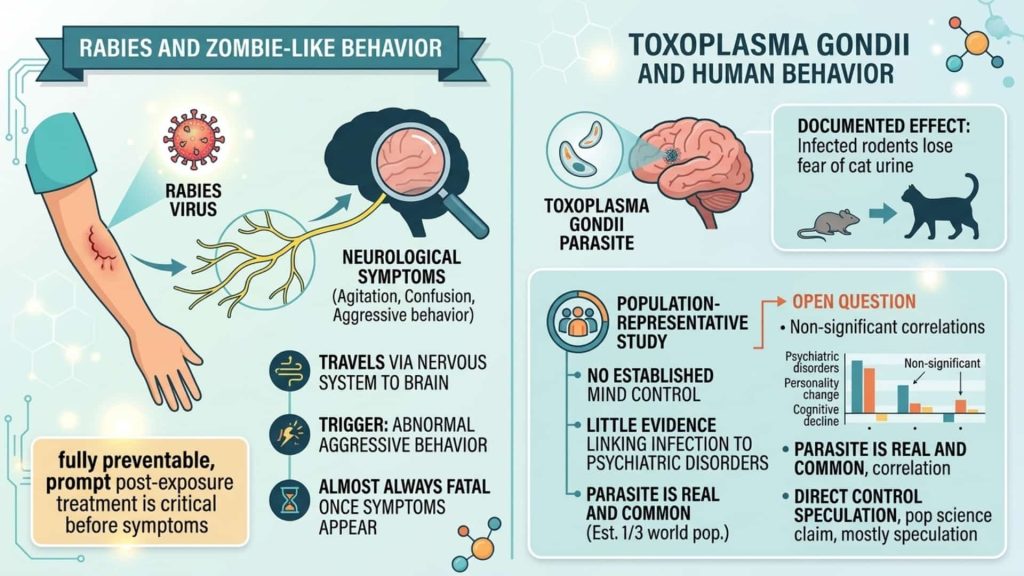
Rabies is one of the closest real-world biological comparisons to some features of zombie fiction, and it’s a genuinely real, well-documented viral disease. According to the CDC, the rabies virus travels from the site of a bite along the nervous system until it reaches the brain, where it can trigger agitation, confusion, hallucinations, and abnormal, aggressive behavior.
Once those neurological symptoms appear, rabies is almost always fatal, and there is still no cure at that stage. It’s important to be precise about what rabies is and isn’t: it’s a real virus that affects the central nervous system, but it does not reanimate dead tissue and does not create the coordinated, contagious “zombie outbreak” scenario found in fiction. The disease is also fully preventable. Prompt post-exposure treatment can prevent rabies from developing if given before symptoms begin.
Toxoplasma Gondii and Human Behavior
Toxoplasma gondii is a single-celled parasite that infects an estimated third of the world’s population, most of whom never notice. Its clearest, best-documented effect is in rodents: infected rats and mice lose their instinctive fear of cat urine, which makes them easier for cats, the parasite’s preferred host, to catch.
Whether Toxoplasma does anything comparable in people is a genuinely open question. Some studies have investigated possible associations between Toxoplasma infection and human behavior, but the idea that it can directly control human minds is not established. A population-representative study of the Dunedin birth cohort, published in PLOS ONE, tested more than 800 adults and found little evidence linking Toxoplasma infection to psychiatric disorders, personality change, or cognitive decline.
Participants in that study scored worse on only one of fourteen neuropsychological measures tested. The parasite is real and common. The zombie-adjacent mind-control claim attached to it in pop science writing is mostly speculation.
Chronic Wasting Disease: “Zombie Deer Disease”
Wildlife biologists and hunters have taken to calling chronic wasting disease “zombie deer disease,” an informal nickname rather than a scientific one, because of what it does to infected animals: drastic weight loss, stumbling, drooling, a blank stare, and a loss of the normal fear response toward people.

Chronic wasting disease is a prion disease, not a virus. It’s caused by a misfolded protein that forces healthy proteins nearby to misfold as well, gradually destroying brain tissue. According to USGS surveillance data, as of June 2026 the disease has been documented in free-ranging or captive cervid populations across 37 U.S. states and five Canadian provinces, and it is always fatal in the animals it infects.
No confirmed human cases of CWD have been reported, but researchers continue to study the possibility of species transmission, given that a related prion disease in cattle once crossed into people as variant Creutzfeldt-Jakob disease. The CDC currently advises against eating meat from any animal that has tested positive for CWD, or that appeared sick before it was harvested, as a precaution.
The Zombie-Ant Fungus: Ophiocordyceps
Outside mammals, one of the more striking real examples of behavioral manipulation involves a fungus, not a virus. Species within the Ophiocordyceps unilateralis species complex are associated with dramatic behavioral changes in the specific ant species they infect. An infected ant is driven to climb to a particular height, clamp its jaws onto a leaf vein in a fixed “death grip,” and stay there until the fungus is ready to release its spores.
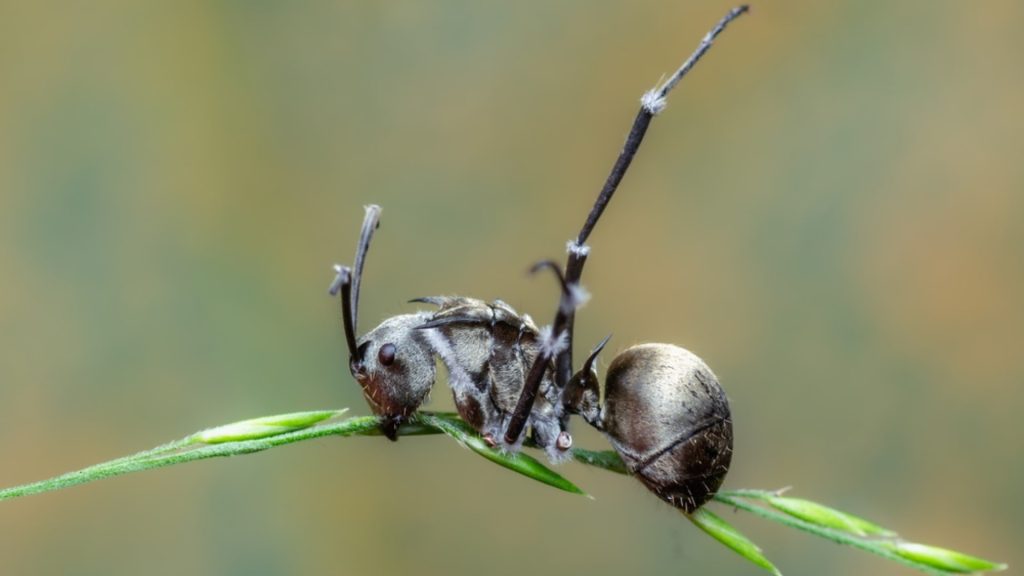
For years, researchers assumed the fungus achieved this by directly invading the ant’s brain. A 2017 study published in PNAS used 3D electron microscopy to show that isn’t quite right: the fungus instead spreads through networks of cells that invade the ant’s muscles, particularly around the jaw, while largely sparing the brain itself. Different species within the Ophiocordyceps complex tend to be highly specific to particular ant hosts, which is part of what makes the relationship so precise. There is no evidence that Ophiocordyceps produces anything resembling zombie behavior in humans; it is an insect-specific fungal adaptation, not a human health threat.
The Haitian Zombie: Folklore, Toxicology and the Scientific Debate
No real-world zombie story is more famous, or more contested, than the Haitian zombie. In Haitian Vodou-adjacent folk belief, a bokor, a sorcerer working outside sanctioned Vodou practice, is said to be able to turn a living person into a zombi: someone who appears to die, is buried, and later reappears in a trance-like, obedient state. This is a cultural and folkloric tradition first, with a separate scientific debate layered on top of it.
In the 1980s, ethnobotanist Wade Davis traveled to Haiti to investigate whether there was a chemical explanation behind these accounts. As Harvard Magazine detailed in its profile of his research, Davis proposed that a “zombie powder” applied to broken skin could combine tetrodotoxin, the neurotoxin found in pufferfish, with datura, a plant known to produce amnesia and delirium. His hypothesis was that the mixture could lower a person’s vital signs enough to be mistaken for dead, followed by burial and later revival into a disoriented, suggestible state.
It’s a genuinely interesting hypothesis, and that’s what it remains: a hypothesis, not settled science. No independent laboratory has been able to replicate Davis’s specific toxicological findings from the samples he collected, and other researchers have questioned whether tetrodotoxin exposure alone could realistically produce the effects he described. What isn’t in dispute is that people in Haiti have been identified by family members and communities as zombis, although the medical explanations for those cases remain disputed.
In 1997, physicians Chavannes Douyon and Roland Littlewood published a peer-reviewed case series in The Lancet documenting three Haitians who had been buried, presumed dead, and later recognized alive by family members years afterward. The likelier medical explanations, the authors concluded, were conditions such as catatonic schizophrenia, epilepsy following brain injury, and learning disability, not a confirmed zombie powder. The tetrodotoxin question remains genuinely unresolved either way.
Are the “Zombie Viruses” From Permafrost Dangerous?
A different kind of “zombie virus” made headlines over the past decade: ancient pathogens thawing out of the Arctic permafrost as the climate warms. The label is a media description, not a scientific classification, and it’s worth being precise about what actually happened.
In 2014, a research team led by Jean-Michel Claverie and Chantal Abergel at Aix-Marseille Université recovered a sample from Siberian permafrost roughly 30,000 years old, revived it under laboratory conditions, and showed it could still infect a living cell. The organism, described in a 2014 paper in the Proceedings of the National Academy of Sciences, was named Pithovirus sibericum, a genuine giant virus with roughly 500 genes packed into an amphora-shaped shell. As National Geographic reported at the time, Pithovirus infects only amoebas, not humans or other animals.
Researchers have separately recovered degraded, non-infectious fragments of smallpox and 1918 influenza DNA from permafrost burial sites, but nothing capable of causing a human outbreak. Reviving an ancient virus in a sealed lab under controlled conditions is a very different thing from that virus posing any risk to people, and so far nothing pulled from permafrost has done the latter.
Was a Zombie Virus Really Found in Siberia?
Yes, in the narrow sense that a genuinely ancient virus, Pithovirus sibericum, was recovered from Siberian permafrost and revived under laboratory conditions in 2014. It earned the “zombie virus” label in media coverage because it had been dormant for roughly 30,000 years and could still infect a cell once thawed. It infects amoebas exclusively, has no known ability to infect humans, and was handled entirely inside a controlled research laboratory rather than in any setting that could produce an outbreak.
Cotard Syndrome: The “Walking Corpse” Delusion
Cotard syndrome is a rare psychiatric condition first described by French neurologist Jules Cotard in 1882. It’s associated with nihilistic delusions, including the belief that one is dead, is missing internal organs, or no longer exists at all. “Walking corpse syndrome” is an informal, popular description of the condition, not a clinical term.
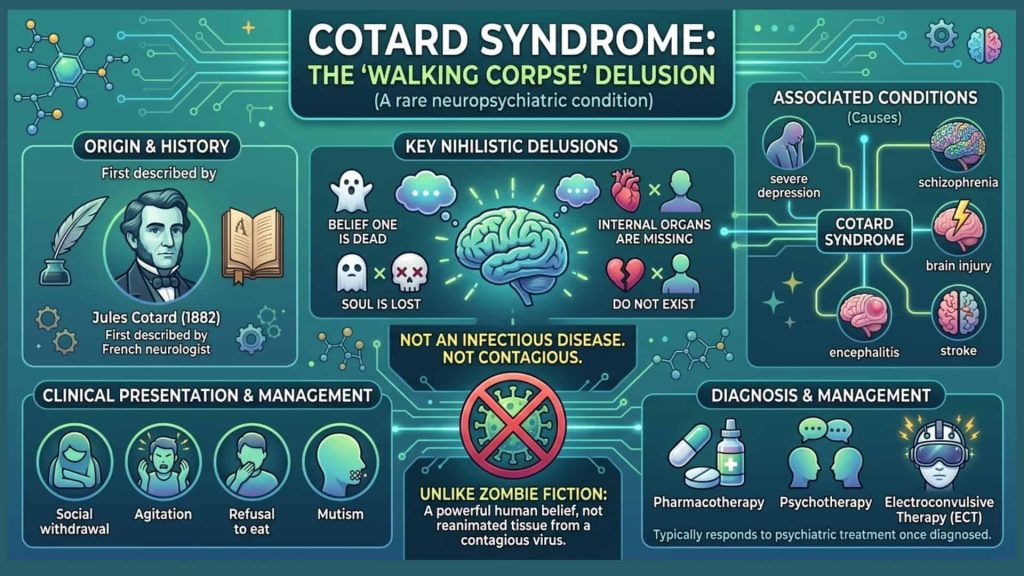
A 2024 case report published through the National Library of Medicine described a patient who insisted he was a walking corpse and had lost his soul, a presentation consistent with cases documented since Cotard first described the syndrome. The condition has been linked to severe depression, schizophrenia, brain injury, and certain forms of encephalitis, and it typically responds to psychiatric treatment once correctly diagnosed. Cotard syndrome is not an infectious disease, and nobody experiencing it is contagious. It is, however, one of the clearest real examples of a person genuinely believing they belong to the category zombie fiction describes, which is a different and much more human kind of strange than anything a virus does.
Can Science Actually Reanimate the Dead?
Even the most far-fetched zombie premise, bringing dead tissue back to some form of function, has a real research program attached to it, though not the one fiction imagines. In 2022, Yale researchers restored circulation and cellular activity to the organs of pigs that had been dead for a full hour, using a specially engineered perfusion system.
Nature’s coverage of the study reported that the pigs’ organs, including the heart, showed renewed cellular function, though the animals were never considered to have regained consciousness or been revived in any meaningful sense. The goal was expanding the window in which organs can be recovered for transplant after cardiac death, not reanimation for its own sake. It’s a genuine, carefully bounded scientific advance with real ethical questions attached about where the line between life and death sits, and it has nothing to do with a virus of any kind.
Could Scientists Create a Zombie Virus?
Every so often, someone asks whether gene-editing tools like CRISPR could theoretically be used to build a zombie virus from scratch. Writing for The Conversation, Brunel University London bio-law researcher Pin Lean Lau laid out what that would actually require: a pathogen that spreads easily, reliably reaches the brain, precisely manipulates aggression and motor control, and keeps its host alive and mobile well past the point most infections would end things.
No known pathogen combines all of those traits, and the reason is more biological than technological. Changing complex human behavior in a targeted way is an enormously difficult problem on its own; doing that while also maintaining easy transmission and keeping a host alive and functional works against many of the same biological pressures that make diseases spread efficiently in the first place. Lau’s analysis concludes that anyone with the resources to attempt something this technically demanding would have far simpler ways to cause harm. It’s a useful reminder that gene-editing biosecurity is a real and serious topic, just not through this particular scenario.
Could a Zombie Apocalypse Actually Happen?
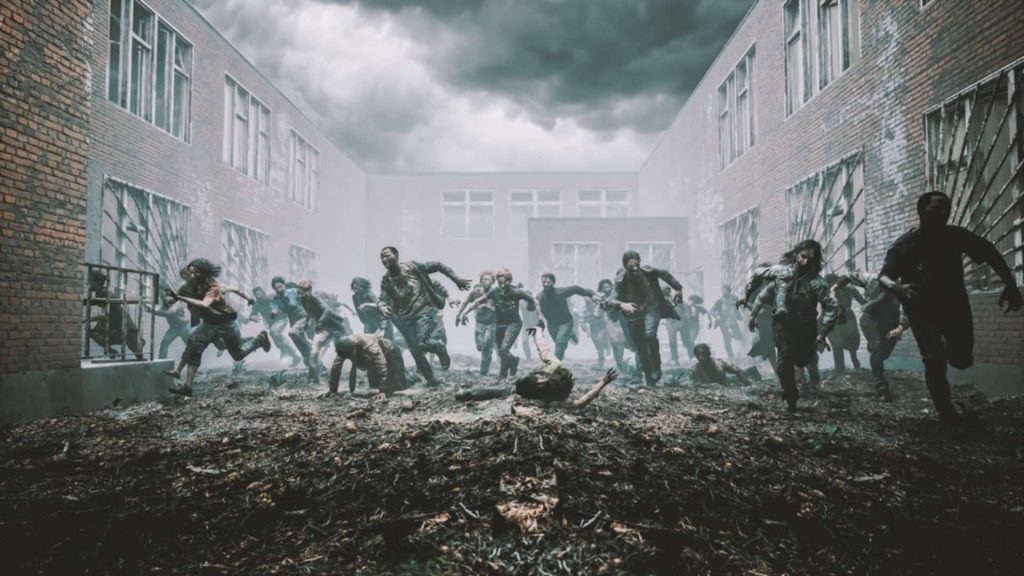
No, a real zombie apocalypse cannot happen, because it would require a real zombie virus in the first place, and no known pathogen combines the traits that would make one possible. But the question of what the chances of a zombie apocalypse would be, if the biology somehow existed, has actually been studied with real mathematical rigor, and the answer is worth understanding.
Here’s a question zombie fiction rarely tries to answer with any rigor: if an outbreak like this happened, would people survive it? In 2009, mathematicians Philip Munz, Ioan Hudea, Joe Imad, and Robert J. Smith? explored that question using the same epidemiological modeling tools researchers apply to real disease outbreaks, treating a zombie outbreak explicitly as a fictional stand-in for teaching how those models work.
Their paper, hosted by the University of Ottawa’s Department of Mathematics, built a susceptible-zombie-removed model, a variant of the standard framework used for diseases like influenza, and tested it against several hypothetical intervention strategies. Under the model’s assumptions, quarantine alone slowed the fictional outbreak but didn’t stop it, and only a scenario involving an effective cure allowed the human population to survive, in reduced numbers.
It’s worth being clear about what this paper actually is: a theoretical teaching exercise showing how transmission and intervention assumptions shape outbreak dynamics in an epidemiological model, not a real-world prediction about an actual zombie threat. It has since been cited by more than a hundred follow-up papers exploring outbreak modeling more broadly, which says more about its usefulness as a teaching tool than anything about the real-world likelihood of a zombie apocalypse.
The Government’s Zombie Preparedness Plans
Two real government documents have used a zombie scenario as a teaching tool, and it’s worth being clear up front that neither one constitutes evidence that zombies exist. Both are fictional preparedness exercises, used because an absurd, non-partisan scenario is a genuinely effective way to teach the same skills as a real disaster response.
In May 2011, the CDC published a blog post titled “Preparedness 101: Zombie Apocalypse,” written by Dr. Ali S. Khan, then director of the agency’s Office of Public Health Preparedness and Response. The post used a fictional zombie outbreak to walk readers through the same emergency kit and family communication plan the CDC recommends for hurricanes, earthquakes, and pandemics.
The logic was simple: a household prepared for zombies is prepared for almost anything else. The post drew enough traffic to briefly overwhelm the CDC’s own servers.
Three years later, a Freedom of Information Act request revealed a military version of the same idea. CONPLAN 8888-11, “Counter-Zombie Dominance,” is an unclassified planning document drafted in 2011 by officers at U.S. Strategic Command’s Joint Combined Warfighting School. It was a training exercise, not a threat assessment, using a fictional scenario to teach junior officers the full military planning process, from initial response through long-term recovery, without practicing on a real-world adversary.
Both documents show how a fictional scenario can be genuinely useful for teaching logistics, communication, and disaster response, which is a different thing entirely from evidence that any of it could happen.
| Example | Type | Human infection? | Behavior / neurological effects? | Reanimates the dead? |
|---|---|---|---|---|
| Rabies | Virus | Yes | Yes, including agitation, confusion and abnormal behavior | No |
| Chronic wasting disease | Prion | No confirmed human cases | Yes, in cervids, including stumbling and altered behavior | No |
| Ophiocordyceps | Fungus | No | Yes, in specific ant species | No |
| Toxoplasma gondii | Parasite | Yes, usually asymptomatic | Documented behavioral effects in rodents; effects in humans remain uncertain | No |
| Pithovirus sibericum | Virus | No, infects amoebas | No | No |
| Cotard syndrome | Psychiatric condition | Not infectious | Can involve the belief that one is dead | No |
Future Research: What’s Still Genuinely Unknown
A few real, open questions remain here, and none of them involve the dead walking. Researchers continue to study whether chronic wasting disease could eventually cross into humans the way a related prion disease once did in cattle, and the CDC and USGS both continue surveillance as a precaution. The exact molecular mechanism Ophiocordyceps uses to control ant muscle tissue is still being mapped in detail.
The debate over Wade Davis’s tetrodotoxin hypothesis has never been definitively closed in either direction, largely because nobody has been able to ethically or practically replicate the original fieldwork. None of it points toward an actual zombie virus, but it’s a reminder that real biology is often strange enough without any help from fiction.
Key Takeaways
- There is no real zombie virus capable of reanimating the dead, but several real diseases and organisms produce isolated symptoms that resemble parts of zombie fiction.
- Rabies is one of the closest real-world comparisons to zombie fiction’s aggression and confusion, but it is a well-understood, preventable viral disease, not a reanimating agent.
- Chronic wasting disease, nicknamed “zombie deer disease,” is a real, always-fatal prion disease confirmed in 37 U.S. states and five Canadian provinces as of June 2026, with no confirmed human cases.
- The Haitian zombie legend has a genuine, unresolved scientific debate behind it, involving a tetrodotoxin hypothesis that has never been independently replicated.
- Government “zombie apocalypse” preparedness materials from the CDC and U.S. military are real documents, but they are fictional training exercises, not evidence that zombies exist.
- A 2009 mathematical model of a fictional zombie outbreak is a teaching tool for epidemiological modeling, not a real-world prediction.
Conclusion
The science behind zombification turns out to be a patchwork of real, unrelated biological phenomena rather than a single hidden disease waiting to be discovered. No known pathogen reanimates dead tissue, and no real zombie virus has ever been documented. What does exist is genuinely strange enough on its own: a virus that rewires behavior through the nervous system, a prion spreading quietly through deer populations, a fungus that controls an ant’s body without touching its brain, a parasite whose effects on humans remain scientifically unsettled, and a folk tradition with a contested toxicological explanation that’s never been fully proven or fully dismissed.
Permafrost has yielded ancient viruses revived under laboratory conditions, not pathogens capable of a human outbreak, and modern reanimation research restores organ function for transplant science, not consciousness. Zombie fiction borrows pieces from all of this, but the real science behind zombification stays stranger, and considerably more restrained, than anything on screen.
Research & Fact-Checking
This article was checked against government agencies (CDC, USGS), peer-reviewed journals (PNAS, The Lancet, PLOS ONE, Nature), a university-hosted academic paper, and established science journalism. Claims are separated deliberately by their evidentiary status: established findings (rabies pathology, the CWD state count, the Ophiocordyceps mechanism) are stated plainly; genuine scientific hypotheses that remain unresolved (the tetrodotoxin explanation for Haitian zombification, Toxoplasma’s behavioral effects in humans) are labeled as such; folklore and cultural belief (the Haitian zombi tradition) is presented as folklore; and fictional or theoretical material (the outbreak model, zombie fiction itself) is identified explicitly as fictional or theoretical. Not every source in the wider research process made it into the final citation list; only sources actually used to support a claim in the article are linked below.
Related Articles You May Like
- Zombie Ant Fungus: How a Fungus Takes Control of Ants
- Zombie Deer Disease: What Is Chronic Wasting Disease?
- Zombie Spiders of Ireland: The Fungus Behind Their Strange Behavior
- Zombie Beetles: The Strange Science Behind Their Behavior
- Mind-Controlled Bees: What Science Really Says
- Mindscape: The Strange Science of the Human Mind
- Cyborg Beetles: When Science Turns Insects Into Machines
Frequently Asked Questions About the Science Behind Zombification
Are zombies real?
No. There’s no evidence that a dead human body can return to functioning life and become aggressive or contagious. Some real conditions, like rabies or Cotard syndrome, produce isolated symptoms that resemble parts of the zombie idea without any actual reanimation involved.
Is there a real zombie virus?
No. No known virus, bacterium, fungus, or parasite can reanimate dead tissue or create the coordinated aggression and contagious spread seen in zombie fiction. Several real diseases, including rabies and chronic wasting disease, produce some individual symptoms associated with zombie fiction, but nothing combines all of them.
What is the science behind zombification?
It’s the collection of real, unrelated biological phenomena, including rabies, chronic wasting disease, the zombie-ant fungus Ophiocordyceps, Toxoplasma gondii, and Cotard syndrome, that each resemble a different isolated piece of zombie fiction without any single pathogen combining them all.
Can a virus turn humans into zombies?
No known virus produces the combination of traits fictional zombification requires: rapid spread, precise behavioral control, and reanimation of dead tissue. Real viruses like rabies can cause aggression and confusion, but that’s a documented neurological effect, not zombification.
Can rabies make someone act like a zombie?
Rabies can cause agitation, confusion, hallucinations, and aggressive behavior as the virus reaches the brain, which is why it’s often compared to zombie fiction. It remains a well-understood, preventable viral disease that does not reanimate the dead.
What is zombie deer disease?
Zombie deer disease is the informal nickname for chronic wasting disease, a fatal prion disease affecting deer, elk, and moose. As of June 2026, it has been documented in 37 U.S. states and five Canadian provinces, according to USGS surveillance data.
Can chronic wasting disease infect humans?
No confirmed human cases of chronic wasting disease have been reported. Researchers continue to study the possibility of species transmission as a precaution, since a related prion disease in cattle previously crossed into humans.
Can Cordyceps infect humans?
No. Species in the Ophiocordyceps unilateralis complex are highly specific to certain ant species and have no documented ability to infect or control human behavior.
Are zombie viruses from permafrost real?
Ancient viruses have genuinely been recovered and revived from permafrost, but “zombie virus” is a media description, not a scientific classification. The best-studied example, Pithovirus sibericum, infects only amoebas and poses no known threat to humans.
Was a zombie virus found in Siberia?
Researchers did recover and revive a 30,000-year-old virus, Pithovirus sibericum, from Siberian permafrost in 2014. It’s often called a “zombie virus” in media coverage because it was dormant for millennia, but it infects amoebas, not people.
Can scientists create a zombie virus?
Biosecurity researchers consider this extremely unlikely. The traits needed for rapid transmission and the traits needed for precise neurological control work against each other biologically, and no known pathogen combines them the way fiction requires.
Could a zombie apocalypse actually happen?
No. A zombie apocalypse would require a real zombie virus to exist first, and no known pathogen combines the transmission, behavioral control, and host-survival traits that would make one possible. Mathematical models of a fictional outbreak exist purely as epidemiology teaching tools, not as evidence that a real one could occur.
What are the chances of a zombie apocalypse?
Effectively zero, based on current biology. No documented pathogen, whether viral, bacterial, fungal, or parasitic, has ever combined the specific traits a zombie outbreak would require, and the traits involved tend to work against each other rather than reinforce one another.
Can a virus reanimate the dead?
No virus has ever been shown to reanimate dead tissue. Separately, researchers have restored limited cellular function to organs shortly after death for transplant research, but this is not reanimation and involves no virus at all.
What is the closest thing to a real zombie?
There’s no single answer, since different real conditions resemble different pieces of the zombie idea. Rabies comes closest on aggression and neurological symptoms, chronic wasting disease comes closest on physical appearance in animals, and Cotard syndrome comes closest on a person’s own belief that they are already dead.
Author Bio
Evan Brooks is a writer at StrangeHappen.com covering strange phenomena, unexplained mysteries, unusual wildlife, ancient discoveries, and the science behind extraordinary claims. His work explores what happens when unusual stories meet real evidence, from bizarre animal behavior and forgotten historical cases to scientific discoveries that challenge what we think we know.
Brooks focuses on research and fact-checking, separating documented evidence from speculation, folklore, and internet myths. His goal is simple: to explore strange stories with curiosity while staying grounded in what science and reliable sources can actually tell us.
Source References
- CDC: About Rabies
- CDC: About Chronic Wasting Disease
- PNAS: Ophiocordyceps and Zombie Ants
- PLOS ONE: Toxoplasma gondii and Human Behavior
- PNAS: Pithovirus sibericum
- Nature: OrganEx and Cellular Recovery After Death

Interesting read! I’ve been thinking about subscribing to newsletters lately, but I’m not sure if it’s worth it. What kind of content do you usually share? I’d love to know if it’s more about updates, tips, or exclusive offers. Also, how often do you send them out? I don’t want to get overwhelmed with emails. Do you have any examples of past newsletters to check out? I’m curious to see if it aligns with what I’m looking for. What’s the main benefit of subscribing? I’d love to hear your thoughts!
Thanks Buddy
“Great reminder about the newsletter—I always appreciate these updates! How often do you send them out? I’d love to know what kind of content to expect—is it more about news, tips, or exclusive offers? Personally, I find newsletters super useful for staying in the loop, especially when they’re concise and to the point. Do you also include any special perks for subscribers? I think adding something like early access or discounts would be a nice touch. Curious—what has been the most popular feature or topic in your newsletters so far? Looking forward to hearing more!”