

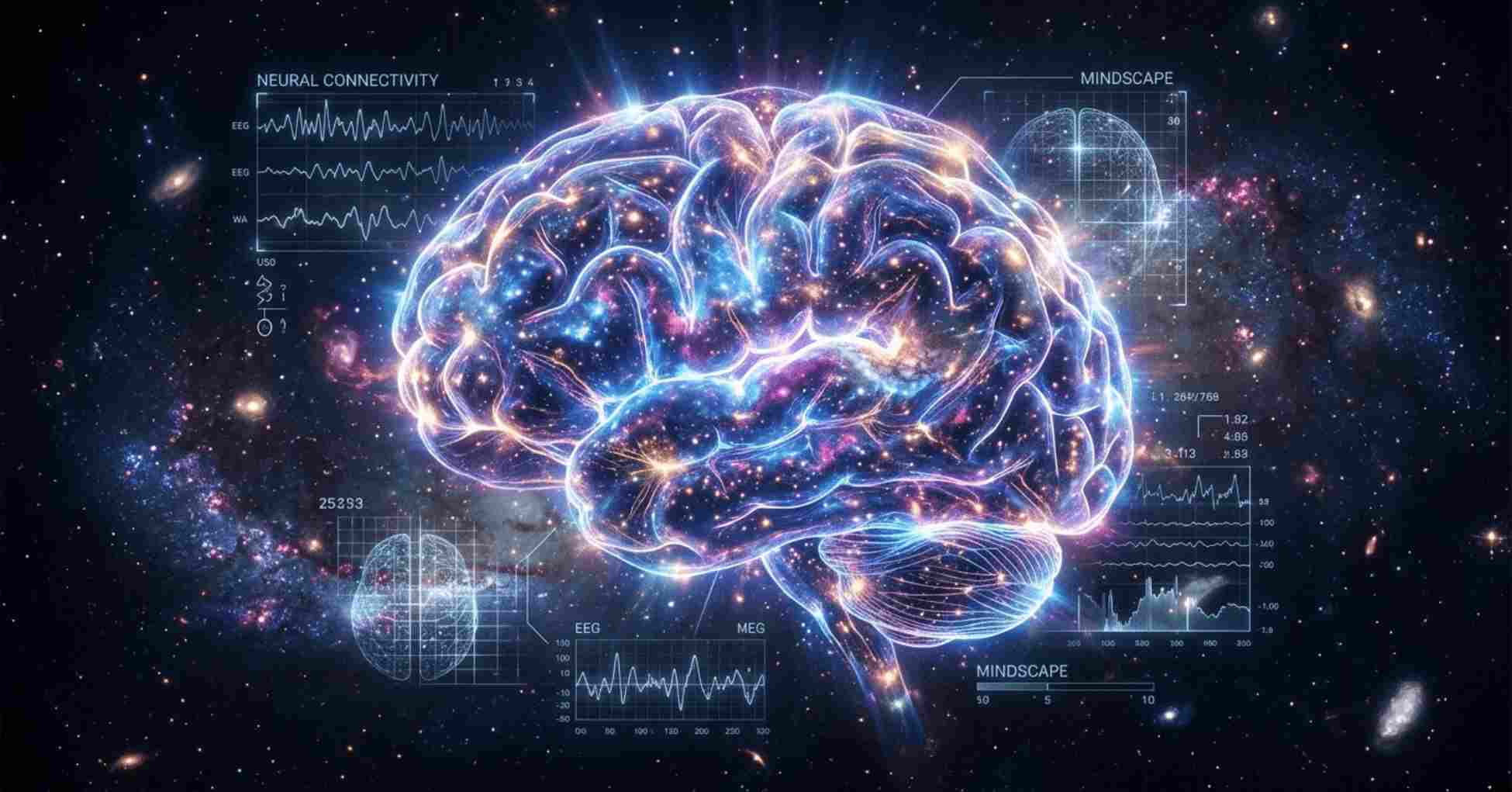
Mindscape: Exploring the Secrets of the Human Mind
The human brain is the most complex structure ever discovered in the known universe. Scientists, neurologists, and philosophers have spent centuries trying to understand it, yet the deeper they look, the more mysteries they find. From the nature of consciousness to the limits of modern brain imaging technology, the mindscape of human thought remains one of science’s greatest unsolved frontiers.
Table of Contents
Mindscape: How the Human Brain Processes the World Around Us
The human brain contains approximately 86 billion neurons, each connected to thousands of others through synapses that transmit signals at remarkable speed. These neurons are responsible for everything from controlling basic motor functions to generating complex emotions, memories, and abstract thought. The sheer scale of these connections makes the brain extraordinarily difficult to map, let alone fully understand.
For decades, neuroscientists have used tools ranging from early anatomical dissection to modern neuroimaging technologies like functional MRI and PET scans. These tools have revealed fascinating details about how different brain regions operate, but they still fall short of explaining the complete picture of human cognition and awareness.
The Mystery of Human Consciousness Science Cannot Yet Explain
Perhaps the deepest mystery within the mindscape of human experience is consciousness itself. Despite its central role in everything we think, feel, and perceive, consciousness remains one of the least understood phenomena in all of neuroscience.
How does the physical brain generate subjective experience? What is the relationship between neural activity and the inner world of thought and feeling? These questions have puzzled researchers for generations. Theories range from the idea that consciousness emerges from complex neural interactions to more controversial proposals suggesting it may be a fundamental feature of the universe itself. The so-called hard problem of consciousness, a term coined by philosopher David Chalmers, continues to resist every scientific attempt at a definitive answer.
Why Modern Neuroscience Still Cannot Fully Map the Human Mind
One of the greatest obstacles to understanding the mindscape of the brain is the current limitation of available technology. Even the most advanced neuroimaging systems capture snapshots of brain activity rather than real-time, neuron-level detail. These images provide valuable data, but they are far from revealing the brain’s full complexity as it actually operates from moment to moment.
The brain’s neuroplasticity adds another layer of challenge. The brain continuously rewires itself in response to learning, experience, and environment. Understanding how memories form and dissolve, how skills are acquired, and how trauma reshapes neural pathways requires not only better technology but entirely new theoretical frameworks that can account for the brain’s constantly shifting architecture.
The Ethical Boundaries of Human Brain Research
Studying the living human brain presents significant ethical challenges that limit the scope of scientific investigation. Direct experimentation on human neural tissue raises serious concerns, and while animal studies provide useful insights, they cannot fully replicate the complexity of human cognition and consciousness.
These ethical constraints push researchers toward indirect methods, computational models, and large-scale data analysis. While powerful, these approaches inevitably simplify the brain’s true nature. Balancing scientific ambition with ethical responsibility remains one of the defining tensions in modern neuroscience research.
The Future of Mindscape and Brain Science
Despite these challenges, brain science is advancing faster than at any point in history. Emerging fields like neuroinformatics, which combines neuroscience with artificial intelligence and big data, are opening new possibilities for detecting patterns that traditional methods could never reveal.
In 2025, scientists at the National Institutes of Health confirmed that the adult human brain can generate new neurons even in people as old as 78, overturning a long-held assumption in neuroscience. Researchers also identified a reality signal in the fusiform gyrus region of the brain that helps distinguish imagination from actual perception, a discovery with major implications for understanding memory, hallucination, and consciousness.
Interdisciplinary collaboration between neuroscientists, psychologists, engineers, philosophers, and data scientists is now considered essential to progress. No single field can crack the
alone. The future of brain research depends on combining these perspectives into a unified approach.
Frequently Asked Questions About Mindscape and the Human Brain
Q: What are the biggest human brain discoveries of recent years?
Scientists at the National Institutes of Health confirmed in 2025 that adult human brains can generate new neurons even at age 78, a process called neurogenesis. Researchers also discovered a reality signal in the fusiform gyrus region of the brain that helps distinguish imagination from actual vision, overturning decades of neuroscience assumptions.
Q: How does human consciousness science explain our thoughts and dreams?
According to research published in Philosophical Transactions of the Royal Society B, consciousness may be a basic cognitive process shared across many animal species, not uniquely human. Studies in 2025 also revealed that psychedelic compounds rapidly reorganize brain networks, dissolving rigid thought patterns linked to depression, trauma, and addiction.
Q: What does neuroscience reveal about how the human mind works?
The human brain contains 86 billion neurons connected by roughly 100 trillion synapses, making it one of the most complex structures in the known universe. Princeton University research in 2025 showed the brain reuses modular cognitive building blocks across many different tasks, explaining how humans efficiently learn and adapt throughout life.
Q: Can the human mind be physically changed by science?
Yes. RNA based therapies are now showing proof of concept for autism related gene mutations according to 2025 neuroscience research. Stem cell derived brain organoids are also helping scientists at leading universities test new treatments for epilepsy, early onset neurodegeneration, and cognitive decline.
Q: What secrets of the human mind remain unexplained by science?
Consciousness remains the single biggest unsolved mystery in neuroscience. The Allen Institute confirms scientists still cannot fully explain how 86 billion neurons produce subjective experience, why humans dream, how memory retrieval happens in milliseconds, or what intelligence actually means at a biological level.
Q: How many neurons does the human brain have?
The human brain contains approximately 86 billion neurons, roughly equal to the number of stars in the Milky Way galaxy. These neurons are connected by an estimated 100 trillion synapses, creating the most complex known object in the entire universe.
Related Articles May you like them.
- Exploring The Wonder Of Children Who Remember Past Lives
- Revolutionary Lab-Grown Human Skin Offers New Hope
- Neutrinos Explained: The Ghost Particles Passing Through Your Body Right Now
- Brainoware: The Shocking Rise of the Living Computer
Conclusion
The human mindscape remains one of the greatest frontiers of scientific exploration. While neuroscience has made remarkable progress in understanding how different regions of the brain function, the deepest mysteries still remain out of reach. From the unsolved puzzle of consciousness to the ethical boundaries of brain research and the limitations of current technology, the journey to fully understand the human mind is far from over. The rewards that await, from better treatments for neurological conditions to a deeper understanding of what it means to be human, make this one of the most important scientific pursuits of our time.
Author
Mubashir Razzaq is a science and mystery writer at StrangeHappen.com specializing in scientific discoveries, ancient mysteries, space exploration, and unexplained phenomena, turning complex research into accurate, engaging stories for curious readers worldwide.