

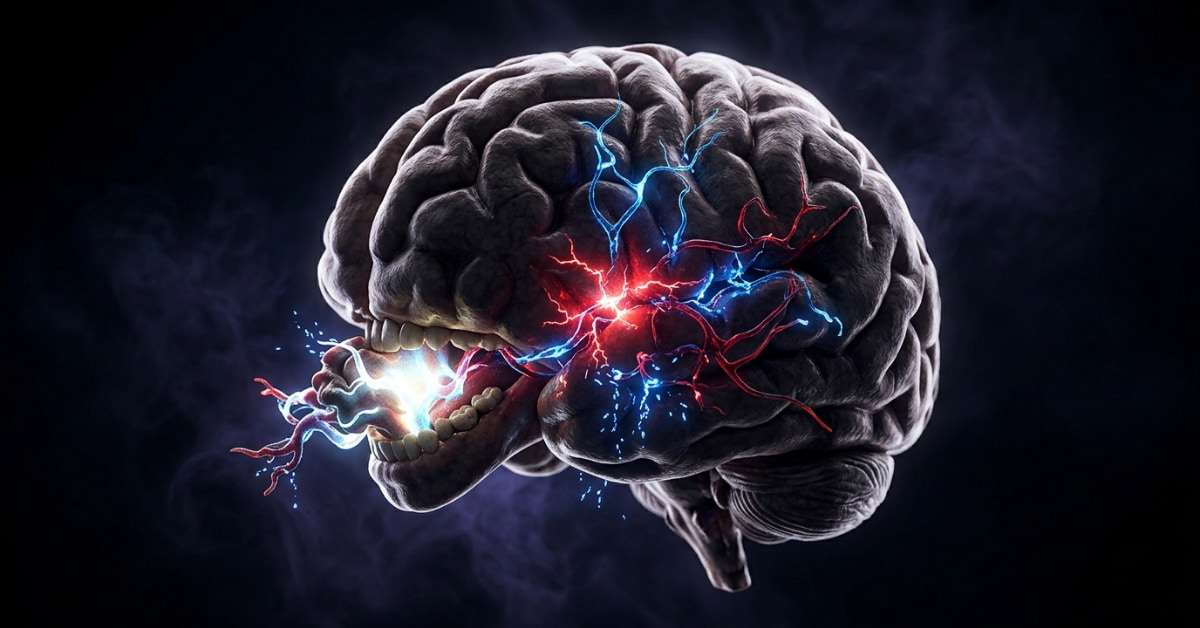
Somewhere in your skull, right now, Somewhere in your brain right now, a specialized cell may be engulfing cellular debris or helping remove an unwanted piece of a neural connection. It is not a tumor. It is not damage. It is one of the strangest, most necessary things your body does, and most people go their entire lives without knowing it happens at all.
The phrase “brain eating itself” sounds like something out of a horror movie, but it describes a real, documented biological process called phagocytosis. Neuroscientists have watched it happen under the microscope, tracked it in sleep-deprived brains, and even caught it happening in the brains of marathon runners. If you have ever typed does the brain eat itself into a search bar after seeing a viral post, or wondered does your brain eat itself when you skip sleep, this piece answers both questions with the actual named studies behind them, not just the headline.
Quick Answer
Yes, in a real but limited sense. Resident immune cells called microglia, along with astrocytes that can also participate in phagocytic activity, continuously engulf and digest dead cells, damaged proteins, and worn-out synapses in a process called phagocytosis. This is normal, ongoing maintenance, not the brain consuming itself as a whole. The process becomes a genuine concern only when it is pushed into overdrive, as research suggests happens with chronic sleep deprivation or advanced age.
What Does the Brain Actually “Eat”? Related but Different Processes
“Brain eating itself” is popular shorthand that gets applied loosely to several distinct biological processes, and mixing them up is where a lot of the confusion online comes from. It is worth being precise about which one is which before going further.
Phagocytosis is a cell engulfing something outside itself, whether that is a bacterium, a dead cell, or a worn synapse. This is the process at the center of this article, carried out mainly by microglia, and it is the real, complete answer to how does the brain eat itself as a mechanism. Autophagy is a different mechanism entirely: it happens inside a single cell, where the cell breaks down and recycles its own internal components using structures called lysosomes. Both processes involve “eating” at the cellular level, but phagocytosis is one cell eating another cell or debris, while autophagy is a cell eating parts of itself. The Portland Press review of this topic covers both, but the popular “brain eating itself” headlines almost always refer to phagocytosis, specifically microglial and astrocytic activity, not autophagy.
Synaptic pruning is a specific outcome of phagocytosis, referring to the removal of weak or unused connections between neurons rather than whole cells. Neuroinflammation is a broader immune response in brain tissue that can involve activated microglia but is not the same thing as normal phagocytic housekeeping. Glymphatic clearance, covered in the sleep section below, is a separate, fluid-based waste-removal system that flushes soluble proteins like beta-amyloid out of the brain through cerebrospinal fluid, rather than cells physically engulfing debris. And myelin metabolism, covered in the marathon section, describes how the fatty insulation around nerve fibers is built up and broken down for energy, which is a lipid-metabolism process, not phagocytosis at all. All five show up somewhere in the “brain eating itself” conversation, and understanding why does the brain eat itself in each of these distinct ways is the difference between an accurate explanation and a viral oversimplification.
What “Brain Eating Itself” Actually Means
The technical term is phagocytosis, from the Greek words for “eating” and “cell.” It describes any process where a cell engulfs and digests something smaller, whether that is a bacterium, a dead cell, or a worn-out piece of another cell.
Inside the brain, this job falls mostly to microglia, a type of immune cell that makes up roughly ten percent of all brain cells. Microglia patrol the brain constantly, and when they find damaged neurons, leftover cellular debris, or misfolded proteins, they engulf and break them down. Biochemist Guy C. Brown of the University of Cambridge, co-author of a 2019 review published in Portland Press’s journal The Biochemist, described this as the brain “continuously changing its microstructure” by eating parts of itself, not as a malfunction but as routine maintenance.
So when someone asks does the brain eat itself, the honest answer is yes, but not in the way the phrase implies. It is closer to a cleaning crew than a self-destructive spiral, and the process is happening in your brain at this exact moment.
Plenty of people also ask can your brain eat itself in a sudden or dangerous way, out of nowhere, with no trigger at all. Under normal, healthy conditions, no. The process is selective, tightly regulated, and reversible, which is a very different picture from the runaway self-destruction the phrase suggests.
Meet Microglia: Your Brain’s Immune Cleanup Crew
Microglia were once dismissed as passive support cells, the neural equivalent of background staff. That view is outdated. Modern brain imaging has shown microglia actively surveying their surroundings, extending and retracting thin branches to scan nearby tissue dozens of times per hour.
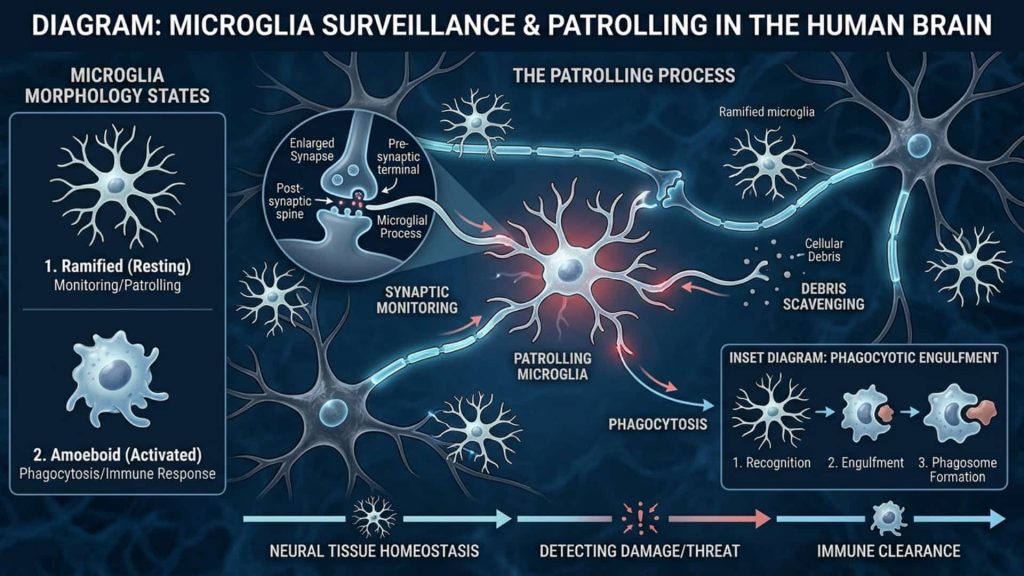
When a microglial cell detects an “eat me” signal, a chemical marker exposed on the surface of a damaged or unwanted structure, it moves in, wraps around the target, and absorbs it. This is how the brain clears dead cells after injury, removes invading pathogens, and disposes of the sticky protein clumps linked to neurodegenerative disease.
It is worth noting this is your own brain cleaning itself on purpose, which is a very different story from cases where an outside organism hijacks brain function for its own ends, like the fungus that turns ants into “zombies” or the parasites behind reports of mind-controlled bees. Phagocytosis is maintenance from the inside; those are hostile takeovers from the outside.
How Phagocytosis Works Inside Your Skull
The process is not random. Microglia rely on specific receptors, including one called MERTK, to recognize which structures are marked for removal and which are healthy and should be left alone. A related immune cell type, astrocytes, was also shown to join in this cleanup work, particularly around synapses, the tiny junctions where neurons pass signals to each other.
This matters because synapses are not fixed for life. The brain is constantly pruning weak or unused connections and reinforcing strong ones, a process that depends directly on this eating-and-clearing mechanism. Without it, the brain would accumulate damaged material the same way a house never taken out the trash would.
This selectivity is also the real answer to whether can your brain eat itself accidentally. Microglia and astrocytes only move on structures carrying a specific “eat me” marker, so healthy, functioning synapses are normally left alone. The exceptions, covered next, show up under sleep loss, extreme exertion, and aging, where that selectivity starts to loosen.
Does Your Brain Eat Itself Without Sleep?
This is where the phrase jumped from a niche biology term into a viral headline, and it is also where a lot of current articles on the topic stop short. Search does the brain eat itself without sleep and you will find dozens of posts repeating the same claim without naming a single study. The story actually traces back to one specific, named piece of research, not a vague internet rumor.
The 2017 Study That Started It All
In 2017, neuroscientist Michele Bellesi, working with sleep researchers Giulio Tononi and Chiara Cirelli at the University of Wisconsin-Madison’s Center for Sleep and Consciousness, published a study in the Journal of Neuroscience examining what happens inside the brains of chronically sleep-deprived mice. Using high-resolution electron microscopy, the team found that astrocytes ramped up their phagocytic activity after just a few hours of lost sleep, and increased it further after several days of chronic sleep restriction.
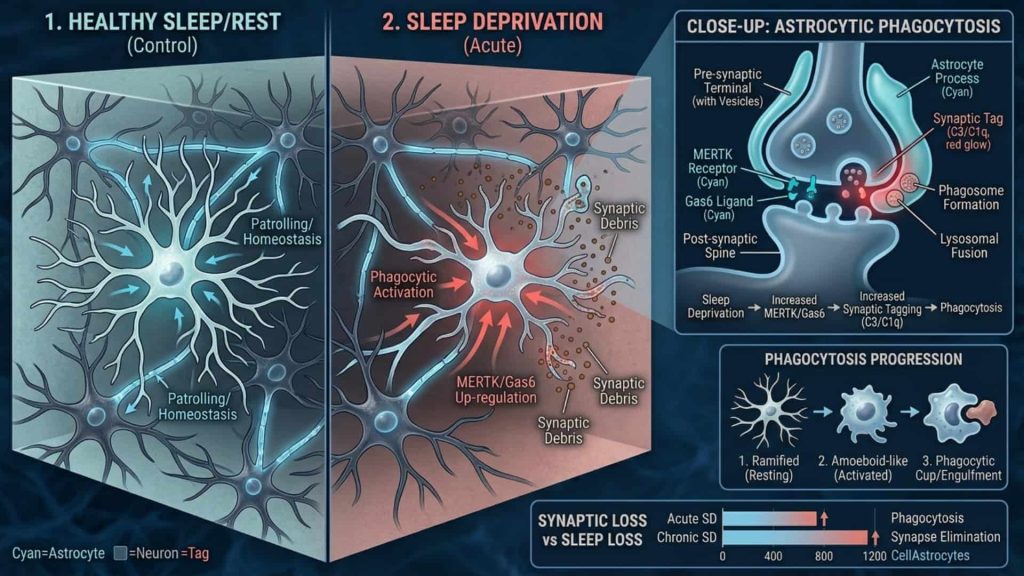
More strikingly, the researchers observed that microglia in the chronically sleep-deprived mice began showing signs of activation typically associated with aging and inflammation, not simple housekeeping. Bellesi’s team concluded that while some synaptic cleanup during sleep loss is a normal stress response, sustained sleep deprivation appeared to push microglia toward a more aggressive, less selective state. This single study is the real evidence base behind almost every headline asking can your brain eat itself if you skip sleep, and it is far more specific and measured than most of those headlines let on.
What This Means for Human Brains, Not Just Mice
Mice are not people, and no study has directly observed this same electron-microscopy-level process in a living human brain. But related human research lines up with the mouse findings. A 2013 study out of the University of Rochester Medical Center found that the brain’s glymphatic system, its waste-clearance network, works far more efficiently during sleep, flushing out metabolic byproducts including beta-amyloid, the protein linked to Alzheimer’s disease.
A 2020 study published in Neurology found that just one night of total sleep deprivation raised tau protein levels in participants’ brains, another marker tied to Alzheimer’s risk. And a large 25-year NIH-linked cohort study found that adults who slept fewer than six hours a night in midlife had a roughly 30 percent higher risk of developing dementia later in life. Put together, this human evidence is what makes brain eating itself sleep deprivation a genuinely researched connection rather than a scary internet exaggeration, even without a direct electron-microscopy study in living human tissue.
So does the brain eat itself without sleep in some dramatic, literal sense? No credible neuroscientist claims your brain shrinks overnight after one bad night’s rest. What the evidence actually supports is narrower and, in its own way, still remarkable: chronic sleep loss appears to push the brain’s normal cleanup crews into overdrive, and that overactive cleanup may come at the cost of healthy synapses, not just damaged ones.
It is worth separating the two questions people usually mean when they ask does your brain eat itself without sleep. One is whether occasional short nights cause harm, and the current evidence says no. The other is whether years of chronic, severe sleep restriction could contribute to lasting synaptic loss, and that is the question researchers are still actively working to answer in humans.
Can Your Brain Eat Itself During a Marathon?
If the sleep-deprivation story is the most viral version of “brain eating itself,” the newest chapter comes from an unexpected source: distance running.
The Myelin Discovery
In April 2025, a research team led by Carlos Matute of the University of the Basque Country, working with Pedro Ramos-Cabrer of CIC biomaGUNE, published a study in Nature Metabolism that scanned the brains of ten marathon runners before and after a 42-kilometer race. Using MRI to measure myelin water fraction, a proxy for the fatty insulation that wraps around nerve fibers, the researchers found a measurable drop in myelin content across twelve regions of white matter within 48 hours of finishing the race.
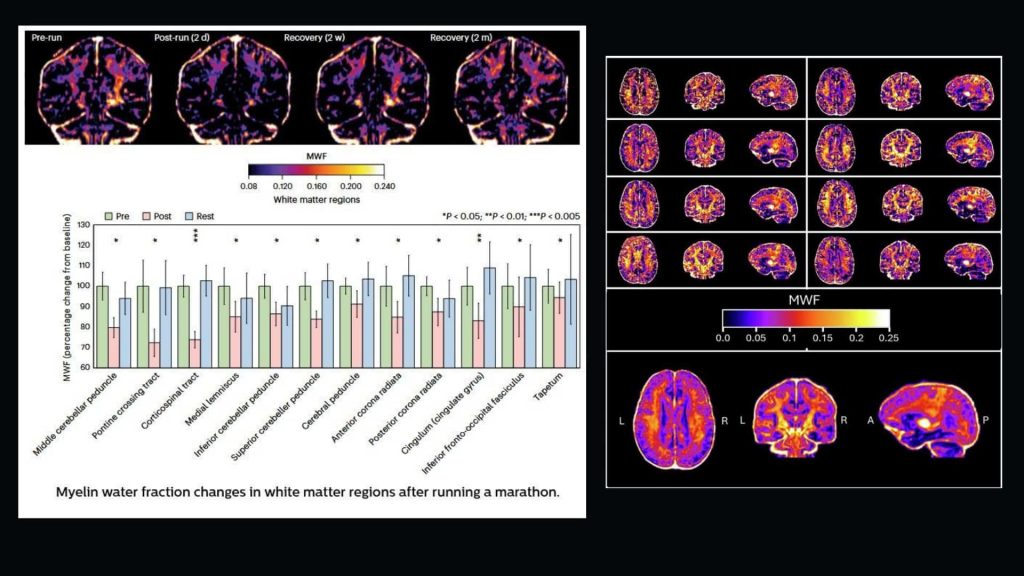
The affected regions were tied to motor coordination, sensory processing, and emotional integration, all functions runners commonly report feeling foggy on right after a race. Matute’s team proposed that when blood glucose runs critically low during extreme endurance exercise, some brain cells may break down myelin lipids and use them as backup fuel, a hypothesis they termed “metabolic myelin plasticity.” It is a very different mechanism from the sleep-deprivation story above, but it is the same underlying idea of brain eating itself myelin marathon researchers now have real imaging evidence for, not speculation.
The encouraging part of the finding is the recovery timeline. Two weeks after the race, follow-up scans on a subset of runners showed myelin levels rebounding substantially, though not yet back to pre-race levels. By the two-month mark, myelin had recovered fully in every affected brain region. In other words, can your brain eat itself during a marathon? In a narrow, reversible sense, the evidence says something like it, temporarily and safely, may be exactly what is happening.
It is worth being upfront about the limitations here. This was a small pilot study of ten runners, and the two-week and two-month follow-up scans covered only two and six of those runners respectively, not the full group. The researchers themselves were explicit that the finding is not a warning: they stated that using and replacing myelin as an energy reserve during a marathon is beneficial, not harmful, because it exercises the brain’s metabolic flexibility rather than damaging it.
Is My Brain Eating Itself as I Age?
Phagocytosis does not stay constant across a lifetime. Research from the University of Cambridge and the University of Barcelona, published in 2024 in the journal Aging, found that aging brains in mice show increased microglial phagocytosis of synapses, driven partly by a receptor called P2Y6R.
Brain shrinkage and synapse loss are already known to correlate with age-related memory decline, a pattern that affects roughly half of adults over 60. The Cambridge-Barcelona team found that blocking the P2Y6R receptor in mice reduced this age-related synapse loss and preserved more memory function, suggesting the receptor may be a future target for slowing cognitive decline.
This is also where phagocytosis connects most directly to Alzheimer’s disease. The same research group found that knocking out P2Y6R protected mice against memory loss triggered by amyloid-beta, the sticky protein that builds up in Alzheimer’s brains. All of this evidence comes from mouse models, and no human trial has yet tested whether blocking P2Y6R affects memory or synapse loss in people. So is my brain eating itself as I get older? Based on the mouse evidence available, something in that direction is a reasonable, well-supported hypothesis for how the human brain likely ages too, but it remains an extrapolation from animal research rather than a directly confirmed human mechanism.
Why It Matters
Understanding phagocytosis reframes a scary-sounding phrase into something closer to routine biological maintenance, most of the time. The brain uses roughly a fifth of the body’s total energy supply, and all that activity generates cellular waste that has to go somewhere.
Without a functioning cleanup system, damaged proteins and dying cells would accumulate, contributing to inflammation and, over time, neurodegenerative disease. The same mechanism that clears this debris is also responsible for synaptic pruning, the process that shapes the brain during childhood and adolescence and keeps it adaptable into adulthood.
It is worth contrasting this with what happens when brain-clearing goes catastrophically wrong. Chronic wasting disease, the so-called “zombie deer disease,” is a prion illness that turns brain tissue spongy by misfolding proteins the brain’s own cleanup crews cannot process correctly. It is a useful reminder that phagocytosis being healthy and selective is exactly what stands between normal brain maintenance and that kind of outcome.
Framed this way, can your brain eat itself in a way that actually hurts you becomes a question of degree and context, not a yes-or-no trap. The catch, based on the sleep and aging research above, is that this system has a tipping point. Enough sleep, and normal aging support a measured, selective version of this process. Chronic sleep deprivation and unchecked inflammation appear to push it into a more indiscriminate mode that costs healthy tissue, not just damaged tissue.
If you are lying awake wondering is my brain eating itself right now, the most useful takeaway from the research is not fear, it is context: a well-rested, healthy brain runs this process in the background without incident, and the version worth watching for is the chronic, poorly regulated kind.
Future Research
Several open questions remain, and researchers are candid that this is an active, evolving field rather than settled science. Scientists do not yet know whether the astrocytic phagocytosis seen in sleep-deprived mice translates directly to humans at a similar scale, since no ethical study can replicate Bellesi’s electron-microscopy methods in living human brain tissue.
Matute’s team has said they want to study a larger and more diverse group of endurance athletes to confirm whether the myelin-as-fuel effect holds across different distances, ages, and fitness levels, since the original brain eating itself myelin marathon dataset included only ten runners. Researchers studying P2Y6R inhibition are still years away from any human clinical trial, and it remains unclear whether targeting this receptor in people would be safe or effective.
The broader field of brain science is moving fast on other fronts too. Lab-grown brain tissue, like the organoid-based Brainoware living computer system, and hardware like China’s first commercial brain-computer interface, are both giving researchers new, non-invasive ways to study how living neural tissue behaves, which may eventually make questions like these easier to answer directly in human tissue rather than by inference from mice.
Related Topics
- The Mindscape: a closer look at how the brain constructs the sense of self this article keeps circling back to.
- Zombie Deer Disease: what happens when a brain’s own cleanup system cannot keep up with misfolded proteins.
- Brainoware: The Living Computer: lab-grown brain organoids now being used to process real data.
- China’s First Commercial Brain-Computer Interface: how brain hardware is moving from lab to market.
- Mind-Controlled Bees: The Truth: a stranger, hostile version of brain control from the outside.
- The Pam Reynolds Case: a famous, medically documented account of consciousness during a near-death brain surgery.
Key Takeaways
- Brain eating itself is a real, documented process called phagocytosis, carried out mainly by immune cells called microglia and, in some cases, astrocytes.
- Under normal conditions, this is routine maintenance: clearing dead cells, misfolded proteins, and worn-out synapses.
- A landmark 2017 study found that chronic sleep deprivation pushes astrocytes and microglia toward more aggressive, less selective cleanup, potentially removing healthy synapses along with damaged ones.
- A 2025 Nature Metabolism study found a temporary reduction in MRI-derived myelin-water fraction after marathon running; researchers proposed that myelin lipids may serve as an emergency energy reserve.
- Aging increases microglial phagocytosis of synapses through pathways like the P2Y6 receptor, linking this process directly to age-related memory decline and Alzheimer’s risk.
- No credible research supports the idea that this happens in a sudden, irreversible, or dangerous way under normal circumstances.
Frequently Asked Questions About Brain Eating Itself
Does the brain eat itself?
Yes, in a real biological sense. Immune cells called microglia and, in some conditions, astrocytes continuously engulf and remove dead cells, damaged proteins, and worn synapses, a process called phagocytosis that keeps the brain functioning normally.
Can your brain eat itself from lack of sleep?
Chronic sleep deprivation has been shown, in a 2017 mouse study, to increase phagocytic activity in astrocytes and microglia, sometimes removing healthy synapses rather than only damaged ones. It is not a sudden or catastrophic event, but a gradual shift tied to poor sleep over time, and it is a good example of why brain eating itself sleep deprivation research gets cited so often in this debate.
Does the brain eat itself without sleep every single night, or only during extreme sleep loss?
The research points to chronic, repeated sleep restriction, not occasional short nights. Bellesi’s 2017 study measured effects after days of sustained sleep deprivation in mice, not a single missed bedtime.
Is my brain eating itself if I don’t sleep well for one night?
No single sleepless night causes noticeable damage. The research pointing to increased phagocytic activity involved chronic, repeated sleep restriction over days, not an isolated bad night.
Can your brain eat itself permanently?
No. Every study covered here, from sleep deprivation to marathon running to aging, describes a process that is either reversible, regulated, or both. There is no credible evidence of the brain eating itself in a permanent, uncontrolled way outside of severe neurodegenerative disease.
Does the brain eat itself when running a marathon?
A 2025 study found that marathon runners showed a temporary drop in brain myelin within 48 hours of finishing a race, likely because the brain used myelin lipids as backup fuel when glucose ran low. Myelin levels fully recovered within two months.
Why does the brain eat itself as people age?
Mouse research suggests that aging can increase microglial activity around synapses through pathways involving P2Y6R. Researchers are investigating whether similar mechanisms contribute to human cognitive aging and Alzheimer’s disease.
Is brain eating itself dangerous?
Under normal, regulated conditions, no. It is a necessary maintenance process. It becomes a concern only when it is excessive or poorly targeted, as seen in chronic sleep deprivation or advanced neurodegenerative disease.
What cells are responsible for the brain eating itself?
Microglia are the primary phagocytic cells in the brain, supported by astrocytes, which were shown in 2017 research to also engulf synaptic material, especially during sleep loss.
Is phagocytosis the same as the brain eating itself?
Yes. Phagocytosis is the scientific term for this same process, involving cells engulfing and digesting smaller cells, debris, or proteins.
Source References
- Bellesi, M. et al. (2017). Sleep Loss Promotes Astrocytic Phagocytosis and Microglial Activation in Mouse Cerebral Cortex. Journal of Neuroscience, 37(21), 5263-5273.
- Ramos-Cabrer, P., Cabrera-Zubizarreta, A., Matute, C. et al. (2025). Reversible reduction in brain myelin content upon marathon running. Nature Metabolism, 7, 697-703.
- Allendorf, D., Popescu, A., Brown, G.C. (2019). How the brain eats itself. The Biochemist, Portland Press, 41(1), 32-35.
- Puigdellívol, M., Brown, G.C. (2024). Stopping the aged brain from eating itself. Aging (Albany NY), NIH/PMC.
- University of Rochester Medical Center (2013). To Sleep, Perchance to Clean.
- Shokri-Kojori, E. et al. (2020). One night of sleep deprivation raises tau levels. Neurology.
- National Institute on Aging / NIH Research Matters (2021). Lack of sleep in middle age may increase dementia risk.
About the Author
Evan Brooks is a science and history writer for Strangehappen.com, specializing in archaeology, space exploration, ancient civilizations, and emerging scientific discoveries. His work focuses on translating complex research into engaging, evidence-based stories that help readers understand the mysteries of our world and beyond.