
The Hammer-headed Bat: Nature’s Strange and Captivating Flying Warm-blooded animal
The Hammer-headed Bat (Hypsignathus monstrosus) is a peculiar and ghostly animal group tracked down in Focal Africa. Known for its unmistakable mallet molded head and enormous size, it’s the biggest bat in Africa, with guys emanating calls during mating. Essentially natural product eaters, assume a fundamental part in seed dispersal, however, their strange appearance and sounds provide them with a quality of secret.
Hammer-Headed Bat appearance depicting highlights
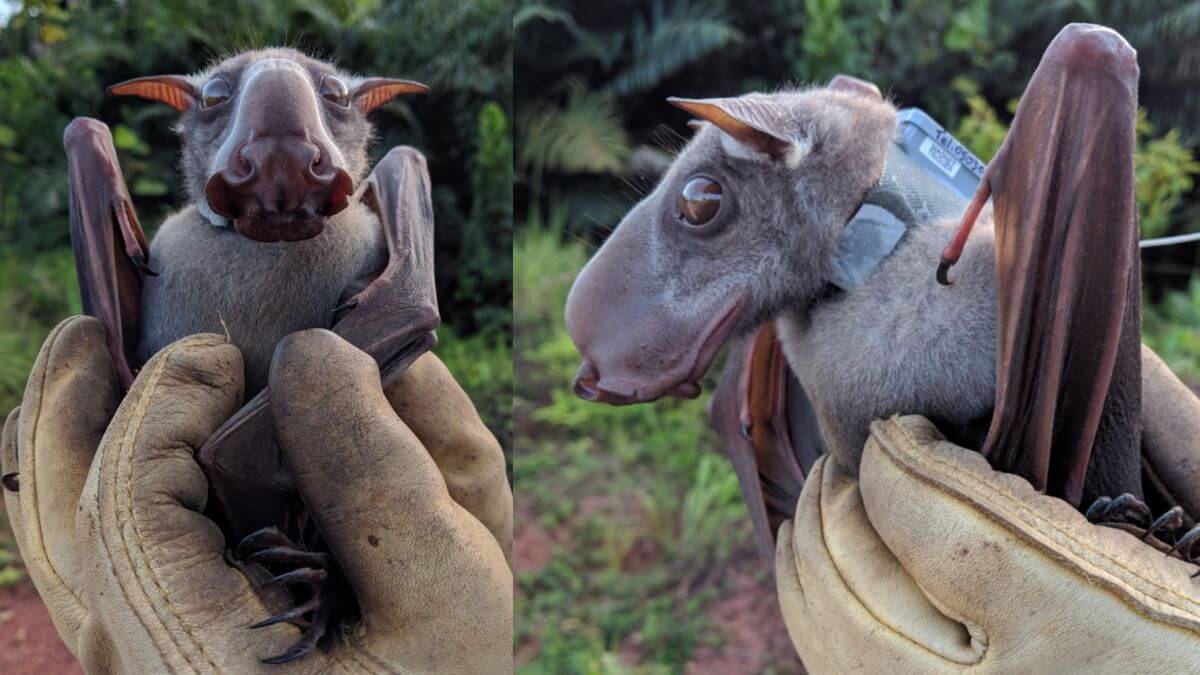
The most striking component of the male Sledge-headed Bat is its enormous, hammer-formed head, intended to enhance its vocal calls. Guys are essentially bigger than females, with wingspans up to 1 meter (3.3 feet) and gauging as much as 420 grams (almost 1 lb). Conversely, females have more regular bat-like heads and are marginally more modest in size.
Hammer-headed bat behavior and unique vocalizations
One of the most entrancing parts of the Hammer-headed Bat is its extraordinary mating custom. Guys accumulate in bunches known as “leks” to shout to females utilizing clearly, sounding vocalizations. These calls can be heard up to a pretty far, making them the most intense bats in Africa. The guy’s particular head shape assumes an urgent part in resounding these profound sounds.
Hammer-headed Bat of the Rainforest
The Hammer headed Bat flourishes in the thick rainforests of Focal Africa. Its essential natural surroundings incorporate regions close to waterways, marshes, and timberland edges. These bats are frugivores, with an eating routine comprising primarily of natural products, particularly figs. They are known to fly significant distances looking for food, making them pivotal for seed dispersal in their environments.
Hammaer-headed protection a creature assortment in decline?
While the Hammer-headed Bat isn’t at present imperiled, deforestation and natural surroundings misfortune are likely dangers to its endurance. The annihilation of rainforests for agribusiness and logging lessens the accessibility of reasonable perching and taking care of regions for these bats, jeopardizing their future.
Scary and Interesting facts
Hammer-headed Bats, notwithstanding their to some degree scaring appearance, assume an urgent part in their biological system. Their evening time propensities and scary calls add to the secret of the evening. This makes them one of the most entrancing bat species. These bats assume a critical part in seed dispersal as natural product eaters. Their unmistakable, tormenting vocalizations put them aside, particularly during mating season. Although their enormous, hammer-molded heads might seem to disrupt, they fill an exceptional need, enhancing the sounds utilized for correspondence. Their weird looks and conduct make them both frightening and enthralling animals of nature.
Conclusion
The Hammer-headed Bat is a veritable showing of the assortment and wonder of the normal world. With its interesting appearance and tormenting calls, it catches the creative mind of all who experience it. Like the blobfish, known for its strange appearance, and the lamprey, an interesting jawless fish, the Hammer-headed Bats frequently face misconception because of its one-of-a-kind elements. Essentially, blind snakes, which explore their surroundings without sight, and the Goliath tigerfish, a considerable hunter of the oceanic world, exhibit the variety of life on The planet.
This bat assumes an urgent part in keeping up with the sensitive equilibrium of its environment. As a vital pollinator and irritation regulator, it contributes fundamentally to the soundness of its current circumstance. Notwithstanding, deforestation and environmental annihilation progressively compromise its future and the general biodiversity of its territory. It is a higher priority than at any time in recent memory to appreciate and safeguard this surprising species, which remains a living image of nature’s unbelievable strength and imagination. By bringing issues to light about its biological significance and pushing for protection endeavors, we can assist with guaranteeing that people in the future can appreciate and gain from these captivating animals.