
The Eight-Eyed Spider revelation denotes an astonishing expansion to the different spider species tracked down in India. Its uncommon capacity to adjust to the thick, sticky timberlands of Kerala permits it to flourish in its current circumstance, making it a fundamental hunter in controlling spider populaces. Researchers are especially charmed by its particular vision and toxin, which assist it with catching prey productively. This revelation further upgrades how we might interpret the unpredictable biological systems in the area.
Eight-Eyed Spider: A Unique Discovery
The Eight-Eyed Spider, found in mid 2024 in Kerala, India, stands apart for its one of a kind life systems and hunting strategies. Known for its outstanding vision and speed, it flourishes in the thick woods climate. This new species contributes significant experiences into savage way of behaving, toxin properties, and environmental equilibrium.
Anatomy
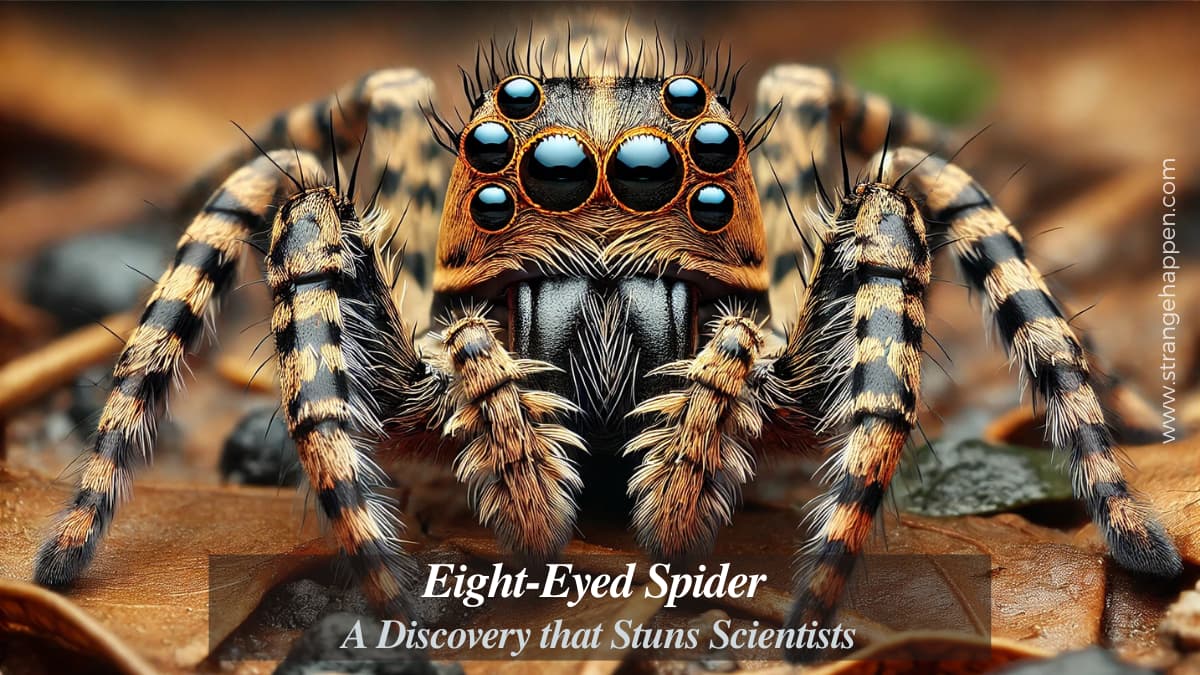
The Eight-Eyed Spider conservative body shape improves its speed and hunting effectiveness. Its eight eyes, organized in two lines, give a wide field of vision, assisting it with identifying even the smallest development. The long, strong legs are extraordinarily intended for quick speed increase, empowering it to pursue and catch prey quickly. Moreover, its body is covered with fine hairs, which help in detecting vibrations, further supporting its hunting and cautious methodologies. This blend of elements makes it an impressive hunter in its woodland climate.
Life Cycle
Like most spider’s, the existence pattern of the Eight-Eyed Spider starts with the laying of eggs in silk-wrapped sacs. Following half a month, the adolescents hatch and look like more modest variants of the grown-ups. As they develop, they go through a few shedding stages prior to arriving at development.
- Egg Stage: Female watches the egg sac until the adolescents hatch.
- Adolescent Stage: Adolescents shed on numerous occasions as they develop.
- Adulthood: Completely created grown-ups equipped for propagation and hunting.
- Female Life span: Females will quite often live longer than guys.
- Multiplication: In the wake of mating, females lay new eggs to begin the cycle once more.
Location and Habitat
The Eight-Eyed Spider’s has been distinguished in the leaf litter of Kerala’s thick timberland regions. It flourishes in damp, concealed conditions where its prey is bountiful. The thick foliage offers an ideal hunting ground and disguise.
- District: Kerala, Southern India.
- Living space: Damp, timberland floors with thick leaf litter.
Venom and Its Effects
The spider’s toxin is utilized to quickly immobilize its prey. While it isn’t thought of as perilous to people, the toxin’s properties are being read up for likely clinical applications.
- Toxin Type: Neurotoxic, powerful on little spider’s.
- Prey Immobilization: Toxin deadens prey quickly for more straightforward catch.
- Clinical Exploration: Progressing studies investigate conceivable remedial advantages, like torment the board.
- Human Security: Not destructive to people however significant for logical investigation.
Habits and Behavior
This spider is an evening tracker, depending vigorously on its vision and secrecy. It stays disguised during the day, mixing into the leaf litter, and becomes dynamic around evening time, hunting little prey like ants and beetles . It is considered one of the most venomous spiders in the world.
- Action: For the most part nighttime.
- Diet: spider’s basically little ground-tenants.
- Hunting Style: Snare hunter, depends on speedy reflexes.
Family and Taxonomy
The Eight-Eyed Spider’s has a place with the Sparassidae family, otherwise called Huntsman insects. This family is described by quick spider’s with a propensity to chase without networks.
- Family: Sparassidae.
- Normal Family members: Huntsman spider’s known for their spryness and size.
Attacking Mechanisms
The spider uses its sharp visual perception to identify prey developments. It approaches quietly prior to jumping, utilizing its long legs to nail down the prey. The toxin is then infused to rapidly deaden the prey.
- Location: Uses its high level vision to detect prey.
- Trap: Crawls nearer, using covertness.
- Assault: Jumps onto the prey, immobilizing it with toxin.
Defense Mechanisms
In the event of danger, the Eight-Eyed Spider’s depends on its disguise. Its body variety mixes flawlessly with the dry leaf litter, making it almost undetectable to hunters. Whenever found, it might utilize its speed to get away or chomp protectively.
- Essential Guard: Disguise in leaf litter.
- Auxiliary Safeguard: Quick break utilizing its speed.
Fascinating Facts
- New Disclosure: Recognized as another species in 2024, featuring the continuous biodiversity revelations in Kerala.
- Uncommon Vision: Its remarkable eye plan furnishes it with a wide field of vision, supporting hunting.
- Speed: Known for its quick developments, it is quite possibly of the quickest spider in its loved ones.
- Natural surroundings Variation: Impeccably appropriate for leaf-covered timberland floors, where it flourishes in thick, muggy conditions.
- Hunting System: Uses covertness and speed to quickly catch prey.
- Environmental Job: Assumes a significant part in controlling bug populaces, keeping up with the timberland’s equilibrium.
- Research Potential: Its toxin and hunting methods offer important bits of knowledge into clinical and environmental exploration.
These entrancing realities add to the developing interest in the spider’s remarkable variations and its importance inside its biological system.
Ecological Importance
The Eight-Eyed Spider assumes a pivotal part in controlling spider populaces in its natural surroundings. As a top hunter among ground-staying spider’s it keeps up with the natural equilibrium.
Ongoing Research
Studies are continuous to grasp the full degree of this bug’s toxin properties and its possible purposes in medication. Analysts are likewise investigating its hunting designs and natural transformations, adding important information about its biological job.
Conclusion
The Eight-Eyed Spider is a wonderful revelation, displaying the rich biodiversity of India’s woods. Its extraordinary life systems, hunting abilities, and versatile ways of behaving make it an intriguing subject for additional review. As analysts keep on investigating its qualities, this bug might offer bits of knowledge into new clinical medicines and add to how we might interpret ruthless species in backwoods environments.