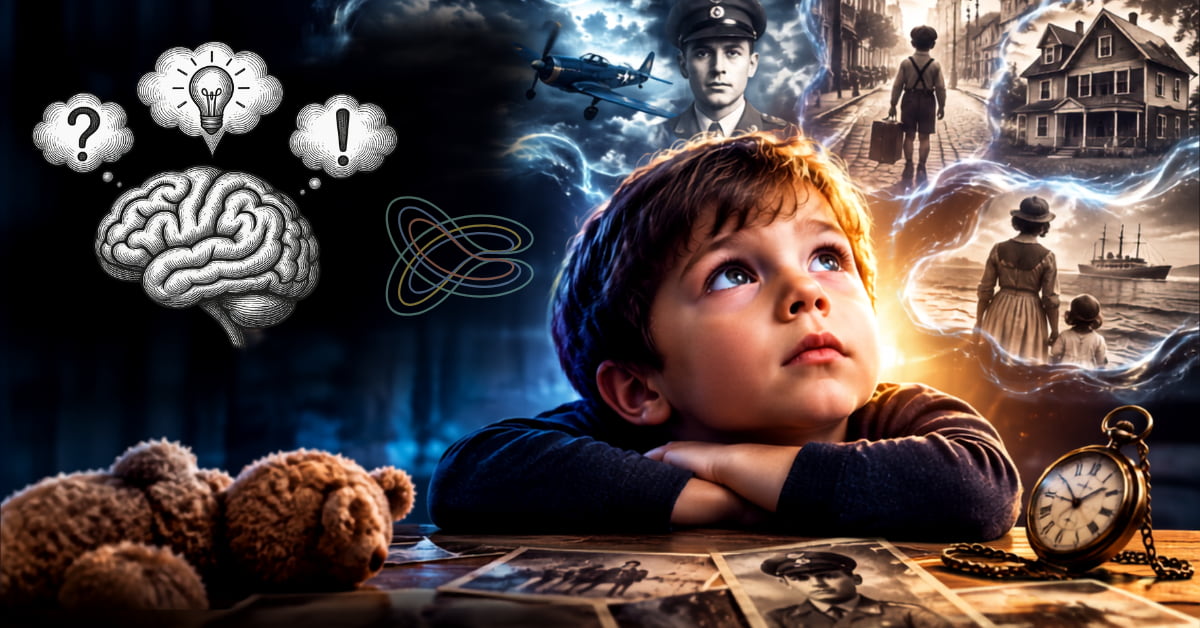
Stories about children who remember past lives have puzzled families and researchers for decades. Some young children describe another life in surprising detail, including names, places, family members, and sometimes the way they believe they died. Psychiatrist Dr. Ian Stevenson spent decades investigating these reports, and the work continues today through Dr. Jim Tucker at the University of Virginia’s Division of Perceptual Studies. Their research has produced a large collection of documented cases, although the question of what these memories actually mean remains open.
Table of Contents
Why People Are Searching This Topic
Search engines register persistent interest in children who remember past lives. People want to know if reincarnation is real or if there is reincarnation evidence. Interest spikes when new research, books, or documentary coverage goes viral. Searches often relate to:
Top reasons people search:
• Documented cases involving names, places, and family details
• University of Virginia reincarnation research findings
• True reincarnation stories described in books and papers
• Scientific explanations for past life memories in children
• Answers to is reincarnation real questions
These topics bridge science, spirituality, and psychology, making them highly engaging.
Characteristics of Past Life Memories in Children
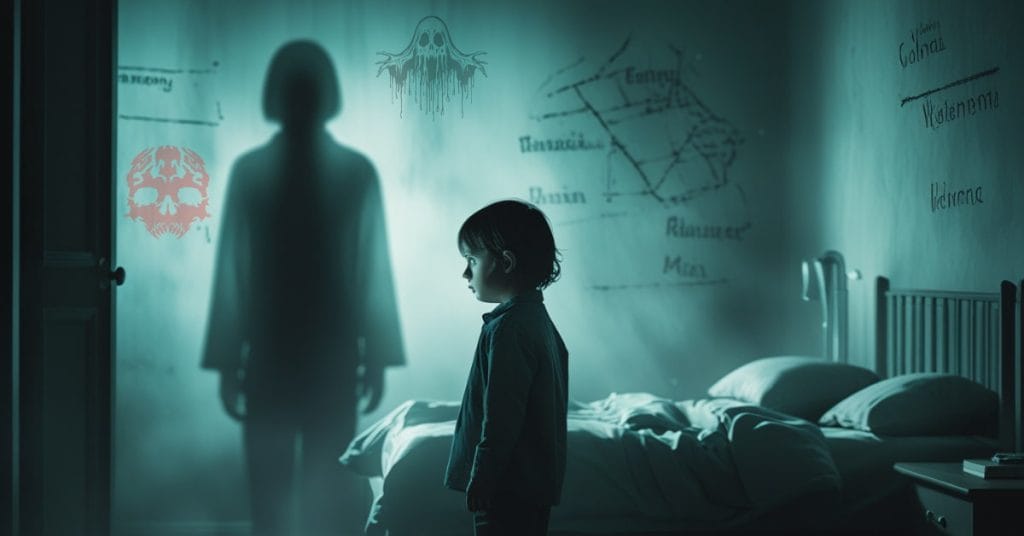
Children who report past life memories often describe similar types of details, including names, places, family members, unusual fears, and memories of how they believe they died. Researchers have noted that these memories are often detailed, emotionally charged, and sometimes linked to physical markers such as birthmarks. These patterns make the phenomenon measurable and suitable for academic study./
Age and Memory Patterns
Many reported cases begin when children are between about 2 and 4 years old. The memories often become less frequent as the child gets older, with researchers commonly noting that the reports tend to fade by around age 6 to 8. This pattern is one reason researchers focus closely on very young children when investigating past-life claims.
Names and Family Details
Some children name people they say they knew in another life, including parents, siblings, friends, or spouses. In some investigated cases, researchers later found people whose names and relationships matched details given by the child. These matches can be striking, although they do not by themselves prove that the information came from a previous life.
Geographic and Environmental Details
Some children have reportedly described towns, houses, streets, or landmarks they said they remembered from another life. In some cases, investigators later found locations that matched parts of the child’s description. Researchers consider these correspondences interesting, but questions about information exposure and how the original statements were recorded still matter.
Modes of Death
Research shows a strong trend: according to Dr. Jim Tucker, about 75 percent of children with past-life memories describe how they died, and of those, roughly 70 percent report dying by unnatural means such as accidents, murder, or combat. Separate studies of Sri Lankan and Lebanese cases by psychologist Erlendur Haraldsson found violent-death rates as high as 76 to 77 percent. Children often recount accidents, drownings, warfare, or other sudden deaths with emotional intensity. Their recollections sometimes include sensory experiences or fear linked to the manner of death, which researchers have confirmed matches historical records. These reports have attracted attention because some of the details can later be compared with records about real people and events.
Source: mindbodygreen — Tucker interview · Psi Encyclopedia — Haraldsson studies
Birthmarks and Biological Correspondence
UVA’s Division of Perceptual Studies has found that roughly 30 percent of its documented cases include a birthmark or birth defect that corresponds to a fatal wound on the person the child claims to remember being. For example, children born with a mark on the chest may correspond to a fatal gunshot wound in the previous life. Researchers also note correlations between birth defects and injuries suffered in past lives. These reported correspondences are among the more unusual features studied in reincarnation research. However, they do not establish a biological link between a past life and a birthmark.
Source: DOPS, “Children Who Report Memories of Past Lives” — this is DOPS’s own published figure.
How Reincarnation Researchers Verify Cases
Case investigation is an important part of reincarnation research. Researchers try to document what children say and compare those statements with information about the person or events they claim to remember. The goal is to separate unusual reports from information that may have come from family members, media, coincidence, or other ordinary sources. At the University of Virginia, investigators follow a strict, multi-step process to ensure accuracy and reliability. (UVA School of Medicine)
Verification steps:
- Interview the child in neutral settings. Investigators speak with children without prompting, suggestion, or external influence, allowing spontaneous recollections to emerge naturally.
- Interview parents and close caregivers. Researchers collect family context and confirm that the child has not been exposed to information about the alleged past life.
- Locate and research the person the child claims to be. Independent investigation identifies the deceased individual, family, and historical records relevant to the case.
- Compare factual details with public records. Names, dates, places, and events provided by the child are cross-checked with verifiable documents, newspapers, and official records.
- Verify geographic and familial evidence. Investigators confirm whether the child can accurately identify locations, homes, or relationships previously unknown to their current family.
- Assess birthmarks or birth defects for medical correspondence. In some cases, physical evidence aligns with fatal injuries or distinctive marks of the deceased, adding an extra layer of verification.
Researchers document these cases through interviews, records, and other forms of corroboration. The strength of the evidence varies from case to case, and documentation does not establish reincarnation as the only possible explanation.
Famous Cases of Children Who Remember Past Lives
Some true reincarnation stories have become well-documented case studies in both academic research and mainstream media. These cases provide detailed accounts of children who remember past lives, often with verifiable names, locations, and life events. They serve as key evidence in reincarnation research and are frequently cited in books and journals.
James Leininger Case (USA)
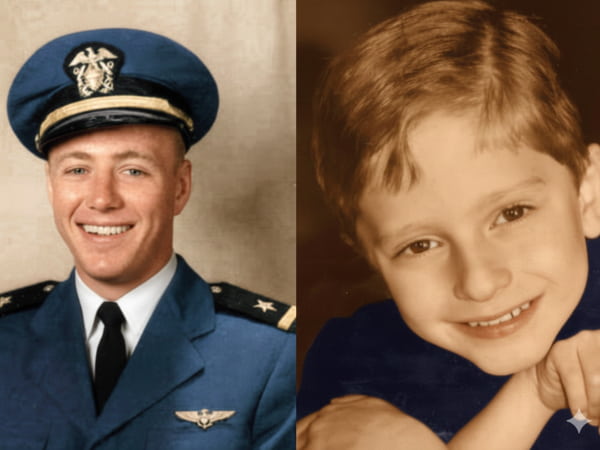
James Leininger began speaking about being a WWII pilot at a very young age, around 2 years old. He named the aircraft he flew, described the carrier, and recounted the crash in vivid detail. His parents initially thought the stories were imagination. Researchers later identified a World War II pilot whose life contained similarities to several details James had reported. Supporters of the case consider those similarities significant, while critics have questioned how the information was obtained and recorded. James also experienced nightmares and phobias consistent with traumatic events from that life, strengthening the credibility of this verified reincarnation case. (reincarnationcentre.org)
Imad Elawar Case (Lebanon)
Imad Elawar reportedly described the life of a man named Ibrahim, including details about his home, family, and work. Researchers later investigated those statements and reported a number of correspondences with Ibrahim’s life. The case remains one of the better-known examples in reincarnation literature.
Shanti Devi Incident (India)
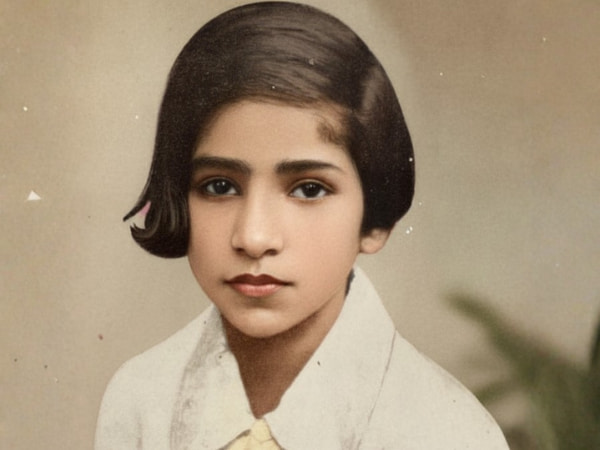
Shanti Devi, born in 1926 in Delhi, India, began recalling details of a life in Mathura when she was about 4 years old. She accurately described the life of Lugdi Devi, including the names of family members, her house, and daily activities. A commission of local officials and academics investigated her claims and reported numerous correspondences between her statements and the life of Lugdi Devi. Shanti Devi was able to identify her previous life’s house, relatives, and neighborhood, providing one of the most widely cited and historically documented true reincarnation stories. (Wikipedia)
These cases are extensively documented in books like Return to Life and Life Before Life, which compile hundreds of verified examples of children with past life memories. Such documentation includes interviews, corroboration with historical records, and medical or physical evidence like birthmarks, making these cases foundational in the study of University of Virginia reincarnation research.
Ryan Hammons Case (USA)
Ryan Hammons began having intense nightmares at age four, telling his mother he “used to be somebody else” and that his real home was in Hollywood. Working with Dr. Jim Tucker, his family traced his statements, which included dancing on Broadway and working at a talent agency, to Marty Martyn, a Hollywood agent who had died forty years before Ryan was born. Researchers later reported 55 specific details that they considered matches with Martyn’s life, one of the highest verified-detail counts in Tucker’s case files, first reported by NBC News and detailed in Tucker’s book Return to Life.
Scientific Interpretations and Challenges
Many people searching “is reincarnation real” are looking for scientific explanations. While verified cases of children who remember past lives exist, mainstream science struggles to provide a definitive mechanism. Researchers and skeptics propose several theories, ranging from psychological explanations to consciousness continuity, each with strengths and limitations.
Psychological Theories
Some scientists suggest that past life memories might be explained by psychological phenomena, such as overheard narratives, imagination, or latent memory—commonly referred to as cryptomnesia. According to this theory, children may unconsciously absorb stories from adults, media, or cultural narratives and later recall them as if they were personal experiences. Supporters of reincarnation research argue that information exposure alone does not easily explain every detailed case. Skeptics, however, point to possibilities such as unnoticed information exposure, memory errors, selective reporting, coincidence, and the way questions were asked or recorded.
Biological Theories
A few researchers have proposed genetic or biological memory theories, suggesting that certain experiences or knowledge could be inherited. However, mainstream biology does not support the storage of detailed personal memories—including names, life events, or geographic knowledge—within DNA. This leaves scientists without a clear neurobiological explanation for past life memories in children. Even advanced studies in neuroscience cannot account for the transfer of highly specific life experiences across unrelated individuals, making this phenomenon a challenge for current biological models.
Consciousness Continuity Theories
Some researchers propose that consciousness may survive physical death, allowing memory and identity to transfer into a new life. Supporters of reincarnation interpret some of these cases through the idea that consciousness may continue after death. This remains a controversial hypothesis, not an established scientific explanation. Researchers emphasize that this theory does not prove reincarnation but offers a plausible explanation for phenomena that psychological and biological theories cannot fully address. (Virginia Magazine)
It’s the same question at the center of the Pam Reynolds case, where a patient reported detailed perceptions during a documented period of flatlined brain activity, one we explore more broadly in our mindscape coverage of consciousness.
What Do Scientists Say About Children Who Remember Past Lives?
Researchers at the University of Virginia have spent decades collecting and investigating reports from children who say they remember previous lives. Their work has produced a large number of detailed case files, including reports involving names, locations, relationships, and memories of death.
That research does not mean that science has established reincarnation as a fact. The cases are unusual because some statements can be compared with information about real people and events, but researchers and skeptics disagree about how those matches should be interpreted.
For now, the subject sits in an unusual space between documented case research and an unanswered question about consciousness.
Cultural Influence Versus Evidence
Skeptics often argue that children’s memories of past lives are influenced by cultural or religious beliefs. They suggest that in societies where reincarnation is widely accepted, children might unconsciously absorb these ideas from parents, teachers, or peers. While culture may influence general understanding, research shows it cannot fully explain verified past life memories in children.(UVA School of Medicine)
- Cases appear in families of various religions and beliefs, including Christian, Muslim, Hindu, Buddhist, and non-religious households. These children report details that their immediate environment could not have taught them, such as specific names, places, and events.
- Cases also occur in societies where reincarnation is not culturally dominant, such as rural communities with minimal exposure to reincarnation concepts. The consistency of accurate details across diverse cultures strongly suggests that these memories are not purely culturally constructed.
Researchers conclude that while cultural beliefs may shape interpretation, they do not account for the precise, verifiable, and often surprising details that emerge in many documented cases. This reinforces the idea that children who remember past lives exhibit a phenomenon that transcends cultural influence. (Virginia Magazine)
Why Most Memories Fade With Age
Most children remembering previous lives stop discussing these memories by age 7 or 8. Researchers studying past life memories in children have identified several factors that contribute to this natural fading. Understanding why these memories diminish helps explain why early childhood is the most critical period for observing verified cases.
- Brain development reshapes memory structures. As children grow, neural networks reorganize, and early memories—especially unusual or emotionally charged ones, can be overwritten or suppressed. This process makes recalling past-life details increasingly difficult over time. Increasingly difficult over time, a reorganization process related to what we cover in our look at how the brain behaves under extreme stress. (Virginia Magazine)
- Social and educational environments discourage unusual claims. As children enter school and interact with peers, teachers, and societal norms, they are encouraged to conform. Statements about past lives may be dismissed or ridiculed, prompting children to stop sharing these memories. (UVA School of Medicine)
- Memory consolidation focuses on present life experiences. Cognitive resources prioritize learning new skills, language, and social behavior. The brain naturally filters out experiences that do not relate to immediate survival or learning, causing past life memories in children to fade gradually.
Guidance for Parents and Caregivers
Parents of children with past life memories in children often feel unsure how to respond. Experts recommend careful observation and neutral handling to support the child’s well-being. (med.virginia.edu)
• Listen without dismissing. Allow the child to speak freely without judgment.
• Avoid encouraging or discouraging. Stay neutral to prevent exaggeration or suppression of memories.
• Record statements neutrally. Note exact words, dates, and context without adding interpretation.
• Avoid leading questions. Do not prompt the child with details about past lives.
• Seek professional help if needed. Consult psychologists if the child shows distress or behavioral changes.
Telling a real memory from a fantasy: Researchers point to a few consistent markers. Researchers may look at consistency, spontaneity, and whether a child’s statements contain information that appears difficult to explain through ordinary exposure. However, these features cannot by themselves establish whether a memory is genuinely from a previous life.
Reincarnation researcher and author Carol Bowman, whose 1997 book Children’s Past Lives remains a standard parenting reference in this field, recommends treating these memories as a chance to help a child process unfinished emotional business rather than something to suppress or dismiss.
Source: carolbowman.com/childrens-past-lives
Common Myths and Misconceptions
Many people misunderstand the phenomenon of children who remember past lives. Researchers clarify that several widely held beliefs are inaccurate. (UVA School of Medicine)
- All children remember past lives. Only a small number of children worldwide report verifiable memories. Most children never show this phenomenon.
- Memories last forever. Past life memories typically fade by age 7 or 8 as brain development and social conditioning take over.
- Hypnosis is required for recall. Verified cases rely on spontaneous memories reported by young children, without any hypnotic or suggestive techniques.
- All cases prove reincarnation without question. Verification requires independent corroboration of names, locations, or death details. Not every report is conclusive; researchers carefully document and cross-check before publishing.
By debunking these myths, parents and readers can better understand what past life memories in children truly entail, separating verified evidence from popular assumptions. (Virginia Magazine)
Ethical Standards in Research
Research on children who remember past lives at the University of Virginia follows strict ethical guidelines to protect children and ensure scientific credibility. (UVA School of Medicine)
- No hypnosis or suggestion used. Children recall memories spontaneously. Researchers avoid leading questions or techniques that could influence the child’s statements.
- Parental consent is required. Families must agree to participation before any interviews or observations, ensuring legal and ethical compliance.
- Avoiding media exposure. Researchers prevent children from being influenced by news, television, or other publicity during studies, preserving the integrity of reported memories.
- Publication only after verification. Cases are documented and verified independently. Only thoroughly corroborated cases appear in academic journals or books, maintaining high standards of evidence.
These ethical standards ensure that reincarnation research respects children’s well-being while producing reliable, verifiable data for scientific and public consideration.
Why This Topic Continues to Go Viral
Interest in children who remember past lives remains strong worldwide. People are fascinated because the phenomenon sits at the crossroads of science, mystery, and spirituality, appealing to both skeptics and believers. (UVA School of Medicine)
- It intersects science, mystery, and spirituality. Verified reincarnation cases challenge traditional scientific explanations while sparking curiosity about consciousness and life after death. This combination naturally draws attention on social media, news, and academic discussions.
- Verified research challenges conventional views of consciousness. The University of Virginia’s Division of Perceptual Studies documents hundreds of cases with independent corroboration, prompting debates in psychology, neuroscience, and philosophy.
- Many documented cases have factual support. Children provide verifiable names, locations, and death details that researchers confirm through independent investigation. Such credible documentation increases public trust and viral interest.
- People everywhere wonder “what happens after death.” Questions about life, death, and consciousness are universal. Cases of children recalling past lives tap directly into this curiosity, making the topic endlessly shareable and widely searched. (UVA School of Medicine)
The combination of verified research, universal curiosity, and mysterious elements ensures that past life memories in children remain a trending subject on search engines and social platforms, appealing to a global audience.
What Remains Unexplained
Despite decades of careful research, many aspects of children who remember past lives remain mysterious. Verified cases provide remarkable details, but science has not yet explained the mechanisms behind these memories. (Virginia Magazine)
- Why do some children recall past lives and others do not? Only a small fraction of children exhibit these memories. Researchers are exploring genetic, neurological, and environmental factors, but no definitive explanation exists.
- Why are violent death memories so common? Studies show roughly 70% of verified cases involve sudden or traumatic deaths. The reason for this prevalence is unclear, though some theories suggest emotional intensity may make memories more likely to persist.
- What mechanism could transmit detailed memory between lives? Current neuroscience and biology cannot account for the transfer of specific personal memories, names, or events from one individual to another. This remains one of the most challenging questions for researchers.
- How can consciousness be measured scientifically? If consciousness survives death, no current tools can quantify or trace it. Researchers continue to study behavior, physiological markers, and correlates, but a precise scientific model does not yet exist.
- Do some children remember the time between lives? A minority of documented cases, some studied by Tucker, describe an “intermission memory,” such as recalling their own funeral or a waiting period before rebirth. Rarer still are cases of apparent xenoglossy, where a child seems to speak or understand a language they were never taught. Neither phenomenon currently has an accepted scientific explanation.
Ongoing research focuses on collecting verified cases, analyzing patterns, and exploring potential mechanisms without drawing premature conclusions. These unanswered questions are part of why children who remember past lives continue to attract research and public interest.
Related Topics
- Mindscape: our hub for consciousness-and-mystery coverage, and the cluster this piece belongs to.
- The Pam Reynolds Case: another documented case where researchers can’t fully explain what a person perceived during a state closely resembling clinical death.
- Neutrinos: The Ghost Particles: a look at another invisible phenomenon passing through your body that current science still can’t fully detect.
- Brainoware: The Living Computer: lab-grown brain tissue research relevant to how scientists now study consciousness outside a living human brain.
- How the Brain Behaves Under Extreme Stress: context for the neurological reorganization that may explain why past-life memories fade with age.
Frequently Asked Questions About Children Who Remember Past Lives.
What percentage of children remember past lives?
There’s no reliable percentage, since cases are voluntarily reported rather than drawn from a random population sample. What’s known is scale, not rate: the University of Virginia’s Division of Perceptual Studies has documented more than 2,500 cases worldwide since the 1960s.
At what age do children usually stop remembering a past life?
Most children stop discussing past-life memories between ages 6 and 8. Researchers, including Dr. Jim Tucker, note this roughly matches the age most people lose their earliest childhood memories generally, suggesting normal memory development plays a role in the fading.
How can you tell if a child’s memory is real or just imagination?
Researchers may look for consistency, spontaneity, and details that appear difficult to explain through ordinary exposure. These clues can make a case interesting, but they cannot prove that a child’s memory comes from a previous life.
Who is Dr. Jim Tucker?
Jim Tucker is a University of Virginia psychiatry professor who leads the school’s Division of Perceptual Studies. He continues the case-investigation work started by Dr. Ian Stevenson and is the author of Return to Life and Life Before Life.
Who was Dr. Ian Stevenson?
Ian Stevenson was the University of Virginia psychiatrist who founded this field of research, investigating children’s past-life claims worldwide from the 1960s until shortly before his death in 2007. He personally documented more than 2,500 cases.
Do birthmarks really correlate with past-life injuries?
In about 30 percent of DOPS’s documented cases, a child’s birthmark or birth defect lines up with a fatal wound on the person they claim to remember being. Researchers note this is a striking correlation, not proof of a causal link.
What is the Ryan Hammons case?
Ryan Hammons is a boy who, starting around age four, described a past life as Hollywood talent agent Marty Martyn. Researchers working with Dr. Jim Tucker reported 55 specific details that they considered matches with the life of Hollywood agent Marty Martyn.
Can a child recall a language they were never taught?
Very rarely. A small number of documented cases describe apparent xenoglossy, where a child appears to speak or understand an unlearned language. These cases are contested and have no accepted scientific explanation.
Is reincarnation scientifically proven?
No. Mainstream science hasn’t confirmed reincarnation or identified a mechanism for it. What researchers have documented are individual cases in which children’s statements were compared with details about real people, places, and events. How those correspondences should be explained remains debated.
Final Thoughts
The study of children who remember past lives has produced decades of case reports, interviews, and investigations. Researchers have documented children who provided names, places, family details, and accounts of deaths that were later compared with information about real people. Some cases are striking, but documentation and corroboration do not prove that reincarnation is the explanation.
Skepticism remains essential, but dismissing these cases ignores a large body of systematically collected evidence. Researchers rely on independent corroboration and peer reviewed publication standards.
These findings connect naturally to broader mysteries explored on this site, including how unseen forces shape reality. Just as Neutrinos Explained examines invisible particles passing through your body without detection, past life memory research challenges assumptions about what can exist, influence us, and remain unseen by current science.
Whether reincarnation is proven or not, these cases continue to test ideas about memory, identity, and consciousness. Their similarities across different cultures continue to raise questions about memory, identity, and consciousness.
Author Bio
Mubashir Razzaq is an independent researcher and writer behind Strange Happenings. He focuses on true based paranormal cases, unexplained phenomena, and historical mysteries. His work examines documented reports, academic sources, and verified records with a critical and curious approach. Mubashir aims to inform readers, challenge assumptions, and present evidence focused content in clear, accessible language without exaggeration or fiction.