
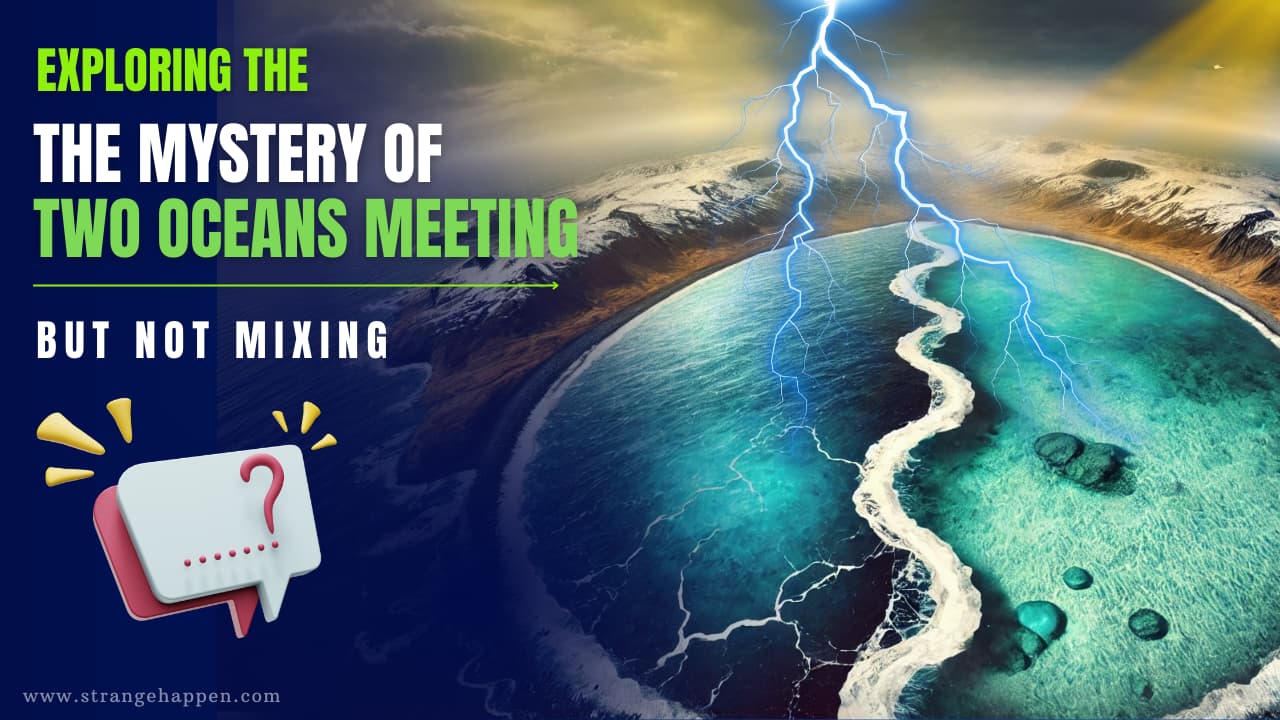
Two oceans meeting is perhaps of nature’s most spellbinding peculiarity, displaying the wonderful cooperation between differentiating waters. Found in areas around the world, these unmistakable waterways meet yet remain apparently isolated, igniting interest and wonderment. Frequently confounded in viral recordings, the peculiarity of two oceans meeting is a captivating mix of science, history, and otherworldly importance.
Understanding the Phenomenon of Two Oceans Meeting
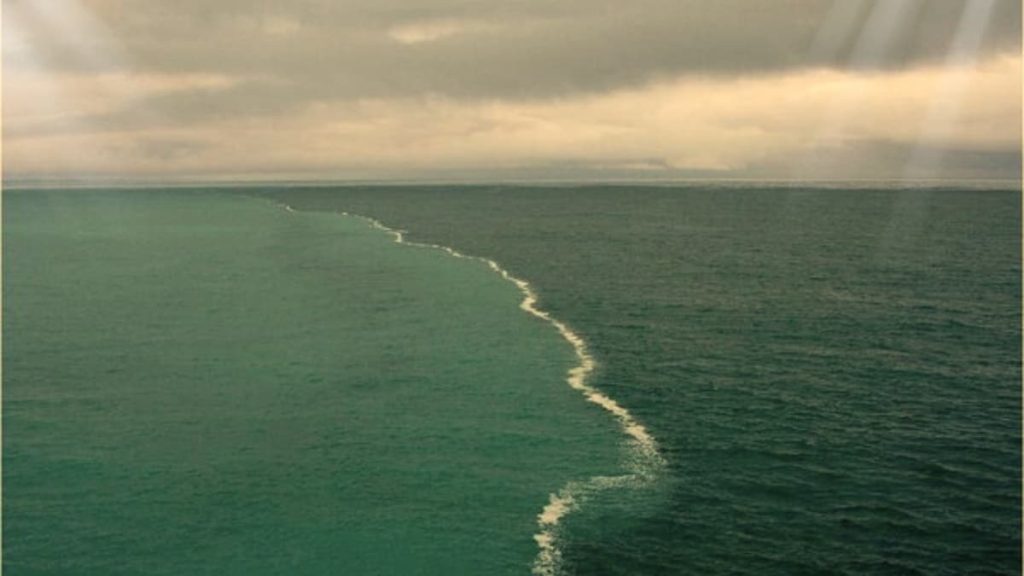
At the point when two oceans meeting, for example, in the Bay of Gold country or different districts, they frequently seem, by all accounts, to be isolated by an undetectable boundary. This visual qualification is brought about by:
Contrasts in Saltiness: Saltiness, or the salt substance in water, assumes a key part. For instance, frigid meltwater is fresher (low saltiness) contrasted with seawater, which is denser and saltier. This distinction forestalls quick blending.
Temperature Varieties: Chilly spillover will in general be colder than seawater. The difference in temperature adds one more layer to the partition.
Thickness and Surface Strain: Denser water doesn’t handily blend in with less thick water, making a surface pressure impact that behaves like a flimsy wall.
Ocean Flows and Swirls: These flows convey water from various locales, keeping them particular briefly. Nonetheless, over the long haul, the powers of nature — like waves, tides, and wind — step by step blend the waters.
Famous Locations Where Two Oceans Meeting
- The Inlet of Gulf of Alaska: This peculiarity is broadly caught in pictures showing frigid meltwater meeting the Pacific ocean. The freshwater, loaded down with silt, gives a smooth appearance contrasted with the dark blue of the ocean.
- Cape Horn (South America): At the southernmost tip of Chile, the Pacific and Atlantic Ocean merge. The fierce gathering is described by outrageous climate, making it a generally critical yet hazardous ocean entry.
- The Waterway of Gibraltar: The Mediterranean Ocean and the Atlantic ocean meet here, with contrasts in saltiness and temperature prompting a noticeable separation.
Spiritual and Quranic Perspective About Two Oceans Meeting
This normal event has been referenced in the Quran, featuring its otherworldly importance:
“He has delivered the two oceans, meeting next to each other. Between them is a boundary [so] neither of them violates.” (Quran 55:19-20)
This refrain mirrors the heavenly insight behind the regular equilibrium of our reality. The “boundary” referenced is certainly not an actual wall yet the distinctions in thickness, saltiness, and flows that forestall prompt blending. It is a wonderful demonstration of the Maker’s accuracy and equilibrium in nature.
Misconceptions About the Oceans Not Mixing
The peculiarity of two oceans meeting yet not blending is enamoring yet frequently misjudged. Numerous viral recordings propose that two oceans never blend, yet this isn’t totally exact.
What We See
The striking visual of two oceans meeting, yet apparently not mixing, happens when freshwater from streams or icy masses meets saltwater. The differentiation in variety is because of the distinction in thickness and saltiness, which briefly keeps the waters from blending.
The Truth
Over the long haul, the waters do blend. The partition we see is brought about by surface pressure, with freshwater being less thick than saltwater. Normal powers like waves, flows, and twist at last break the obstruction, permitting the waters to mix. The interaction can require days to weeks relying upon conditions like temperature and water volume.
The Science Behind It
- Thickness and Saltiness: Freshwater is less thick than saltwater, which makes it float and structure a noticeable limit.
- Surface Pressure: The limit is held by surface strain, forestalling quick blending.
- Natural Variables: Temperature and flowing developments additionally influence the pace of blending.
Social Importance
In many societies, this regular peculiarity has emblematic significance, addressing solidarity or differentiation. All things considered, it entranced mariners and adventurers, frequently saw as a sign or sign.
Historical Significance: Cape Horn’s Sea Inheritance
Cape Horn, where the Pacific and Atlantic oceans meet, holds an unmistakable spot in oceanic history. Found in 1616 by Dutch pilgrims Willem Schouten and Jacob Le Maire, it was a basic course for ships before the Panama Trench was fabricated. The region is notorious for its furious tempests, transcending waves, and ice shelves, procuring it the standing of a mariner’s burial ground.
Scientific Research and Observations About Two Oceans Meeting
Researchers concentrate on these maritime limits to comprehend worldwide water cycles and environmental change. Key perceptions include:
- Supplement Streams: These limits frequently bring about supplement rich waters, supporting different marine environments.
- Dregs Stores: Frigid meltwater conveys residue that influence the clearness and shade of the ocean.
- Effect of Environmental Change: Liquefying ice sheets and changing flows are modifying the elements of these regular divisions, making them a focal point of ecological exploration.
Lessons from Nature’s Balance
Two oceans meeting shows us significant examples conjunction and agreement. Notwithstanding their disparities in properties, these waters in the long run blend, representing balance in variety. This peculiarity fills in as an illustration for mankind, helping us to remember the significance of understanding and regarding contrasts.
Conclusion
Two oceans meeting is something beyond a logical wonder — it represents balance, reflects divine insight, and shows the significance of conjunction. Seen from the perspectives of history, science, or other worldliness, this regular peculiarity brings out wonder and fills in as a sign of the complex frameworks that support life on the planet. Like the getting through secrets of the Bermuda triangle, Alaska Triangle, the Great Pyramid, and other perplexing miracles, it moves us to embrace interest and look for understanding, advising us that the world is an embroidery of interconnected wonders ready to be investigated.