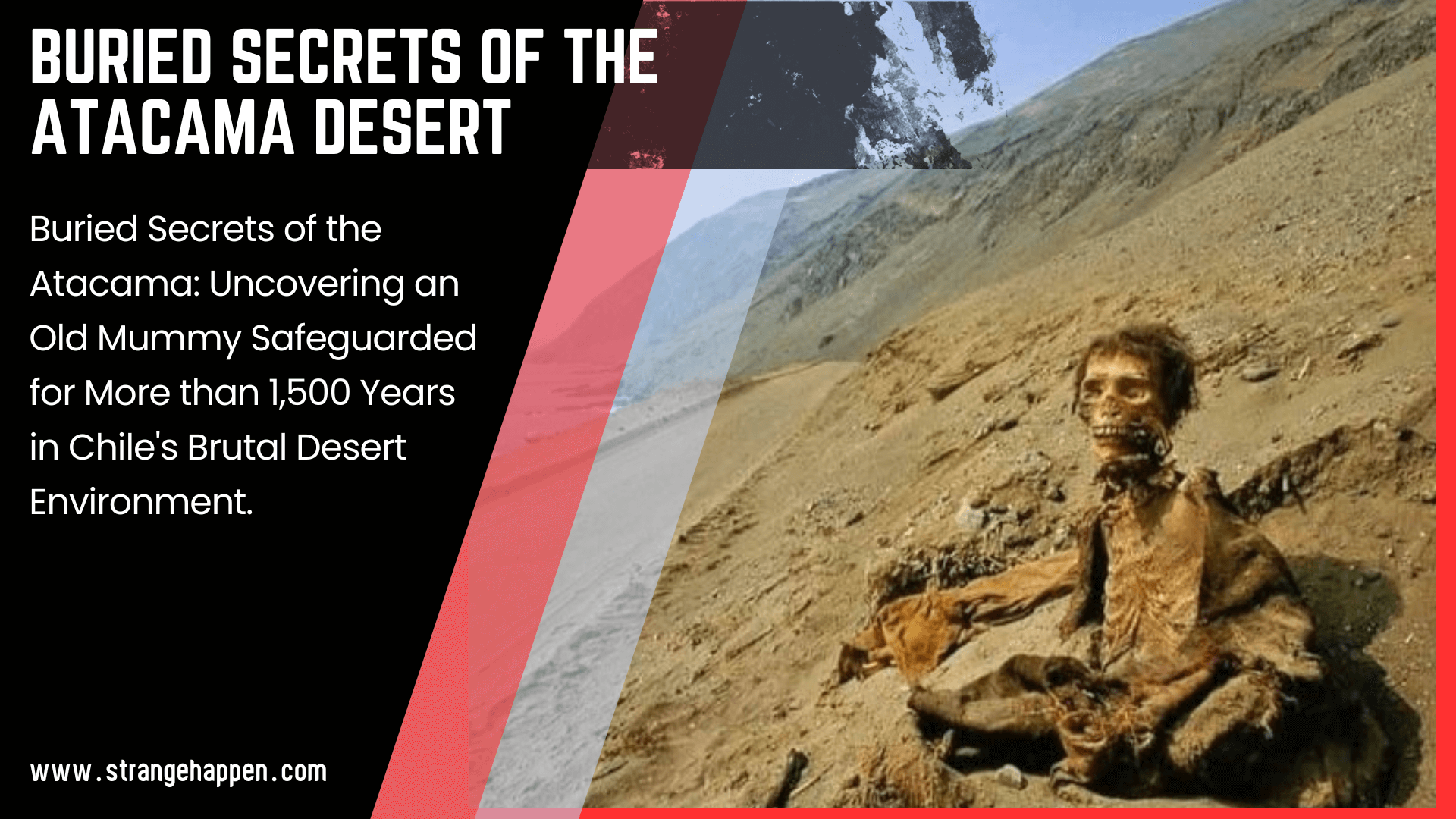
Buried Secrets: In Chile’s Atacama Desert, a long-covered body was found. Dated to 502 Promotion, it uncovers a world of a distant memory. Components and time made a characteristic time container. The cadaver shows amazing safeguarding. More than 1,500 years of age, the body holds its skin, hair, and apparel. The rugged skin sticks to the bones, featuring the desert’s drying up power. Flawless hair offers pieces of information about the singular’s age and well-being. Saved articles of clothing give bits of knowledge into old material practices and day-to-day existence in this unforgiving scene.
Buried Secrets: Atacama Desert A Climate of Preservation
(Buried Secrets) the Atacama Desert isn’t simply any desert; it is the driest non-polar desert on Earth. A few regions of this desert get under 1mm of downpour every year, establishing a climate so cruel that even microscopic organisms battle to get by. This outrageous dryness is critical to the desert’s capacity to protect natural materials for centuries.
In such a climate, the course of decay is decisively eased back. Without dampness, organisms and growths can’t flourish to break down bodies in the afterlife. This takes into consideration momentous protection. The Atacama has seen various saved stays throughout the long term. A portion of these remaining parts date back millennia. Every disclosure gives extraordinary experiences into the past.
Buried Secrets: Antiquated Remains Opening the Secrets of the Past
The cadaver found in the Atacama Desert is a demonstration of this regular protection. Notwithstanding being north of 1,500 years of age, the body holds its skin, hair, and even apparel. The skin, presently rough and contracted, sticks firmly to the bones, a demonstration of the parching force of the desert. The hair, frequently found unblemished in mummies, offers hints about the singular’s age and wellbeing. It likewise uncovers bits of knowledge into their appearance during life.
The saved dress is maybe the most enamoring part of the find. It offers an immediate association with old material practices. The materials, examples, and procedures give significant data about their way of life. These experiences uncover the everyday existence of individuals in this cruel scene.
Buried Secrets: What We Can Learn
Revelations like this are something other than archeological interests; they are windows into the existence of individuals who lived hundreds of years prior. By concentrating on the safeguarded remains, researchers and antiquarians can find out about the well-being, diet, and social designs of antiquated civic establishments. The dress, specifically, can uncover a lot about the exchange, as materials and plans could demonstrate associations with far-off districts.
Likewise, the conservation of such remaining parts features the wonderful strength of early human civilizations. Individuals who lived in the Atacama Desert millennia prior confronted quite possibly the most extreme environment on the planet, yet they created imaginative techniques to get by and flourish. Their versatility, creativity, and capacity to beat outrageous circumstances act as a demonstration of human resourcefulness. Despite overpowering difficulties, they constructed enduring societies, abandoning hints of their exceptional lives that keep on spellbinding us today. Their heritage perseveres as an image of human tirelessness even with misfortune.
Buried Secrets Conclusion
The disclosure of a centuries-old cadaver in the Atacama Desert grandstands nature’s capacity to safeguard the past. In this dry scene, the body offers an uncommon association with our old predecessors. Likewise, the Colossus of Rhodes represented human resourcefulness, moving stunningness despite its nonappearance. The mummy of Queen Neith uncovers experiences into old convictions, while Heimaey, Iceland, recounts accounts of normal strength. The Incomparable The Great Pyramid epitomizes the mind-blowing design abilities of antiquated developments. Each finds, whether in the Atacama or somewhere else, associates us with our common human legacy, featuring the perseverance through the tradition of the people who preceded us.