



Leafy Seadragon
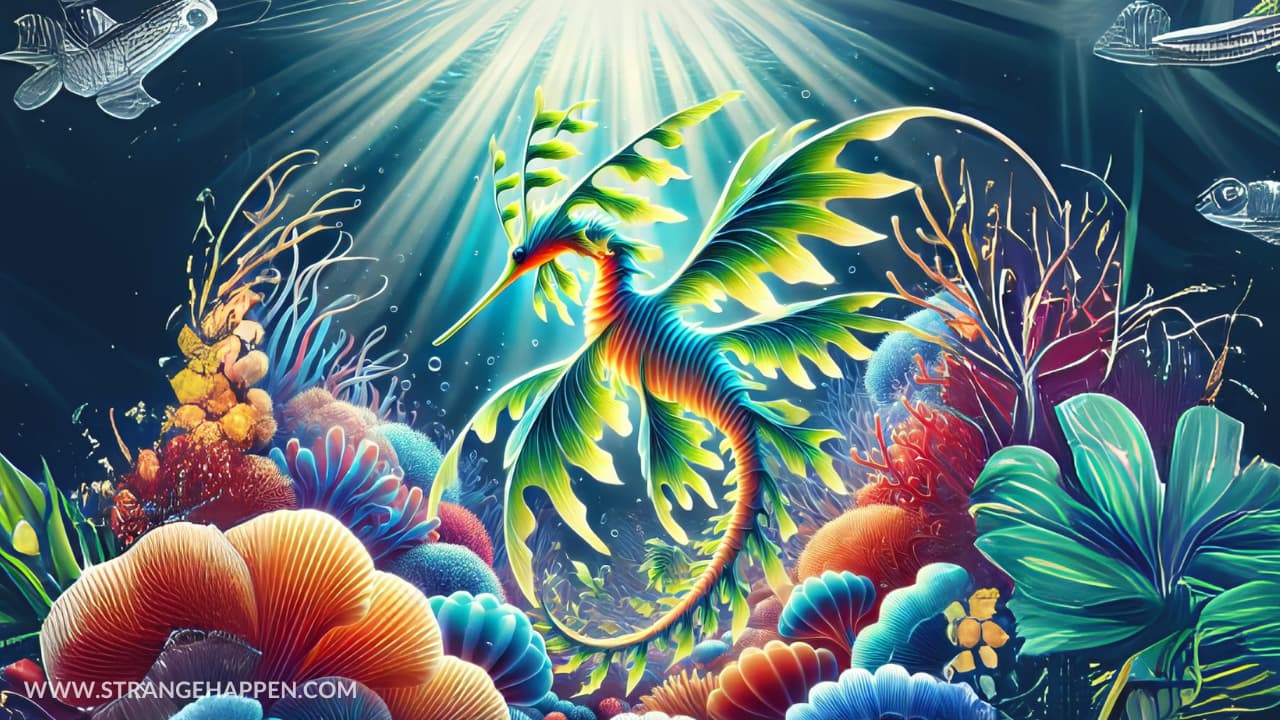
The Leafy Seadragon: A Mystical Ocean Marvel
Underneath the shimmering waters of southern and western Australia abides one of the sea’s most enthralling and exceptional animals — the leafy seadragon (Phycodurus eques). This phenomenal marine creature, with its sensitive, leaf-like extremities, appears to have jumped straight out of a fantastical submerged story. We should jump profound into the universe of this charming seadragon and reveal its privileged insights.
Introduction to the Leafy Seadragon
The leafy seadragon is a marine fish having a place with the Syngnathidae family, making it a direct relation of seahorses and pipefish. In contrast to its cousins, the leafy seadragon flaunts elaborate leaf-like limbs that copy ocean growth, giving it outstanding cover. Its name comes from these unmistakable “leaves,” which make it seem to be a floating piece of kelp in the water.
This species is endemic to the beachfront waters of southern and Western Australia, where it flourishes in calm oceans rich with kelp and seagrass.
Anatomy and Physical Features
The leafy seadragon is a visual exhibition. Here are a few vital insights regarding its actual highlights:
- Leafy Members: These are not utilized for swimming however for cover. They mix impeccably with the encompassing vegetation, shielding the seadragon from hunters.
- Body Size: A grown-up leafy or Phycodurus eques measures around 20-24 cm (8-10 inches) long.
- Nose: It has a long, tube-like nose that assists it with sucking up small prey with accuracy.
- Hue: Its body highlights shades of yellow, green, and brown, frequently matching the tones of its living space.
- Balances: Straightforward pectoral and dorsal blades are practically imperceptible to the unaided eye, supporting unobtrusive development without disturbing its camouflage.
Lifecycle of the Leafy Seadragon
The leafy seadragon has an intriguing conceptive interaction that includes job inversion between the sexes:
- Romance and Egg Move: During mating, the female stores up to 250 radiant pink eggs onto a particular region on the male’s tail.
- Brooding: The male cautiously conveys the eggs for around two months, guaranteeing their well-being until they hatch.
- Incubating: When prepared, the child seadragon’s, known as fry, arise full fledged however are unimaginably minuscule.
- Free Life: In contrast to numerous marine species, leafy or Phycodurus eques posterity get no parental consideration post-bring forth. They should fight for themselves right away, depending on their disguise to keep away from hunters.
Behavior and Habitat
Leafy seadragon’s are single and non-forceful animals. Their way of behaving and step-by-step processes for surviving are unpredictably attached to their environmental factors.
Habitat
These marine animals like:
- Kelp woods
- Seagrass glades
- Rough reefs
Their living spaces are situated in cool, calm waters going from 10°C to 18°C (50°F to 64°F). These districts give the ideal mix of food sources and concealing spots.
Behavior
- Disguise: The leafy seadragon floats delicately in the water, copying the influencing of ocean growth to keep away from recognition by hunters.
- Taking care of: It is a sluggish and conscious feeder, depending on its cylinder like nose to suck up little scavengers, microscopic fish, and mysid shrimp.
- Development: Because of their absence of solid swimming skills, they depend on unpretentious developments of their almost imperceptible blades to explore their current circumstance.
Fascinating Facts About the Leafy Seadragon
Here are extra entrancing realities about the leafy seadragon:
- Disguise Expertise: The leafy or Phycodurus eques looks like kelp as well as moves with the flow to improve its mask, making it one of the best instances of normal mimicry in the collective of animals.
- Delicate Predators: They are detached feeders, depending on their great disguise and sluggish developments to move toward prey like mysid shrimp and microscopic fish without frightening them.
- No Regular Predators: Because of their outstanding disguise, most hunters neglect to recognize them, making the leafy or Phycodurus eques an almost resistant objective right at home.
- Slow yet Shocking Swimmers: leafy or Phycodurus eques are not worked for speed, all things being equal, their energy-effective, unpretentious developments permit them to moderate energy while dodging identification.
- Image of Marine Conservation: The leafy or Phycodurus eques is so notable in Australia that it has been assigned as the authority marine image of South Australia, featuring its social and environmental significance.
- Particular Anatomy: Their hard plates go about as normal covering, adding an additional layer of security against expected dangers in their current circumstance.
- Generation Challenges: Low regenerative rates and high adolescent mortality make the leafy or Phycodurus eques especially powerless against populace declines, expanding the significance of preservation endeavors.
- Exceptional Vision: Leafy or Phycodurus eques have fantastic visual perception, permitting them to identify the little developments of their prey in cloudy waters.
- Job in Biological system Health: Their presence shows the strength of marine environments, as they require spotless, undisturbed living spaces to flourish.
- Seldom Found in the Wild: Regardless of their striking appearance, leafy or Phycodurus eques are slippery and challenging to recognize, in any event, for jumpers, because of their phenomenal cover and inclination for separated natural surroundings.
These subtleties further feature the miracle and delicacy of the leafy seadragon, stressing its job as both a marine wonder and a protection need.
Conservation Efforts
The leafy seadragon’s shocking appearance has made it an objective for the pet exchange, regardless of severe lawful securities. Preservation endeavors include:
- Laying out marine safeguarded regions in Australian waters.
- Raising public mindfulness about the significance of safeguarding seadragon environments.
- Leading exploration to comprehend their populace elements and dangers better.
The Leafy Seadragon’s Role in Marine Ecosystems
However sensitive and sluggish, leafy seadragon assume a fundamental part in their environment:
Hunter Prey Equilibrium: As hunters of little scavangers, for example, mysid shrimp and microscopic fish, they assist with managing the number of inhabitants in these species, keeping up with biological equilibrium in their living spaces. By benefiting from these organic entities, they forestall overpopulation, which could somehow or another upset the well established pecking order.
Biodiversity Pointers: The presence of leafy seadragon’s is areas of strength for an of a sound and perfect marine environment. They require perfect, undisturbed waters with plentiful seagrass and kelp, making their living spaces benchmarks for biodiversity and ecological quality.
Natural surroundings Communications: By occupying kelp woods and seagrass glades, leafy seadragon’s add to the powerful associations inside these conditions. They give visual proof of the complex connections between marine greenery, featuring the significance of saving these submerged environments.
Instructive and Biological Significance: Leafy seadragon’s move marine preservation endeavors because of their uniqueness and delicacy. Their notoriety among jumpers and scientists drives public mindfulness about safeguarding fragile marine conditions, encouraging a more profound appreciation for sea biodiversity.
These jobs underline the verdant seadragon’s significance past its visual allure, stressing its commitment to the natural well-being and equilibrium of marine environments.
Conclusion
The leafy seadragon exhibits the wonders of development and the magnificence of the regular world. Its ethereal plan and novel conduct make it one of the sea’s most phenomenal animals. Safeguarding such fragile species is critical to guaranteeing people in the future can appreciate their miracles. Additionally, creatures like the blobfish, barreleye Fish, Ghostfish adjusted to remote ocean pressures, and the old lamprey, feature nature’s resourcefulness. The eccentric red-lipped batfish and tough Yeti Crab further stress the sea’s unequaled imagination.
By esteeming these amazing species, we develop how we might interpret marine environments and the dire requirement for protection. We should safeguard these images of nature’s splendor.