
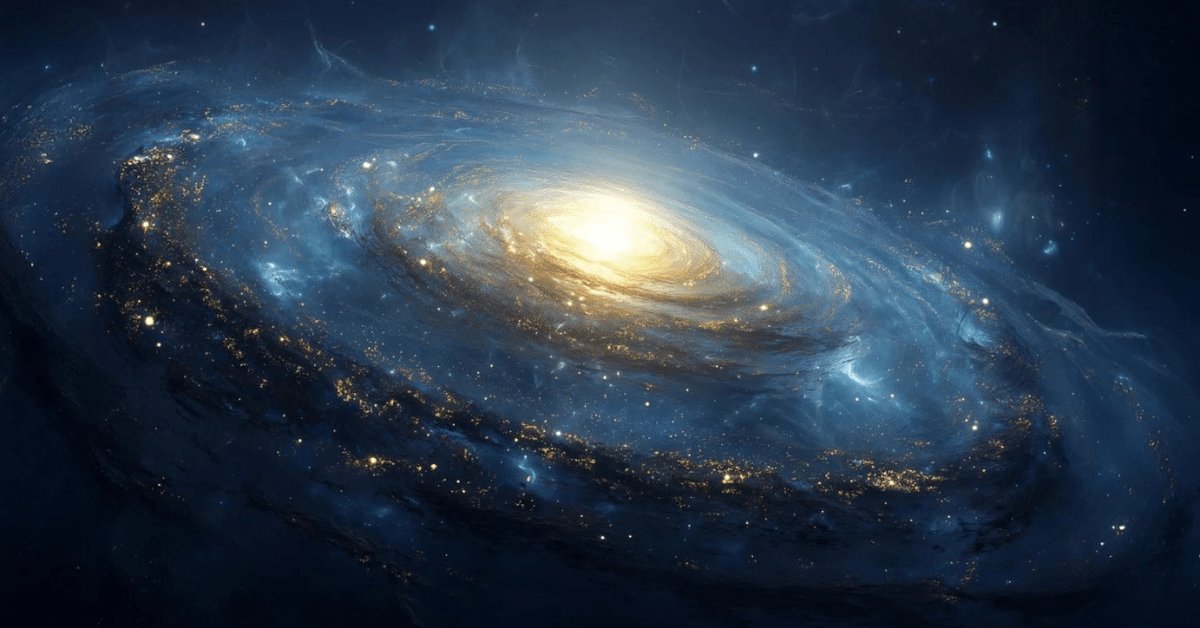
What if astronomers found a galaxy that refused to do the one thing every galaxy is expected to do: spin?
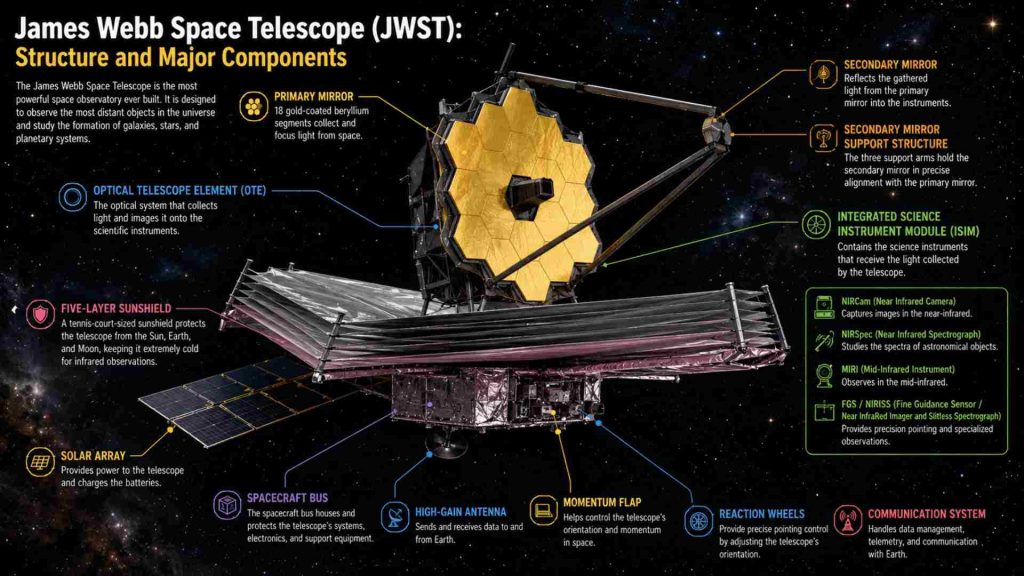
That is exactly what the James Webb Space Telescope discovered with XMM-VID1-2075, one of the most talked-about JWST galaxy discoveries of 2026. When astronomers observed this massive ancient galaxy from the early universe, they found almost no rotation at all. Gravity draws in gas, angular momentum builds, and spin follows without exception, until now.
When a research team led by Ben Forrest at the University of California Davis found a galaxy that had skipped that process entirely, while already containing several times more stars than the Milky Way, it stopped the astronomical community in its tracks. This is the story of that galaxy, what scientists found inside it, and why it is forcing a serious rethink of how galaxies form.
Table of Contents
Quick Answer: What Galaxy Doesn’t Spin?
XMM-VID1-2075 is a massive early galaxy confirmed by the James Webb Space Telescope that shows almost no rotation despite existing less than two billion years after the Big Bang. This JWST galaxy discovery 2026 was published in Nature Astronomy on May 4, 2026.
The Discovery That Broke the Rules
Galaxies are expected to spin from birth. According to current models of galaxy formation, as the first galaxies assembled after the Big Bang, inflowing streams of gas and the pull of gravity set them rotating.
Over billions of years, some galaxies slow down. Repeated mergers between galaxies can disrupt their angular momentum, gradually eroding organized spin until random stellar motion takes over. Astronomers call these systems slow rotator galaxies.
But slow rotator galaxies are only supposed to appear among the oldest, most evolved systems in the universe. These are galaxies that have had ten billion years or more of collisions behind them.
XMM-VID1-2075 had none of that time. According to the study published in Nature Astronomy by Forrest and colleagues, this galaxy existed when the universe was less than two billion years old. It already contained several times more stars than our Milky Way. And it was already a slow rotator galaxy.
“That’s something only seen in the most massive, mature galaxies that are closer to us in space and time,” said Forrest, a research scientist in the Department of Physics and Astronomy at UC Davis. “Researchers were surprised to find that this galaxy exhibited virtually no rotational motion, despite its massive size.”
What Scientists Found Inside XMM-VID1-2075
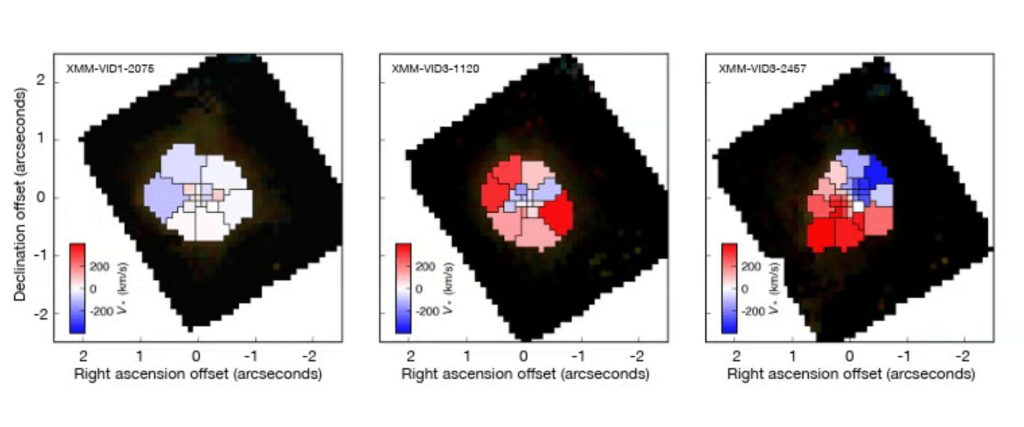
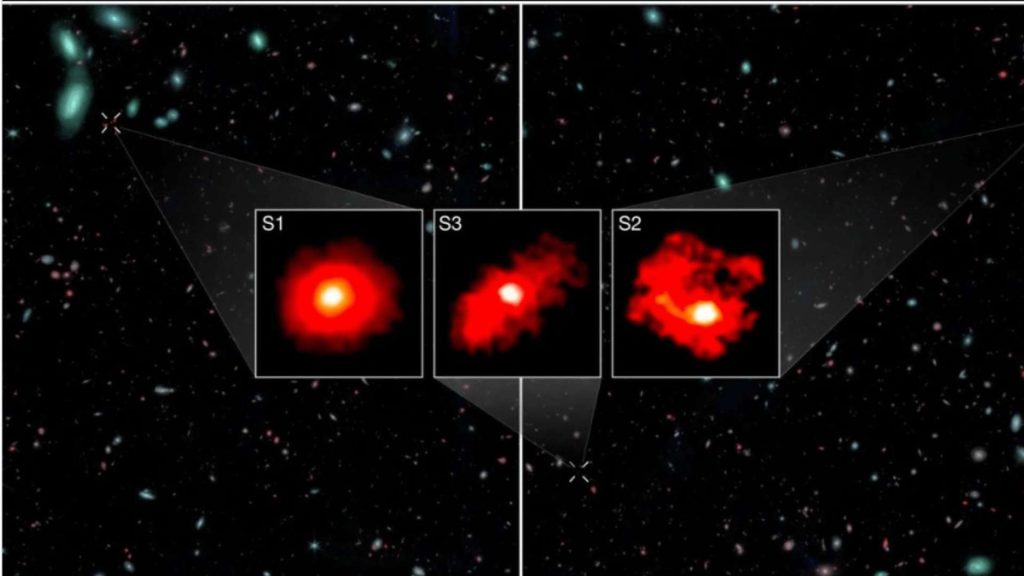
The James Webb Space Telescope used near-infrared integral-field spectroscopy to measure the internal motion of stars within the galaxy. This technique works by detecting Doppler shifts in starlight. One side of a rotating galaxy moves toward us, the other side moves away, creating a measurable color gradient.
In this galaxy, that gradient was almost completely absent.
Stellar velocities at the galaxy’s center reached around 500 kilometers per second. That is extremely fast. But the motion was in all directions simultaneously rather than organized into a coherent spin. Velocity offsets across all measured regions stayed below 100 kilometers per second. There was no spin axis. No disk. No organized rotation.
Instead of the orderly motion expected in a young massive galaxy, researchers found a system dominated entirely by random stellar movement. As described in the Nature Astronomy paper, the galaxy displayed a low stellar spin parameter consistent with what astronomers call dispersion-dominated kinematics. That is the same signature seen in ancient, fully evolved elliptical galaxies.
The galaxy also showed irregular features at its edges. These disturbed low-surface-brightness structures hint at a violent recent interaction. Forrest noted a large excess of light off to one side, suggesting another object had recently collided with the system and altered its dynamics.
How XMM-VID1-2075 Compares to Other Galaxies
| Feature | Milky Way | Typical Early Galaxy | XMM-VID1-2075 |
|---|---|---|---|
| Rotation | Fast, organized | Fast, disk-forming | Almost none |
| Age at Observation | 13.6 billion years | Under 2 billion years | Under 2 billion years |
| Star Count vs Milky Way | Baseline | Similar or smaller | Several times more |
| Star Formation | Active | Active | Completely stopped |
| Structure | Spiral disk | Disk forming | Disturbed, elliptical-like |
| Classification | Fast rotator | Fast rotator | Slow rotator galaxy |
This early slow rotator galaxy behaves like a system that is billions of years older than it actually is. That is what makes it genuinely unprecedented.
Why This JWST Galaxy Discovery Matters
What Experts Think
Researchers caution that a single unusual galaxy is not enough to overturn existing theories of galaxy evolution. However, if future James Webb Space Telescope observations uncover additional early slow rotator galaxies, astronomers may need to revise current models describing how massive galaxies form, evolve, and lose their rotation.
This is not a minor footnote in a research journal. The implications reach across decades of theoretical astronomy.
Current galaxy formation models predict that slow rotator galaxies take a very long time to develop. They are the product of many collisions, many mergers, and a gradual erosion of organized spin that spans billions of years. According to researchers from the University of California Davis, the models do not account for a galaxy reaching that state in under two billion years.
If this JWST galaxy discovery 2026 is confirmed, and the Nature Astronomy study published on May 4, 2026 makes a strong case, then one of the following must be true:
- The existing galaxy formation models are wrong
- There is a fast-track pathway to slow rotation that scientists have not yet identified
- The early universe was producing conditions far more chaotic than previously assumed
Any of those conclusions demands a revision of how we think about galaxy evolution.
Quick Answer: Why Is XMM-VID1-2075 Important?
Because it appears to have become a slow rotator galaxy billions of years earlier than current galaxy formation models predict. This JWST galaxy discovery 2026 suggests the early universe may have been far more violent and chaotic than scientists believed.
How Did a Non-Rotating Galaxy Lose Its Spin So Fast?
This is the question at the heart of the discovery, and scientists have a working hypothesis.
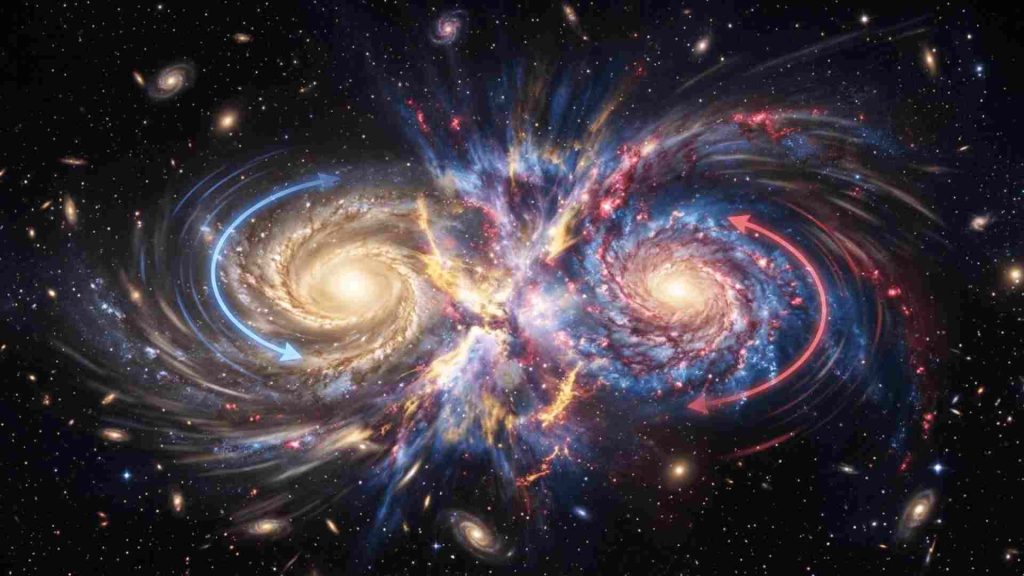
The standard explanation for slow rotator galaxies involves many mergers over a long period. But according to the Nature Astronomy study, Forrest and the team propose that this galaxy may have taken a shortcut: a single catastrophic head-on collision with another large galaxy rotating in the opposite direction.
When two galaxies spinning in opposite directions collide directly, their angular momentum cancels out almost immediately. The result is a chaotic, non-rotating remnant. That is precisely what this early slow rotator galaxy appears to be.
This hypothesis is supported by the disturbed structures observed at the galaxy’s edges and the excess light detected to one side, both consistent with a recent large-scale interaction rather than a gradual series of minor mergers.
The research team was part of the MAGAZ3NE survey, which stands for Massive Ancient Galaxies at z greater than 3 NEar-Infrared. This survey had previously confirmed the system as one of the most massive galaxies in the early universe using the W.M. Keck Observatory in Hawaii. Those earlier observations also confirmed the galaxy was already quiescent, meaning it had stopped forming new stars entirely, making it an obvious target for JWST follow-up.
What Happens When a Galaxy Stops Spinning?
Rotation maintains the balance between gravity pulling inward and outward orbital motion carrying stars along their paths. Without that balance, a galaxy’s disk structure dissolves. Stars no longer move in the orderly paths typically expected around a galaxy’s center. Star formation slows and eventually halts entirely because the gas dynamics that trigger star birth depend on organized rotation to function.
XMM-VID1-2075 has already gone through all of this. Its disk broke down. Star formation stopped. What remained was a massive, ancient, non-rotating collection of stars held together by gravity alone. A cosmic fossil, preserved exactly as it was after the collision that stole its spin.
Are There Other Galaxies That Don’t Rotate?
Yes. But not like this one.
Astronomers have catalogued slow rotator galaxies before. These are almost always massive elliptical systems found relatively close to Earth in cosmic terms, meaning they are ancient galaxies that have had ten billion years or more of merger history behind them. They reached their non-rotating state through a long, gradual process that current models predict well.
This galaxy is different from every confirmed example. It reached the same endpoint in under two billion years, through what appears to have been a single violent event rather than a slow accumulation of mergers.
The research team compared the object with two other massive, similarly aged galaxies observed in the same JWST session. One of those galaxies showed clear rotation. The other appeared irregular and disorganized. This early slow rotator stood apart from both. It showed no measurable rotation and a structure that looked far more evolved than its age should allow.
Future Research Into Early Universe Galaxy Formation
The JWST team is now actively searching for additional non-rotating galaxies in the early universe. Finding more would confirm that the single-collision fast-track pathway is real and represents a broader pattern rather than a one-off anomaly.
The next planned JWST observing cycles will widen the sample and allow the team to test their results against galaxy formation simulations. This ongoing work makes the original JWST galaxy discovery 2026 even more significant, as it sets the baseline for what researchers are now looking for across the wider sky. If the object turns out to be isolated, the single-merger model stays a niche explanation. If similar galaxies turn up, the theoretical frameworks governing galaxy evolution will need to expand significantly.
As the paper published in Nature Astronomy notes, this is one of the first spatially resolved spectroscopic observations of a massive quiescent galaxy from less than two billion years after the Big Bang. The field is only just beginning to see what the early universe actually looked like in this level of detail.
Key Takeaways
- XMM-VID1-2075 existed less than two billion years after the Big Bang and shows almost no rotation, something normally seen only in very old evolved galaxies
- The James Webb Space Telescope measured the galaxy’s internal stellar motion and found it dominated by random movement rather than organized spin
- The leading explanation is a single head-on collision with another galaxy rotating in the opposite direction, which canceled out angular momentum almost instantly
- The galaxy was already quiescent and no longer forming new stars when JWST observed it
- This JWST galaxy discovery 2026 was published May 4 in Nature Astronomy by a team led by Ben Forrest at the University of California Davis
- Current galaxy formation models do not predict slow rotator galaxies appearing this early in cosmic history, making this a direct challenge to existing theories
- Scientists are now searching for similar non-rotating galaxies to determine whether this was an isolated event or a broader pattern
Conclusion
XMM-VID1-2075 is one of the most unusual galaxies ever discovered. Its near-total absence of rotation challenges long-standing theories about how galaxies evolve and raises a direct question: did the early universe produce conditions violent enough to shortcut billions of years of cosmic development in a single collision?
There is no definitive answer yet. But as the James Webb Space Telescope continues to peer deeper into cosmic history, discoveries like this one are accumulating. Each anomaly adds pressure on the existing models. Each unexpected finding narrows the gap between what theory predicts and what the universe actually did.
Astronomers are now searching for more. If other non-rotating galaxies from the early universe turn up, the rewrite of galactic history will have to begin in earnest.
Frequently Asked Questions
What galaxy doesn’t spin? XMM-VID1-2075 is a massive early galaxy confirmed by the James Webb Space Telescope to have almost no rotation. It existed less than two billion years after the Big Bang and was described in a Nature Astronomy study published May 4, 2026.
Are there any galaxies that don’t rotate? Slow-rotating galaxies exist but are almost always old, nearby massive elliptical systems that lost their spin gradually over billions of years through repeated mergers. XMM-VID1-2075 is the first confirmed example of a slow rotator galaxy reaching that non-rotating state so early in cosmic history.
How did XMM-VID1-2075 lose its rotation? Researchers believe it collided head-on with another large galaxy spinning in the opposite direction. This would have canceled out the angular momentum of both systems almost immediately, leaving behind a chaotic, non-rotating remnant. Disturbed structural features observed by JWST support this hypothesis.
What if the Milky Way stopped spinning? Without rotation, the Milky Way’s spiral disk structure would dissolve over time. Stars would lose their organized orbital paths around the galactic center. Star formation would slow and eventually stop because the gas dynamics that create new stars depend on organized galactic rotation.
Why was XMM-VID1-2075 no longer forming stars? The galaxy was classified as quiescent, meaning star formation had already shut down. This is another feature normally associated with very old evolved galaxies. Combined with the lack of rotation, it suggests the galaxy underwent a rapid and violent evolution very early in cosmic history.
What does this mean for galaxy formation theories? Current models predict that slow rotator galaxies require billions of years of mergers to develop. This galaxy reached that state in under two billion years. If more such galaxies are confirmed, scientists will need to revise the models to account for rapid evolutionary pathways that current frameworks do not predict.
How did JWST detect that this galaxy wasn’t spinning? JWST used near-infrared integral-field spectroscopy to measure the motion of stars inside the galaxy. A rotating galaxy shows a color gradient because one side approaches us and the other moves away. This galaxy showed almost no such gradient, indicating stars were moving in all directions rather than spinning together.
What is the MAGAZ3NE survey? MAGAZ3NE stands for Massive Ancient Galaxies at z greater than 3 NEar-Infrared. It is an astronomical survey that previously observed XMM-VID1-2075 using the W.M. Keck Observatory in Hawaii, confirming it was one of the most massive galaxies in the early universe and had already stopped forming new stars before JWST observations were conducted.
Related Articles You Might Like
- Interstellar Comet 3I ATLAS: Scientists Searched for Alien Tech and Found Something Far More Remarkable
- 3I-ATLAS: Extraordinary Discovery Stuns Scientists
- The Universe: Unveiling the Ultimate Mystery Beyond the Stars
- ZTF J2020+5033: Unraveling Cosmic Mysteries in Binary System
- Galaxy of Horrors: NASA’s Stunning Cosmic Phenomena
- The Mystery of the Vanishing Stars: A Cosmic Puzzle Beyond Science
- Miranda Moon
- Latest Scientific Discoveries
- Planet Nine
- Magnetic Reversal
About the Author
Mubashir Razzaq is a science and history writer for Strange happenings, specializing in archaeology, space exploration, ancient civilizations, and emerging scientific discoveries. His work focuses on translating complex research into engaging, evidence-based stories that help readers understand the mysteries of our world and beyond.
Primary Source:
- University of California, Davis – Non-Rotating Early Galaxy Is a Surprise to Astronomers
- phys.org – XMM-VID1-2075 is a Massive, Evolved and Slow-Rotating Galaxy, Observations Suggest
- ScienceDaily – Webb Space Telescope Finds a Giant Galaxy That Doesn’t Spin
- Universe Today – The Galaxy That Forgot to Spin
- ResearchGate – A Resolution to the XMM-VID1-2075 Puzzle via Entanglement-Weighted Operator Geometry