

Vampire Wasp
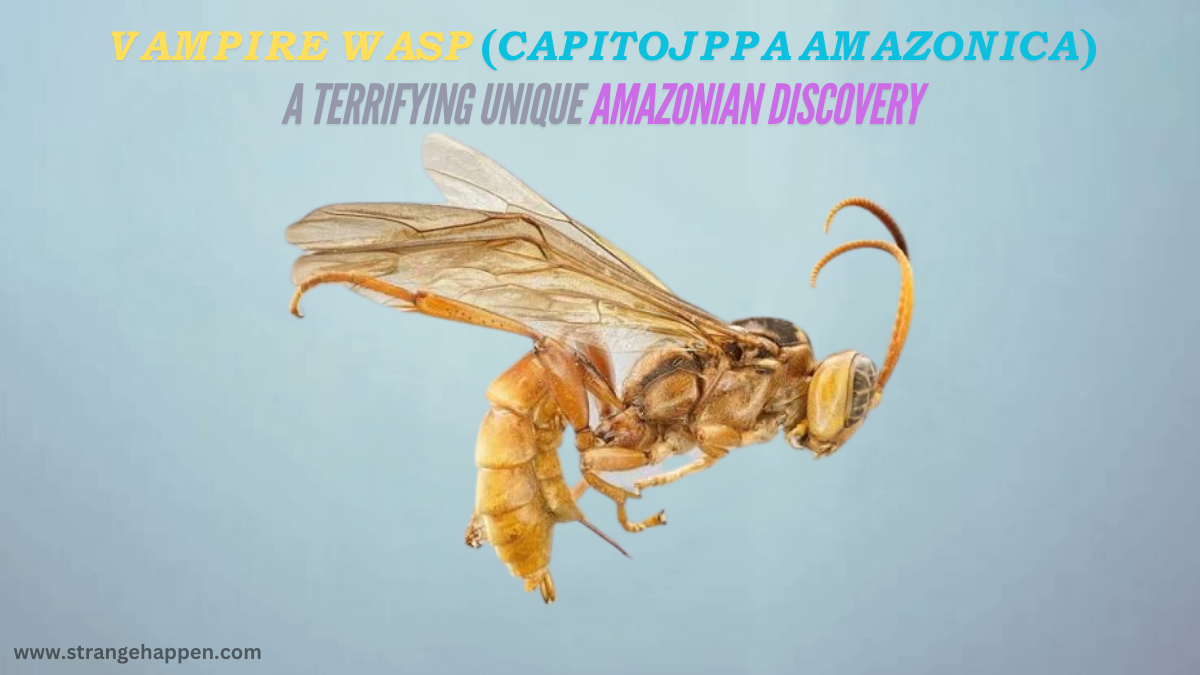
Vampire Wasp (Capitojoppa amazonica): A Terrifyingly Unique Amazonian Discovery
Vampire Wasp, Found in 2023 in the Peruvian Amazon, the vampire wasp (Capitojoppa amazonica) has caught mainstream researchers’ interest because of its parasitic conception propensities, exceptional life structures, and the biological job it plays. While not a danger to people, the wasp’s lifecycle and taking care of methodologies are perfect representations of the hazier side of transformative variation.
Vampire Wasp (Capitojoppa amazonica) Introduction
The Capitojoppa amazonica, or vampire wasp, has a place with the Ichneumonidae family, a gathering of wasps eminent for their parasitic way of behaving. The “vampire” moniker catches its strange lifecycle, wherein it depends on other residing bugs to raise its young. However grisly, this procedure has demonstrated exceptionally effective, with the vampire wasp flourishing in the thick rainforests of the Amazon.
Habitat and Geographic Range
The vampire wasp is local to the Peruvian Amazon, a district known for outrageous biodiversity and exceptional transformative variations. Here, the vampire wasp flourishes, tracking down bountiful hosts and optimal circumstances in muggy and lavish biological systems. The Amazon’s complicated food networks and thick vegetation offer an ideal environment where the wasp’s parasitic nature can prosper, to a great extent undisturbed by people.
Lifecycle of the Vampire Wasp (Capitojoppa amazonica)
The vampire wasp, a one of a kind parasite found in the Peruvian Amazon, has a day to day existence cycle that captivates researchers because of its determined way to deal with endurance and multiplication. Each stage — egg laying, larval turn of events, and pupation — exhibits the wasp’s complicated and dull transformation to its current circumstance, guaranteeing its hatchlings’ development and development to the detriment of another living animal.
Lifecycle Stages of Capitojoppa amazonica
Egg Laying
The female vampire wasp utilizes a particular instrument, the ovipositor, to painstakingly lay a solitary egg inside a live bug have, frequently a caterpillar or another delicate bodied bug.
- Have Determination: Females select has in a calculated manner, picking ones that give ideal circumstances to their creating hatchlings, expanding the chances of the wasp’s conceptive achievement.
Larval Turn of events
Subsequent to incubating, the hatchling starts benefiting from the host’s non-fundamental tissues, drawing out the host’s life to give a consistent supplement source.
- Have Control: By consuming unimportant organs first, the hatchling expands its taking care of time, keeping the host alive as far as might be feasible.
- Conduct Effect: The host’s adjusted state might possibly deflect hunters, however this peculiarity requires further examination.
Pupation and Development:
At the point when the hatchling has consumed a large portion of the host, it enters the pupal stage inside the host’s remaining parts, transforming into a grown-up wasp.
- Change: During pupation, the wasp fosters its grown-up highlights, like wings and conceptive organs.
- Last Rise: After finishing improvement, the grown-up wasp leaves the host’s vacant shell, prepared to rehash the lifecycle in another host.
This parasitic cycle highlights the vampire wasp’s transformative variation, adjusting its requirements for development with methods for surviving fit to its thick Amazonian natural surroundings.
Actual Characteristics of the Vampire Wasp
The vampire wasp (Capitojoppa amazonica) has a scope of actual qualities that improve its viability as a parasite. Here are extra elements that add to its endurance and progress in the Amazon rainforest:
- Ovipositor: This long, adaptable organ is essential for infusing eggs into have bugs with accuracy, permitting the female to lay eggs in difficult to-arrive at places without hurt.
- Dim Disguise: The wasp’s dim tinge permits it to mix flawlessly into the shadows of the rainforest, assisting it with sidestepping hunters and stay undetected while chasing after has.
- Coordinated Body Construction: Its slim, stretched body works with quick development through thick vegetation, supporting both avoidance from bigger hunters and fast admittance to expected has.
- Tangible Receiving Wires: The vampire wasp has exceptionally evolved radio wires that improve its capacity to identify pheromones from possible hosts, as well as vibrations in the climate, empowering it to find appropriate prey.
- Substance Guard Components: A few wasps in the Ichneumonidae family, including the vampire wasp, may emit synthetics that can discourage hunters or parasites. These substances can go about as an obstacle, permitting the wasp to get away from experiences with bigger dangers.
- Fast Wingbeats: The wasp’s wings beat quickly, which helps with nimble trip as well as make a sound that might befuddle or surprise likely hunters, permitting the wasp to make a speedy break.
- Size Variety: The vampire wasp displays size variety, with bigger people possibly scaring more modest hunters or contending species, while more modest people can explore more tight spaces inside the thick foliage of their territory.
These transformations show how the vampire wasp has developed to flourish in a mind-boggling biological system, utilizing various techniques to guarantee its endurance and regenerative achievement. For more point by point data about the vampire wasp and its biological job, you can investigate assets like Public Geographic and Science-Direct.
Conduct and Taking care of Instrument of the Vampire Wasp (Capitojoppa amazonica)
The vampire wasp’s unpredictable way of behaving and concentrated taking care of components are crucial for its endurance as a parasite. These characteristics guarantee the hatchlings’ fruitful improvement as well as assume a huge part in keeping up with the biological equilibrium inside the Amazon rainforest.
Key Behavioral Traits
- Have Discovery: The vampire wasp uses its profoundly delicate receiving wires to identify expected has. These receiving wires are finely adjusted to single out the substance transmissions and pheromones delivered by delicate bodied bugs, especially caterpillars. This olfactory ability permits the wasp to find has successfully, making it an adroit hunter in the thick rainforest climate.
- Parasitism: After the female lays her egg inside a host, the hatchlings start to inside take care of. They explicitly target unnecessary organs, like fat bodies and different tissues, permitting the host to stay alive for a drawn out period. This conduct is urgent on the grounds that it guarantees a consistent stock of nourishment for the hatchlings, expanding their development potential. The larval taking care of interaction isn’t just grim yet in addition exceptionally vital, permitting the hatchlings to flourish while the host endures.
- Particular Parasitism: Not at all like numerous unpredictable hunters, the vampire wasp shows specific parasitism. It targets explicit host species that offer ideal circumstances for the advancement of its hatchlings. This designated approach assists control populaces of specific bugs, which with canning forestall overpopulation and related plant harm. By directing these bug populaces, the vampire wasp by implication helps the Amazonian environment, adding to its general well-being and balance Variations
- Wary Methodology: The vampire wasp approaches potential has subtly, limiting recognition. This cautious technique is essential in guaranteeing that it can effectively infuse its eggs without disturbing the host or standing out from hunters.
- Impact on Host Conduct: Exploration recommends that the hatchlings can impact the way of behaving of their hosts, making them less dynamic and diminishing their perceivability to hunters. This control effectively drags out the existence of the host, subsequently helping the hatchlings’ turn of events.
- Worldly Synchronization: The vampire wasp might time its conceptive exercises with the existence patterns of its picked have species, guaranteeing that hatchlings have adequate food sources after incubating. This synchronization is critical to amplifying the endurance pace of the posterity.
Defensive and Attacking Mechanisms of the Vampire Wasp (Capitojoppa amazonica)
The vampire wasp (Capitojoppa amazonica) has evolved unique defensive and attacking mechanisms that allow it to survive and thrive in the competitive environment of the Amazon rainforest. Its strategies encompass a combination of physical adaptations and behavioral tactics that aid in both securing hosts for its larvae and evading potential threats.
Defensive Mechanisms
- Fast Flight: The vampire wasp has a lithe flight capacity, permitting it to escape from hunters rapidly. This speed and mobility assist it with avoiding bigger creatures and hunters who may be drawn to its developments.
- Cover and Aversion: The wasp’s dull, mysterious tinge permits it to mix into the rainforest shadows, giving regular disguise that assists it with staying away from identification by bigger hunters. Its way of behaving frequently includes remaining nearby concealed, thickly vegetated regions, where it can move unnoticeably.
- Danger Show: When compromised, the wasp might take on a guarded stance, like raising its wings or flicking its body, to make the deception of a bigger, seriously threatening bug. This strategy can frighten a hunter quickly, offering the wasp a chance to escape.
- Compound Emission: Like a few different wasps, the vampire wasp might create a gentle substance discharge that prevents little hunters. Albeit not hurtful to people or huge creatures, this discharge can act as an obstruction to more modest bugs or potential parasitoids.
Attacking Mechanisms
- Ovipositor Accuracy: The vampire wasp’s essential weapon is its ovipositor, a particular organ utilized for infusing eggs into a host bug with noteworthy accuracy. This long, adaptable device permits the wasp to lay an egg profound inside a host, guaranteeing a fruitful parasitic connection. The ovipositor’s accuracy keeps the host from quickly distinguishing or dismissing the egg, permitting the hatchling to create undisturbed.
- Have Discovery through Receiving wires: Outfitted with exceptionally delicate receiving wires, the wasp identifies synthetic transmissions, especially pheromones, discharged by its host bugs. This permits it to distinguish reasonable has like caterpillars from a good ways, focusing on prey that offers ideal circumstances for larval development.
- Larval Host Control: After the hatchling hatches inside the host, it starts benefiting from unimportant organs, a strategy that drags out the host’s life. Via cautiously controlling the speed of taking care of, the hatchling guarantees that the host stays alive, giving a predictable food source and improving the hatchling’s endurance until it arrives at development.
The vampire wasp’s mix of protective and hostile systems is a perfect representation of nature’s versatile intricacy. These ways of behaving improve its endurance as well as make it a viable and particular parasite in its biological system, adding to the normal control of bug populaces inside the Amazon rainforest.
Ecological Role: Balance Through Parasitism
Regardless of its fearsome strategies, the vampire wasp assumes a significant natural part in its territory. By focusing on unambiguous bug populaces, it forestalls expected overpopulation of herbivorous nuisances, in a roundabout way safeguarding plants and keeping up with the equilibrium of the Amazon rainforest environment.
Conclusion
The vampire wasp (Capitojoppa amazonica) embodies nature’s chilling yet captivating methods for surviving through its parasitic lifecycle, which assumes a vital part in keeping up with biological equilibrium in rainforests like the Amazon. The as of late found Micro Chameleon, found in the Amazon rainforest, improves the biodiversity of this territory with its one of a kind variety evolving capacities.
Additionally, creatures like the tongue-eating mite (Cymothoa exigua) and Zombie Beetles, show parasitic ways of behaving that, while agitating, are fundamental to their environments. These models highlight the significance of biodiversity and protection, as every species adds to the strength and flexibility of its current circumstance.