
A loud crack splits the humid air of the rainforest. No gun was fired, no branch snapped. The sound came from a tree, and somewhere nearby, a seed fragment moving at highway speed just buried itself in a trunk fifty feet away.
This is not science fiction. The exploding tree is a real, living organism found across the tropical Americas, and it has earned a reputation as one of the most dangerous plants on Earth. It even grows in parts of south Florida, often planted as an ornamental shade tree by people who have no idea what they are standing under.
This is the story of Hura crepitans, a tree armed with spikes, poison, and a seed launching system violent enough to draw blood.
Table of Contents
What Is the Exploding Tree? (The Botanical Bomb That Actually Exists)
Scientific Name and Classification
The exploding tree’s formal name is Hura crepitans, a member of the Euphorbiaceae family, the same botanical family that includes castor bean and the notorious manchineel. Like many of its relatives, Hura crepitans produces a thick, caustic latex sap that the plant uses as a chemical defense system against insects, fungi, and anything else foolish enough to wound its bark.
Botanists have studied the species since the eighteenth century, and it remains a subject of active research today because of its unusual seed mechanics.
Why Is It Called the Dynamite Tree?
Few plants have collected as many nicknames as this one. It goes by dynamite tree, monkey no climb tree, monkey pistol, monkey dinner bell, possumwood, and jabillo, depending on the region.
Each name points to a different defense mechanism. Dynamite tree refers to the explosive force of its seed pods. Monkey no climb tree describes the spiked trunk that keeps primates and other climbers away. The nicknames are not exaggeration; they are accurate field descriptions passed down by people who lived alongside this tree for generations.
Where Does the Exploding Tree Grow?
Native Habitat and Global Distribution
The sandbox tree is native to the tropical regions of Central and South America, with a natural range stretching from Costa Rica down through the Amazon rainforest and across the Caribbean. It thrives in warm, humid lowland forests with consistently moist soil.
It has also been introduced as an ornamental and shade tree in other tropical and subtropical regions, including parts of south Florida. Outside its native range, the species has become invasive in Tanzania and parts of East Africa, where it now spreads aggressively without the natural checks found in its home ecosystem.
What Does the Sandbox Tree Look Like?
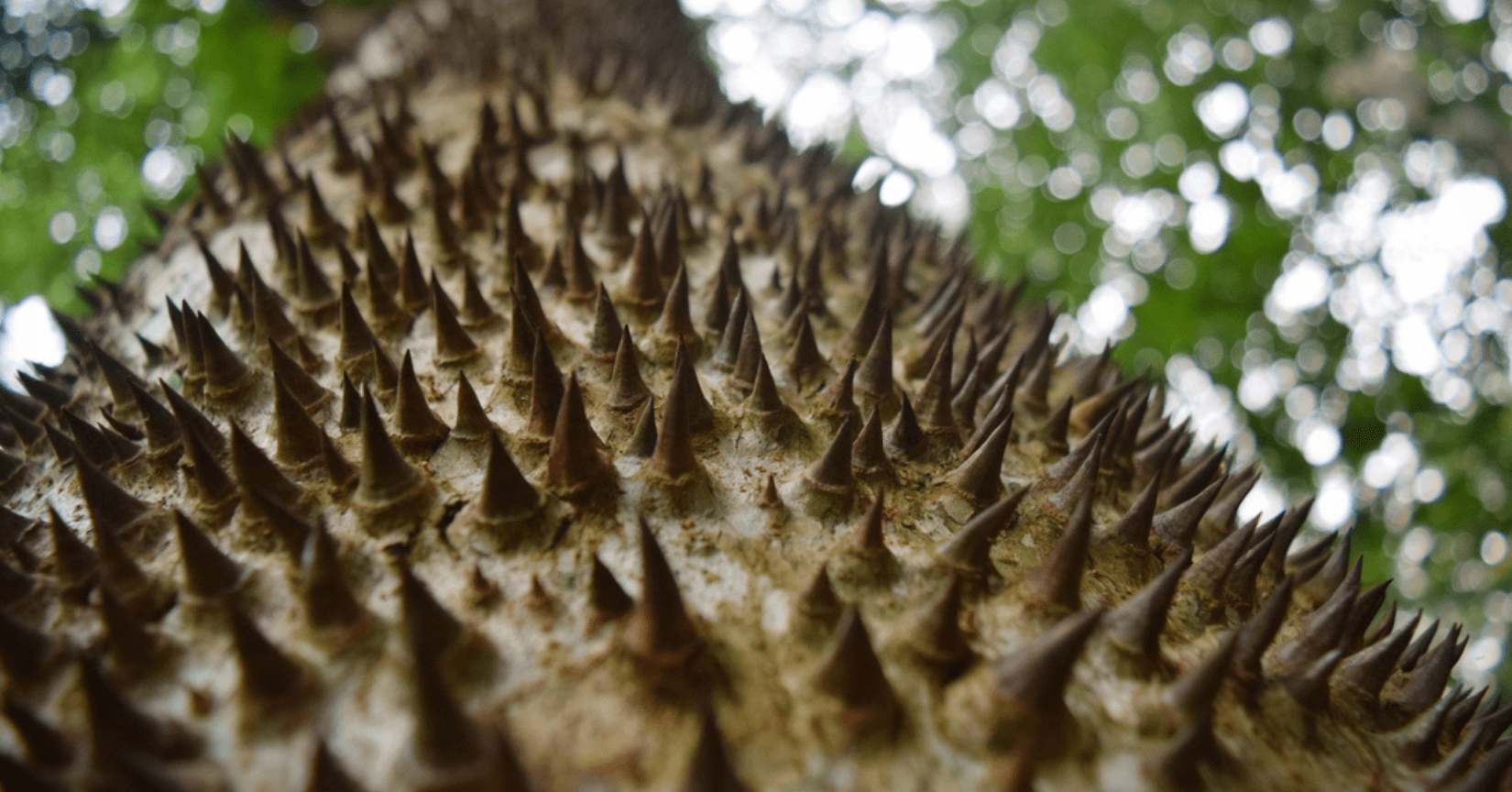
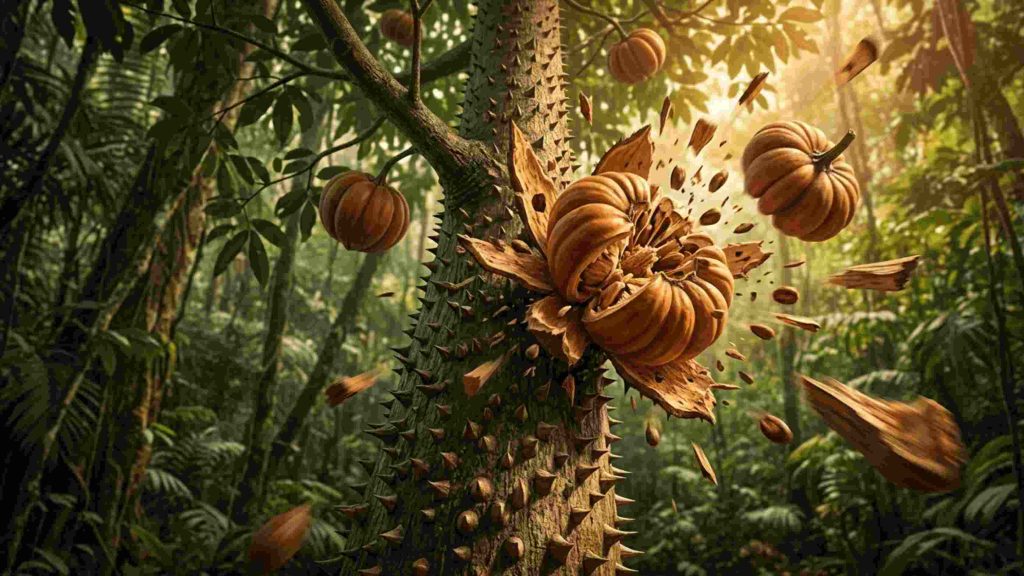
A mature sandbox tree is hard to miss. It can reach heights of nearly 200 feet, with a thick trunk covered in sharp, conical spines that make the bark look like something out of a medieval weapon.
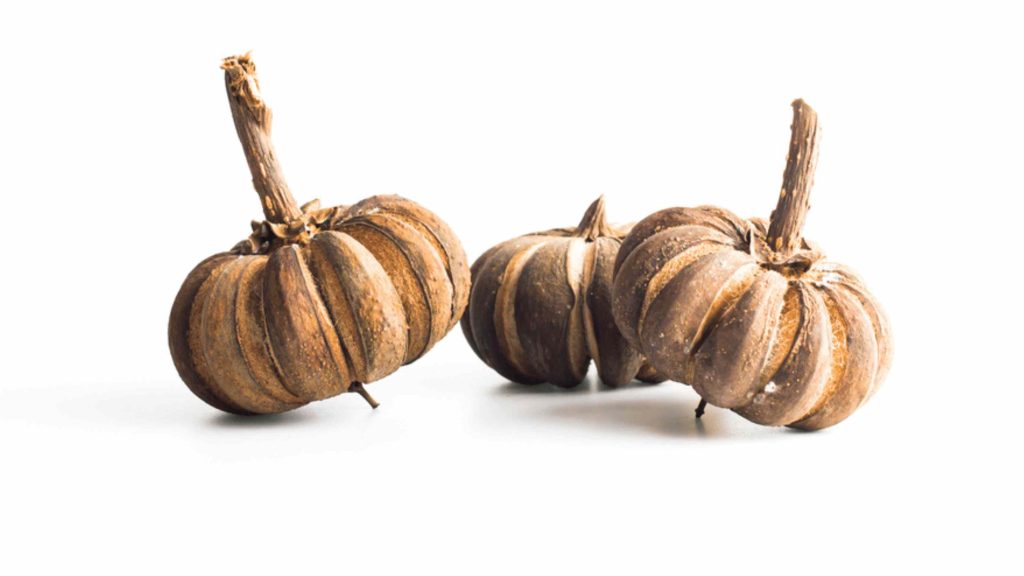
The leaves are broad and heart shaped, often growing close to two feet wide. The fruit, however, is the tree’s signature feature: a green, pumpkin shaped capsule about three inches in diameter, divided into 15 to 16 radial segments that hang quietly until the pod is ready to detonate.
The Explosion: Nature’s Most Violent Seed Dispersal
How Does the Exploding Tree Explode?
The mechanism behind the exploding tree is called explosive dehiscence. As the seed capsule ripens on the tree, internal tension builds within its woody segments. When that tension exceeds the structural limit of the pod, it ruptures violently, splitting apart and launching seeds outward in every direction.
Researchers studying the process have recorded the sound as a sharp, gunshot like bang, loud enough to startle anyone standing nearby. Research published in New Phytologist found seed velocities exceeding 70 meters per second, equivalent to roughly 150 to 160 mph.
When Does the Tree Actually Explode?
The detonation is not random. The pods need heat and dryness to fire, which is why explosions almost never happen at night or during humid, rainy conditions. As temperatures climb, the capsule loses more than half its internal moisture, drying and shrinking until the segments can no longer hold together and tear apart all at once. This makes the exploding tree more predictable than people assume, dangerous mainly during hot, dry afternoons.
How Far Do the Seeds Travel?
The numbers involved are difficult to believe for a plant. Seeds have been documented traveling up to 100 feet from the parent tree under typical conditions, with some recorded cases reaching distances closer to 330 feet, according to data published on Wikipedia.
To put that in perspective, the seeds move faster than a thrown baseball and can clear the length of a football field.
What Happens If You’re Hit by the Seeds?
This is not a gentle process. The exploding tree is genuinely described as a tree that shoots seeds like bullets, and the seeds themselves are hard, flattened, and roughly three quarters of an inch wide. At the velocities recorded by researchers, a direct hit can cause bruising, cuts, or more serious injury, particularly if it strikes the eyes or face.
Local guides in regions where the tree grows often warn visitors to avoid lingering beneath a fruiting sandbox tree, especially in hot, dry weather, when the pods are most likely to detonate.
The Deadly Weapons of the Sandbox Tree
The Toxic Sap: Nature’s Poison Factory
Beneath the bark of Hura crepitans flows a thick, milky latex that ranks among the most irritating plant saps known to science. Contact with skin can cause a painful rash and blistering welts within hours.
If the sap reaches the eyes, it can cause severe inflammation and, in documented cases, temporary or even lasting vision damage. These sandbox tree poison symptoms are well known among botanists and have been recorded in toxicology literature for decades, including the landmark 1969 study by Hardin and Arena, Human Poisoning from Native and Cultivated Plants, published by Duke University Press.
The Spike Armor: Why Nothing Dares Touch It
The trunk of the sandbox tree is covered in dense, conical spines that make climbing virtually impossible. This is precisely why the tree earned the name monkey no climb tree; even agile primates that can scale almost any other rainforest giant give this one a wide berth.
The spines serve a clear evolutionary purpose, protecting the trunk’s living tissue from animals that might otherwise strip the bark or damage the tree.
The Poisoned Fruit: A Ticking Time Bomb
The pumpkin shaped fruit looks almost inviting, smooth and segmented like a small gourd. But it shares the same toxic compounds found in the tree’s sap, and consuming it can trigger severe vomiting, cramps, and diarrhea.
Indigenous communities throughout the tree’s range have long understood this danger and historically used the toxic properties for very specific, deliberate purposes.
The Poisoned Fruit: A Ticking Time Bomb
The pumpkin shaped fruit looks almost inviting, smooth and segmented like a small gourd. But it shares the same toxic compounds found in the tree’s sap, and consuming it can trigger severe vomiting, cramps, and diarrhea.
Indigenous communities throughout the tree’s range have long understood this danger and historically used the toxic properties for very specific, deliberate purposes.
Is the Exploding Tree the Deadliest Tree in the World?
Sandbox Tree vs Manchineel Tree
When people search for the deadliest tree in the world, two names dominate the conversation: Hura crepitans and the manchineel tree, Hippomane mancinella. Both belong to the Euphorbiaceae family, both produce caustic sap, and both have toxic fruit.
The manchineel is generally considered the more dangerous of the two by toxicologists, partly because even standing beneath it during rain can cause skin burns as sap laced water drips down. The sandbox tree’s primary distinction, by contrast, is mechanical rather than purely chemical: nothing else in the plant kingdom combines toxic sap with a seed launching system this forceful, which is why many lists still rank it among the most dangerous tree in the world contenders.
How Has This Tree Harmed Humans Historically?
Indigenous groups across Central and South America have documented and managed the dangers of Hura crepitans for centuries. Its sap was historically used to poison the tips of arrows and darts for hunting and, in some accounts, warfare. The Caribs specifically are recorded as having made arrow poison from the sap, a detail confirmed across multiple botanical and ethnobiology sources. Fishermen in parts of its range also reportedly used the milky sap to stun fish in small streams, a practice recorded by early naturalists exploring the Amazon basin.
Strange and Shocking Facts About the Exploding Tree
The Explosion Sounds Exactly Like a Gunshot
Eyewitness accounts and field recordings consistently describe the sound of a bursting sandbox tree pod as a sharp crack, similar enough to gunfire that it has reportedly startled people unfamiliar with the tree.
Indigenous Tribes Weaponized This Tree for Centuries
Long before modern toxicology classified its compounds, local communities had already identified and harnessed the sap’s potency for hunting tools.
The Name Sandbox Has Nothing to Do With Playgrounds
The name traces back to colonial era writing desks, not children’s toys, a detail most readers never expect.
Explosive Dehiscence Is One of Nature’s Fastest Movements
Scientists studying plant biomechanics have clocked the seed launch as one of the most rapid mechanical events in the entire plant kingdom, with the rupture itself lasting only a fraction of a millisecond.
The Tree Was Used as an Ink Blotter in Colonial Times
Dried, hollowed seed capsules were once filled with sand and used to blot wet ink on handwritten letters, a practical use that gave the tree its everyday name.
The Tree Is Now Considered Invasive in Africa
After being introduced to Tanzania, the sandbox tree spread aggressively beyond cultivation, and conservationists now classify it as an invasive species across parts of East Africa.
Its Wood Was Once Used to Build Canoes
Despite its toxic reputation, the tree’s lightweight wood has historically been carved into canoes and furniture by communities throughout its native range.
Monkeys Genuinely Avoid Climbing It
Field naturalists have observed that even highly capable climbing primates consistently bypass the sandbox tree in favor of smoother barked neighbors.
The Exploding Tree in Human History and Culture
How Indigenous People Used the Sandbox Tree
Beyond hunting tools, communities throughout the tree’s native range incorporated its toxic sap into traditional practices passed down through generations of careful, observational knowledge about the surrounding rainforest.
Colonial Uses: The Strange Origin of the Name Sandbox
European settlers in the Caribbean and South America discovered that the dried, woody seed capsules made convenient containers. Filled with fine sand, they were used to dust over fresh ink on letters and documents, soaking up the excess before it smudged. That everyday office tool, common up until the mid-1800s, is the surprising source of the tree’s most common English name.
Modern Scientific Interest
Today, Hura crepitans attracts attention from biomechanics researchers studying explosive dehiscence as a model for understanding rapid energy release in biological systems. The tree’s seed oil is also processed into biodiesel and soap, and the leftover seed meal can be cooked and used as animal feed, giving the species an unexpected role in sustainable materials research alongside its dangerous reputation.
Could the Exploding Tree Hurt You Today?
Where Are You Most Likely to Encounter It?
Travelers exploring the Amazon rainforest, Central American rainforests, or Caribbean botanical gardens are the most likely to encounter a mature sandbox tree. It has also been planted as a curiosity or shade tree in parts of south Florida and other warm regions.
What Should You Do If You Come Near One?
Botanical experts recommend keeping a respectful distance from fruiting trees, avoiding any contact with the sap, and never attempting to break open or collect the seed pods by hand.
Are There Any Exploding Tree Incidents on Record?
Documented injuries are relatively rare but consistent across botanical and travel literature: minor cuts, bruising from seed impacts, and skin irritation from sap contact have all been reported by visitors and researchers working near fruiting specimens.
More Strange Discoveries You’ll Love
- Amazon’s Deadly Secret: The Rainforest’s Most Dangerous Wildlife
- 10 Heartless Creatures: Nature’s Strangest Survival Adaptations
- The Amazon Rainforest: Inside Earth’s Largest Tropical Ecosystem
- Plastic-Eating Fungi: The Microorganism Solving a Global Crisis
- Zombie Ant Fungus: The Parasite That Controls Its Host’s Mind
Frequently Asked Questions About the Exploding Tree
What is an exploding tree?
An exploding tree is Hura crepitans, a tropical tree whose ripe seed pods burst open with explosive force, firing seeds outward at high speed.
What is the sandbox tree also known as?
The sandbox tree is also called the dynamite tree, monkey no climb tree, monkey pistol, monkey dinner bell, possumwood, and jabillo.
How fast do sandbox tree seeds travel?
Sandbox tree seeds travel at roughly 150 to 160 mph, among the fastest known seed dispersal speeds in the plant kingdom.
How far can exploding tree seeds fly?
Exploding tree seeds typically travel up to 100 feet from the parent tree, with some recorded cases reaching nearly 330 feet.
Is the exploding tree the most dangerous tree in the world?
The exploding tree ranks among the most dangerous trees, though the manchineel tree is generally considered more toxic overall.
Where does the exploding tree grow?
The exploding tree is native to Central and South America, including the Amazon basin, and has spread to south Florida and parts of East Africa.
What happens if you touch sandbox tree sap?
Sandbox tree sap causes painful skin irritation and blistering on contact, and can cause serious damage or temporary blindness if it reaches the eyes.
Can the sandbox tree kill you?
The sandbox tree is rarely fatal to humans, but its toxic sap, poisonous fruit, and high speed seed launch can all cause serious injury.
What does explosive dehiscence mean?
Explosive dehiscence is the rapid, forceful splitting of a ripe seed pod that propels seeds outward at high velocity.
Why is it called the monkey no climb tree?
t is called the monkey no climb tree because its trunk is covered in sharp conical spines that prevent monkeys and other animals from climbing it.
What is the scientific name of the sandbox tree?
he scientific name of the sandbox tree is Hura crepitans, a member of the Euphorbiaceae family.
Is the sandbox tree the same as the manchineel tree?
No, the sandbox tree and the manchineel tree are different species, though both belong to the Euphorbiaceae family and are considered among the most dangerous trees in the world.
Conclusion: Nature’s Most Explosive Secret
The exploding tree proves that some of the strangest things on Earth need no embellishment. A plant that fires seeds at highway speeds, wields blistering sap, and wears a coat of spikes sharp enough to repel monkeys sounds invented, yet Hura crepitans grows quietly across the tropical Americas, and even in a few backyards in Florida.
References
- Wikipedia — Hura crepitans
- Encyclopaedia Britannica — Sandbox Tree
- Hardin, J. W., Arena, J. M. (1969) — Human Poisoning from Native and Cultivated Plants, Duke University Press
- Google Arts & Culture, Botanical Research Institute of Texas — Curiously Dangerous: The Sandbox Tree
- New Phytologist — Explosive Seed Dispersal in Hura crepitans L. (Euphorbiaceae)
About the Author
Evan Brooks is a science and history writer for Strange Happenings, specializing in archaeology, space exploration, ancient civilizations, and emerging scientific discoveries. His work focuses on translating complex research into engaging, evidence-based stories that help readers understand the mysteries of our world and beyond.