


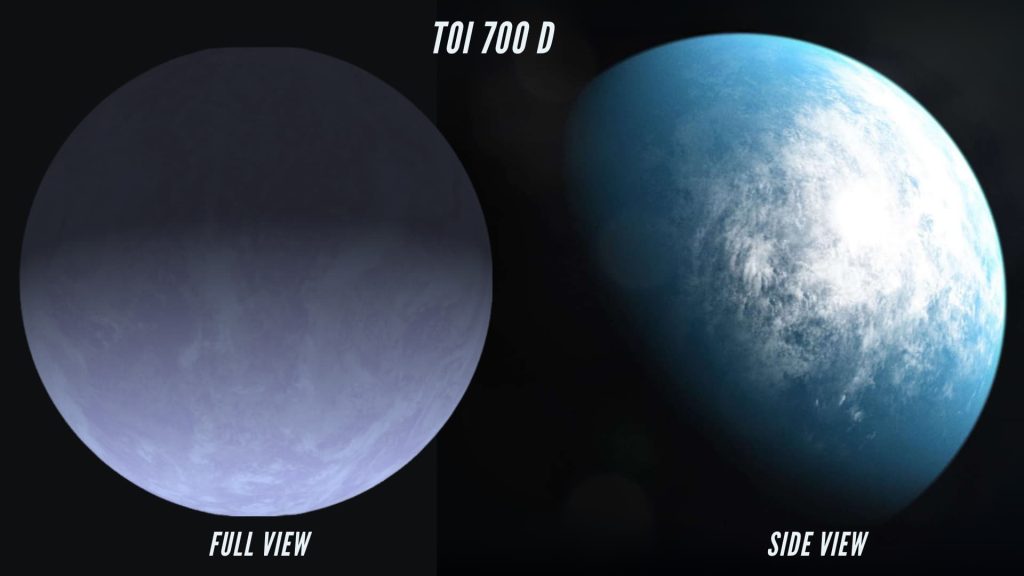
TOI 700 d
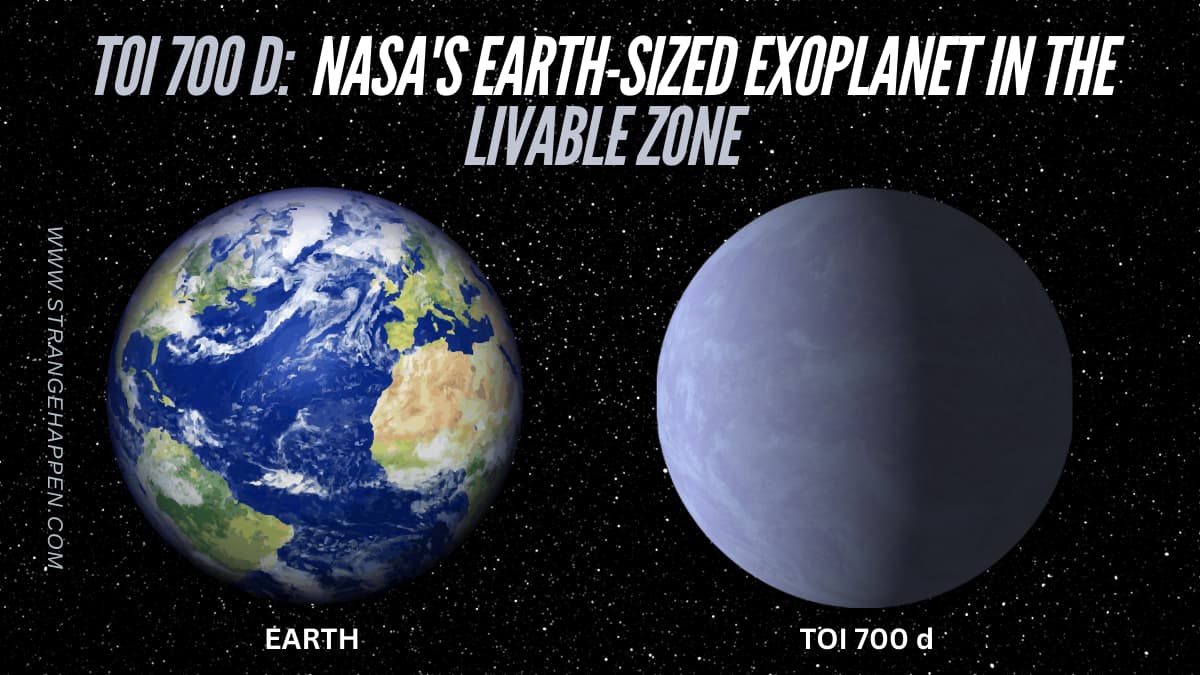
TOI 700 d: NASA’s Earth-sized Exoplanet in the Livable Zone
TOI 700 d: NASA’s Earth-sized Exoplanet in NASA’s Voyaging Exoplanet Survey Satellite (TESS) made an undeniably exhilarating disclosure: TOI 700 d, an Earth-sized exoplanet arranged around 100 light-years away in the sublime body Dorado. In its star’s legitimate zone, TOI 700 d presents a magnificent opportunity to explore the potential for liquid water and, possibly, extraterrestrial life.
In this blog, we’ll dive into the nuances of TOI 700 d, its disclosure, and why it stands separated as a strong competitor for future extraterrestrial exploration. Habitable Zone
1. TOI 700 d Introduction
The revelation of TOI 700 d is perhaps of the most entrancing tracking down as of late. Identified by NASA’s TESS mission, this world-estimated planet circles close by a star inside its tenable zone, making it an excellent contender for additional concentration on planetary frameworks with potential life-supporting circumstances.
Found on January 3, 2020, by Emily Gilbert et al., TOI 700 d is situated around 100 light-years away. Its steady circle and Earth-like circumstances offer researchers a significant chance to study livable exoplanets past our nearby solar system
2. The Discovery of TOI 700 d
NASA’s TESS recognized TOI 700 d during its central goal to look for planets circling close by stars. It was at first misclassified because of the weak idea of its host star, however resulting perceptions uncovered it to be a super-Earth inside a good zone for livability.
TESS utilizes the travel strategy to find exoplanets, estimating plunges in splendor as planets pass before their stars. It circles a small red star, and information affirms it as the peripheral planet in an arrangement of no less than three planets.
3. What is a Habitable Zone?
The livable zone, likewise called the “Goldilocks zone,” is the district around a star where temperatures are perfect for fluid water to exist. Planets inside this zone aren’t excessively hot or excessively cool, making them bound to help life.
On account of TOI 700 d, the planet circles inside this zone of its star, expanding the likelihood that fluid water could exist on its surface, a vital component forever.
4. Star System of TOI 700 d
It circles a small red star called TOI 700, which is cooler and more modest than the Sun. Red smaller people are frequently read up for tenable planets since they consume gradually and live significantly longer than Sun-like stars, giving their planets additional opportunities to foster life.
The TOI 700 framework contains three known planets:
- TOI 700 b: A rough planet nearest to the star.
- TOI 700 c: Logical a gas or ice monster.
- TOI 700 d: The most Earth-like planet, situated in the livable zone.
5. Physical Characteristics
It is a charming exoplanet in the tenable zone and shows a few key qualities that make it stick out.
- Size: It is around 1.2 times the size of Earth, showing it’s comparable in scale to our planet.
- Orbital Period: It finishes a circle around its host star every 37.42 days.
- Distance from Star: With a semi-significant hub of 0.1633 AU, it circles near its star but stays in the tenable zone.
- Eccentricity: Its unpredictability of 0.042 proposes a stable and almost round circle.
- sSurface Temperature: The surface temperature is roughly 268.8 K (−4.3°C or 24.2°F), making it cool, however its situation in the tenable zone considers the chance of fluid water.
6. Why TOI 700 d is a Prime Candidate for Life
It is in a tidally locked circle, meaning one side of the planet is continuously confronting the star while the opposite side remains in obscurity. This makes outrageous temperature varieties, however with a sufficiently thick climate, intensity could be conveyed all the more uniformly across the planet.
- Water Potential: Given its area in the livable zone, researchers accept there could be fluid water either on the sunlit side or in sub-surface seas.
- Earth-like Circumstances: Its Earth-like size and comparable energy levels from its star make TOI 700 d an interesting possibility for future investigation into the potential forever.
7. Future Exploration of TOI 700 d
NASA’s James Webb Space Telescope (JWST) will assume a huge part in concentrating on TOI 700 d. JWST can inspect the planet’s climate to look for biosignatures like oxygen or methane, which could show life.
Further perceptions utilizing ground-based telescopes will likewise assist with social affairs information on TOI 700’s synthesis, atmospheric conditions, and generally speaking tenability.
8. Conclusion
The disclosure of TOI 700 d means a critical accomplishment in the journey for legitimate universes past our close-planet bunch. Its region in the valid zone, Earth-like size, and potential for liquid water make it a top opportunity for future examination. In equal, the quest for Planet Nine inside our nearby planet group features the continuous investigation of universes past our ongoing information. As we continue to accumulate extra information from missions like TESS and JWST, both TOI 700 d and the speculative Planet Nine may one day offer indispensable signs about the presence of life past Earth.
Key Facts About TOI 700 d:
- Found by NASA’s TESS mission.
- Found 100 light-years away.
- Circles a red small star in the livable zone.
- Roughly 1.2 times the size of Earth.
- Potential circumstances for fluid water.