


- Ancient Beliefs
- Ancient Egyptian
- Ancient Mystery
- Ancient Wonder
- Archaeological Find
- Mysterious Sites
- Science
The Whispering Statues of Tell Brak
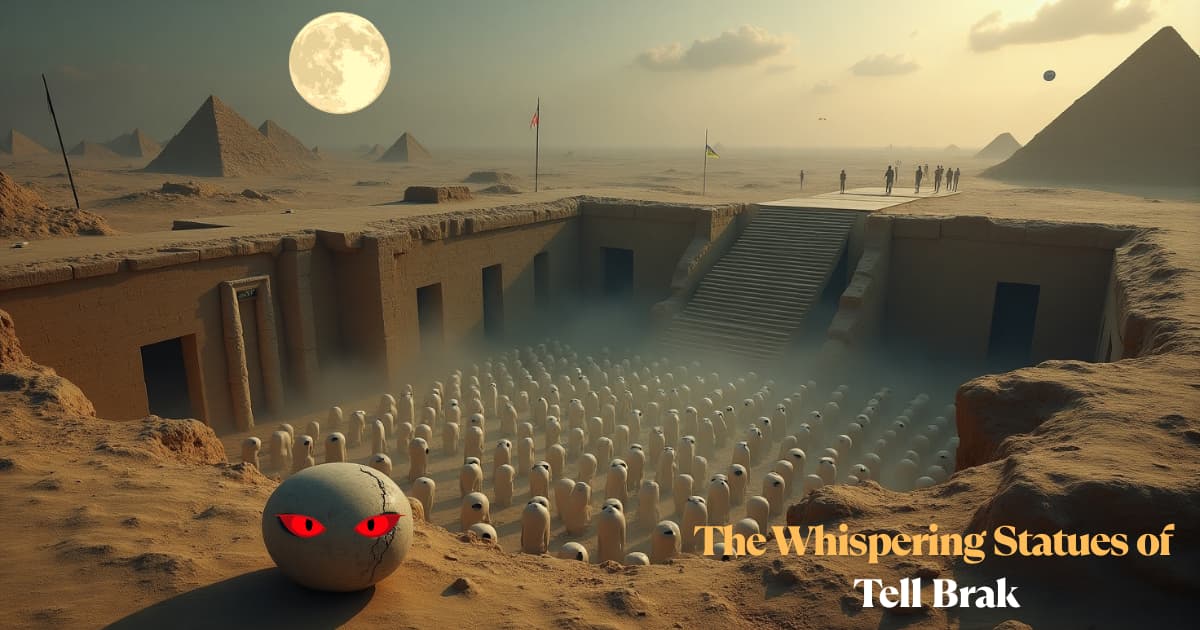
The enigmatic eye idols from Tell Brak remain one of the most mysterious archaeological discoveries of ancient Mesopotamia. These small, haunting figures, unearthed in what is now northeastern Syria, have sparked intrigue among historians, archaeologists, and spiritual researchers for decades. With their distinctive oversized eyes and minimalist features, they challenge our understanding of early civilizations, symbolism, and rituals. The Whispering Statues of Tell Brak aren’t just ancient artifacts; they are profound relics that whisper untold stories of a forgotten civilization.
What Are the Whispering Statues of Tell Brak?
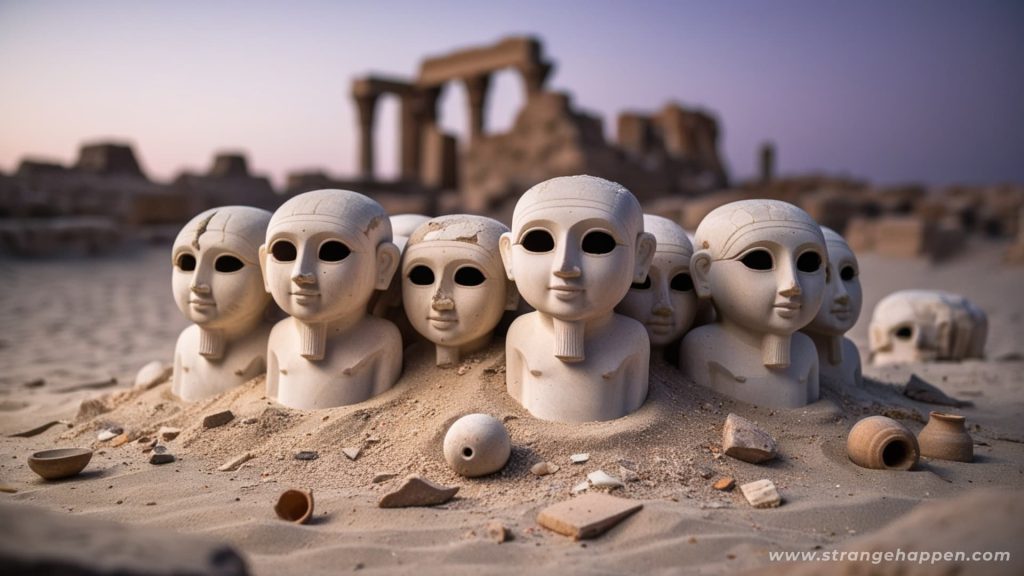
The Whispering Statues of Tell Brak are ancient alabaster idols known for their wide, circular eyes and simplified bodies. Found at the ancient Mesopotamian site of Tell Brak—once one of the earliest urban settlements—the statues date back over 5,000 years to around 3500 BCE. Often called “Whispering Statues” due to their eerie silence and spiritual implications, they continue to inspire awe and scholarly curiosity. Their ghostly appearance and repetitious discovery at sacred sites elevate their status in the annals of archaeological marvels.
Historical Context of the Whispering Statues of Tell Brak
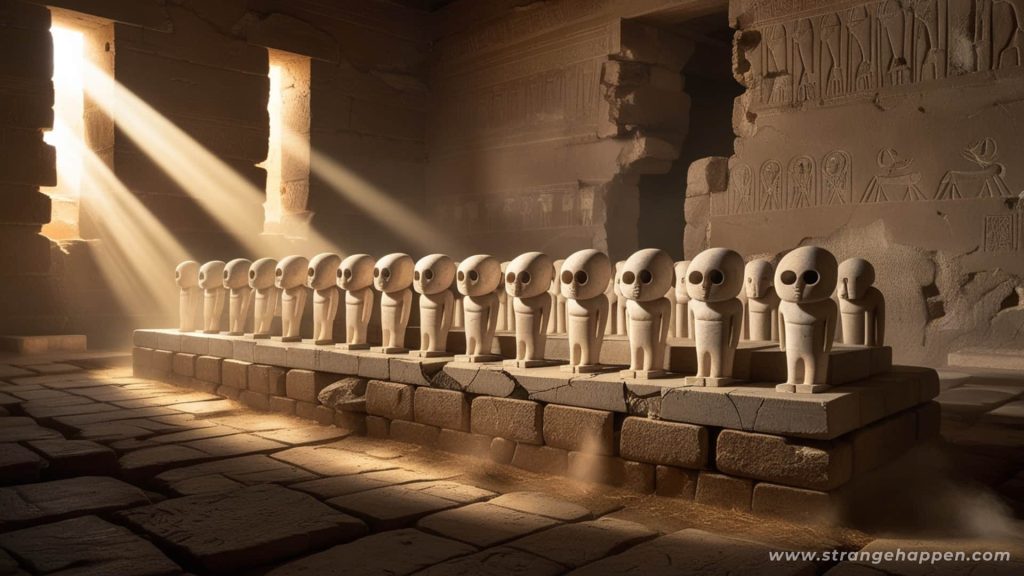
Tell Brak was a major urban hub during the rise of Mesopotamian culture, functioning as a religious, commercial, and political center. The Whispering Statues of Tell Brak were primarily discovered in the so-called Eye Temple, named after the thousands of similar figurines unearthed there. Their abundance and centralized location suggest these artifacts played a significant spiritual role in the city’s religious life. These idols likely served as the spiritual eyes of the community, observing rituals and conveying divine presence.
Uncovering the Symbolism Behind the Whispering Statues
The oversized eyes of the Whispering Statues of Tell Brak are believed to symbolize divine awareness or an all-seeing spiritual presence. Many scholars suggest these idols were early representations of deities or protective spirits. Others propose that they symbolized the soul or were used to establish a connection between the living and the divine. These interpretations provide a glimpse into the metaphysical beliefs of the era.
What Were the Whispering Statues of Tell Brak Used For?
Numerous theories have emerged about their purpose:
- Spiritual Offerings: The Whispering Statues of Tell Brak were likely left as tokens of devotion in religious ceremonies.
- Divine Watchfulness: Their penetrating eyes may signify supernatural beings believed to watch over human actions.
- Ancestor Worship: Some believe the Whispering Statues of Tell Brak could depict loved ones or spirits from past generations.
Each theory underscores the profound religious and cultural significance attached to these haunting figures.
Unearthing the Whispering Statues of Tell Brak
British archaeologist Max Mallowan led the first major excavation of the Tell Brak site in the 1930s. Since then, numerous additional Whispering Statues of Tell Brak have been discovered, often found in clusters. These groupings may suggest ritual deposit practices or ceremonies performed en masse. The varied designs hint at diverse purposes or symbolic meanings assigned to different statues.
Archaeological and Cultural Importance of the Whispering Statues of Tell Brak
The Whispering Statues of Tell Brak predate writing, making them essential to understanding the pre-literate expressions of human belief and emotion. They serve as some of the earliest surviving visual indicators of spirituality. Their minimal yet expressive features offer vital insights into early human thought, revealing the complexities of ancient worship and societal structure.
Global Interest in the Enigmatic Statues of Tell Brak
Museums and institutions around the world feature the Whispering Statues of Tell Brak in exhibitions dedicated to Mesopotamian culture. Scholars continue to study them to unlock clues about the early urban civilizations of the Near East. Their appeal extends beyond academia—they are admired for their stark beauty, artistic simplicity, and symbolic depth.
Influence on Art and Storytelling
Contemporary creatives frequently find inspiration in the mysterious form and history of the Whispering Statues of Tell Brak. Their strange appearance and ancient origin have fueled stories ranging from speculative fiction to historical reenactments. These idols serve as enduring symbols of mystery and the forgotten wisdom of early societies, blending myth and history into compelling narratives.
Advances in Scientific Research
Technological tools such as 3D scanning, isotopic analysis, and digital reconstruction have allowed researchers to examine the Whispering Statues of Tell Brak in extraordinary detail. Such studies reveal insights into their material origins, manufacturing techniques, and the trade routes used by their creators. These innovations open new doors to understanding their role and significance.
Conservation and Preservation of the Whispering Statues of Tell Brak
The ongoing regional unrest and the passage of time have made safeguarding the Whispering Statues of Tell Brak an urgent concern. Digital archiving and international collaborations aim to protect their cultural heritage and make them accessible to future generations. Virtual museums and 3D models are helping spread awareness and appreciation for their historical importance.
The Enduring Legacy of the Whispering Statues of Tell Brak
Though silent and small, the Whispering Statues of Tell Brak speak volumes about the spiritual life of early humans. These enigmatic idols continue to bridge past and present, inviting contemplation about how our ancestors expressed reverence, awe, and wonder. These figures are more than mere artifacts; they serve as voices from the distant past, softly conveying stories across thousands of years.
If you’re fascinated by ancient civilizations, unexplained relics, and the evolution of spiritual belief, the Whispering Statues of Tell Brak offer a profound glimpse into humanity’s distant past. From their spiritual symbolism to their artistic mystery, the Whispering Statues of Tell Brak remain one of archaeology’s most captivating finds.
Conclusion
The Whispering Statues of Tell Brak are more than ancient carvings—they are echoes of a civilization’s soul. Emerging from one of humanity’s earliest urban landscapes, these haunting figures with their wide, watchful eyes continue to stir curiosity and reverence. Their silent presence challenges us to consider how the earliest humans grappled with divinity, identity, and the unseen forces of the world around them. As science and technology uncover new layers of meaning, these idols remain timeless reminders of our enduring quest to understand the spiritual and symbolic roots of human existence. In their gaze, we glimpse the forgotten dreams and sacred beliefs of a world long gone—but not lost.
If you want to explore more knowledge about ancient mysteries, strange happenings, and eerie facts, stay connected with Strange Happenings.