
When we think of immortality, we picture vampires, ancient gods, or maybe even billionaires chasing life-extending tech. But what if one of Earth’s most unassuming creatures—smaller than your fingernail—has already cracked the code to eternal life? Say hello to Turritopsis dohrnii—a tiny sea creature famously nicknamed the immortal jellyfish for its jaw-dropping ability to cheat death.
This tiny marine wonder doesn’t just defy death—it rewinds its biological clock. It’s not science fiction. It’s not a hoax. It’s a mind-bending biological truth that’s got scientists buzzing and futurists dreaming. But can the immortal jellyfish really live forever? And what does that even mean?
Let’s dive deep into this fascinating creature, its uncanny ability to regenerate, its life cycle, habitat, diet, and whether this jellyfish could pose any danger to humans. Oh—and we’ll repeat the focus keyword immortal jellyfish often (naturally, of course) for those of you hunting facts and SEO juice.
Table of Contents
What Exactly Is the Immortal Jellyfish?
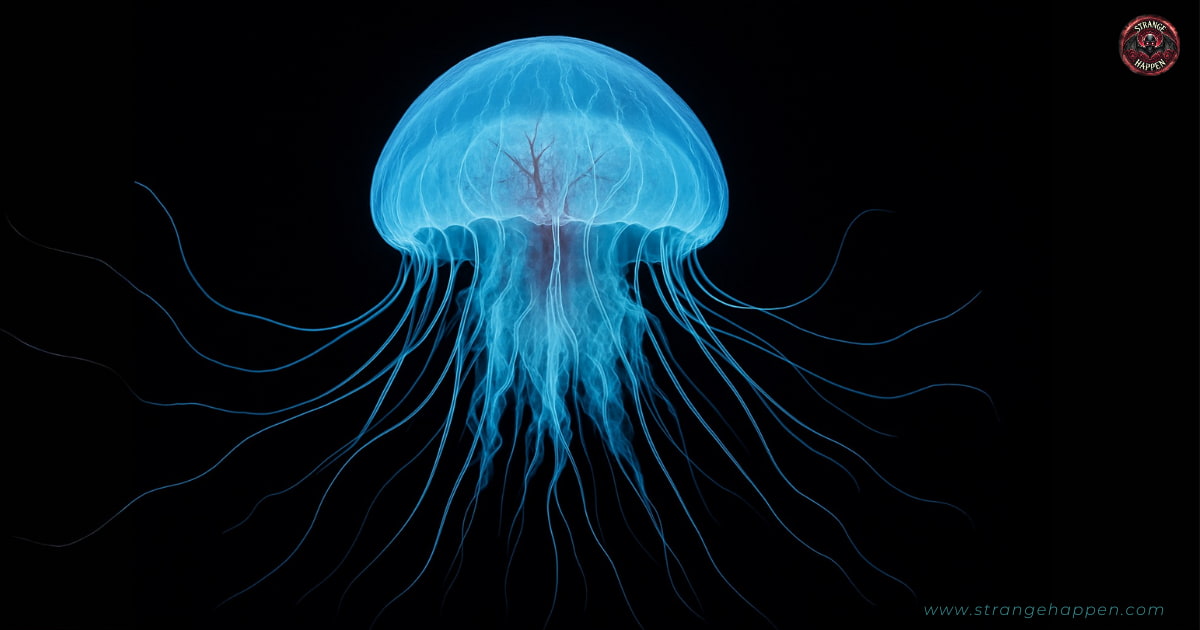
Scientifically known as Turritopsis dohrnii, the immortal jellyfish is a species of small hydrozoan jellyfish native to the Mediterranean Sea but now found in oceans around the world.
Don’t be fooled by its delicate appearance. This jellyfish, measuring just about 4.5 millimeters in diameter, holds a biological trick that borders on science fiction. It has the unique ability to transform its cells back to a more youthful state—basically giving itself a fresh start in life. Imagine turning into a baby whenever life gets tough. That’s the level of regeneration we’re talking about.
The Bizarre Life Cycle of the Immortal Jellyfish
For the majority of jellyfish species, life follows a straight path—starting as a polyp, maturing into a medusa, and eventually ending in death. But not the immortal jellyfish.
Step-by-Step Breakdown
- Egg to Planula—Like other jellyfish, they start life as a tiny larva called a planula.
- Polyp Stage – The larva attaches to a surface and becomes a polyp colony.
- Medusa Stage—The colony buds into medusae—the familiar jellyfish form.
- Biological Reversal—Here’s the twist. Instead of dying, the immortal jellyfish reverts its cells back to the polyp stage when injured, starved, or aged.
The jellyfish can go through this transformation time and again, effectively allowing it to stay in a perpetual state of youth. It’s like Benjamin Button in real life—but with tentacles.
H2: What Does Biological Immortality Really Mean?
Let’s be clear: the immortal jellyfish isn’t indestructible. It can still be eaten, get sick, or die from environmental factors. But biologically, it has no natural aging limit. It doesn’t undergo senescence—the slow deterioration that plagues nearly all life forms.
Think of it this way: aging is like rust on a car. Most animals accumulate damage over time until they break down. The immortal jellyfish is like a car that, instead of rusting, morphs back into a shiny new version every few years.
Biologically immortal, yes. Invincible? Definitely not.
How Does the Immortal Jellyfish Achieve Immortality?
The answer lies in a process called transdifferentiation. This means one type of cell transforms into another—a muscle cell can become a nerve cell, for example.
Thanks to this rare ability, the immortal jellyfish can completely reshape its cells and transform back into its youthful polyp form—essentially hitting the biological reset button. Most animals can’t do this. For us, once a cell chooses its job—skin, heart, or brain—it’s locked in. The immortal jellyfish broke that rule.
Scientists are studying this process intensely. Could we one day reverse human aging or regrow organs using similar principles? The implications are mind-blowing.
Where Does the Immortal Jellyfish Live?
Once native to the Mediterranean Sea, the immortal jellyfish has since expanded its range across the globe, showing up in the Atlantic, Pacific, Caribbean, and beyond.
Through ballast water discharge and global shipping routes, these tiny jellyfish have unintentionally traveled vast distances across the world’s oceans. Nowadays, these jellyfish flourish in a wide range of marine environments, from warm temperate zones to tropical seas. Their habitats include:
- Shallow coral reefs
- Deep open ocean
- Coastal regions with plenty of plankton
They’re versatile and surprisingly resilient, thriving in a wide variety of marine environments.
What Does the Immortal Jellyfish Eat?
The immortal jellyfish may have eternal youth, but it still needs lunch. These tiny predators survive by eating other small organisms, with a diet that mainly includes.
- Plankton
- Tiny fish eggs
- Larvae
- Microcrustaceans
Using their long tentacles, they sting and immobilize prey with nematocysts—tiny venomous harpoons. While their sting isn’t harmful to humans, it’s deadly to microscopic sea life.
How Does Immortal Jellyfish Defend Itself?
The immortal jellyfish is more “flight” than “fight.” Its primary defense mechanisms include:
- Transparency—Helps it blend with the water column.
- Small size—makes it harder for predators to spot.
- Stinging tentacles—used mostly for catching prey, but can discourage very small attackers.
Still, they’re no match for predators like larger jellyfish, fish, or sea turtles.
Is Immortal Jellyfish Dangerous to Humans?
In a word: no.
The sting of the immortal jellyfish is far too weak to affect human skin. You wouldn’t feel a thing even if it brushed against you. Unlike box jellyfish or Portuguese men-of-war, this species poses no danger to humans.
However, their ability to colonize ecosystems might raise eyebrows. Scientists are watching for signs of environmental impact, especially in places where they weren’t originally found.
How Big Is the Immortal Jellyfish?
Small but mighty. Fully grown, the immortal jellyfish measures only 4 to 5 millimeters across—roughly the width of a human fingernail.
Don’t let the size fool you. Inside this tiny creature is a cellular system that can do what no human technology can yet replicate: reset life.
The Immortal Jellyfish in Pop Culture and Science
It’s no surprise that the immortal jellyfish has inspired everything from sci-fi novels to biotechnology research. In fact:
- Futurists see it as a model for life extension.
- Biologists study its transdifferentiation to understand aging and regeneration.
- Geneticists are intrigued by the jellyfish’s DNA stability.
While it’s still early days, the immortal jellyfish could one day help unlock the secrets to human longevity.
Can the Immortal Jellyfish Truly Live Forever?
Here’s the million-dollar question: Can it really live forever?
Technically, yes—under perfect conditions. But the ocean is a dangerous place. Predators, pollution, and environmental shifts mean that most immortal jellyfish don’t actually live indefinitely in the wild.
Yet the potential for eternal life is there. And that’s a revolutionary concept in biology.
What’s the Future of Immortal Jellyfish Research?
As the global scientific community dives deeper, here’s what’s being explored:
- Anti-aging medicine inspired by jellyfish genetics
- Stem cell therapy models using transdifferentiation
- Synthetic biology that mimics jellyfish cellular behavior
The immortal jellyfish might be tiny, but its impact on science could be enormous.
Conclusion: A Creature That Changed Our View of Life
The immortal jellyfish isn’t just a marine oddity—it defies everything we thought we knew about aging and death. Through a rare process, it reverts to its younger form, essentially starting life over. Not invincible, not dominant—but undeniably mind-blowing.
Then there’s the box jellyfish, nearly invisible but armed with venom that can kill in minutes. A silent reminder that nature can be beautiful—and deadly.
And the glow jellyfish, lighting up the deep sea with bioluminescent pulses, like nature’s underwater lanterns. Mesmerizing, mysterious, and alive in the dark.
So next time you look at the ocean, remember: somewhere out there, a tiny creature might be flipping the bird to death—again and again.
Subscribe to Strange Happenings for more wild science, deep-sea mysteries, and nature’s strangest secrets.