

Bullet Ant
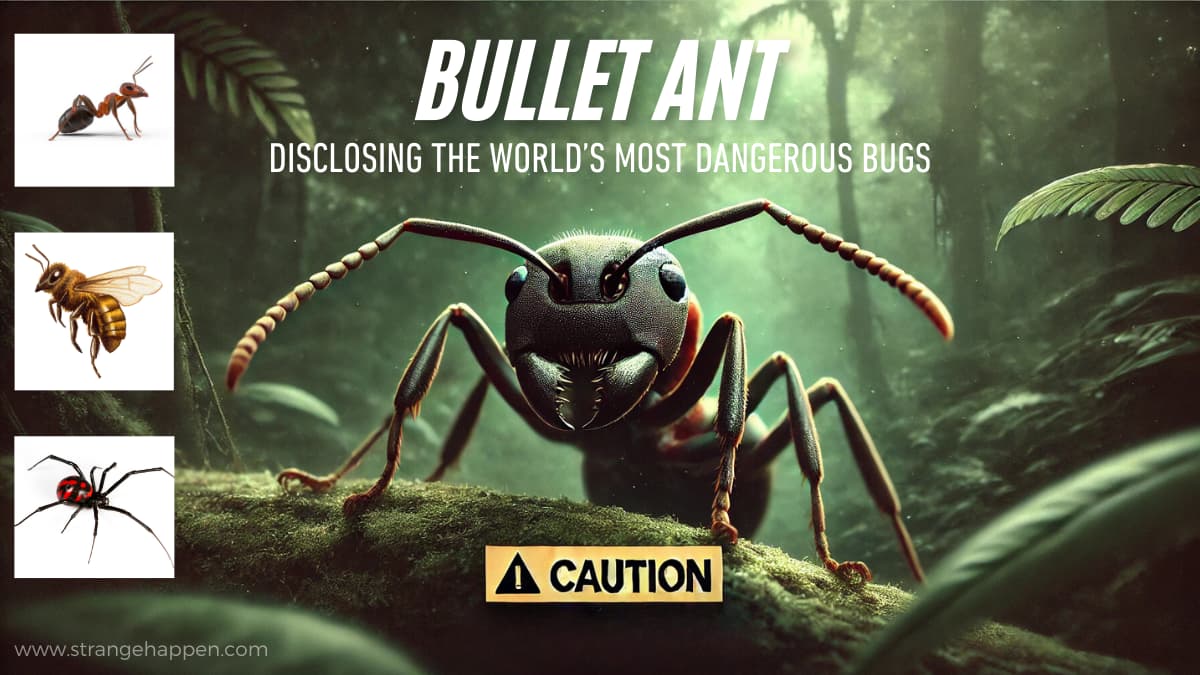
Bullet Ant: Disclosing the World’s Most Dangerous Bugs
Bullet Ant, Messes with frequently slip by everyone’s notice, except some harbor serious dangers to people because of strong toxin, forceful way of behaving, or infection transmission. In this investigation, we plunge into the existences of the Bullet Ant, shoot subterranean insect, Africanized honey bee, and Black Widow Spider — species known for their great variations as well as their prominent risks. Each assumes an extraordinary part in its biological system, uncovering both entrancing and fearsome characteristics.
Exposing the Most Risky Bugs: Conduct, Territory, and Endurance Strategies
1. Bullet Ant Behavior
Every one of these bugs has created one of a kind social transformations, permitting them to get by and flourish in frequently threatening conditions. These ways of behaving range from outrageous animosity and regional safeguard to powerful stowing away and toxin use. Here is a more critical glance at the conduct characteristics that make these animals impressive in their particular territories:
- Bullet Ant: Known for its exceptionally regional nature, the projectile subterranean insect involves its strong sting as an essential protection component. This excruciating sting dissuades the two hunters and opponent insects. Living in complex settlements, shot insects exhibit agreeable ways of behaving that help them keep up with and safeguard their region. Correspondence between province individuals is significant, permitting them to successfully facilitate guard systems.
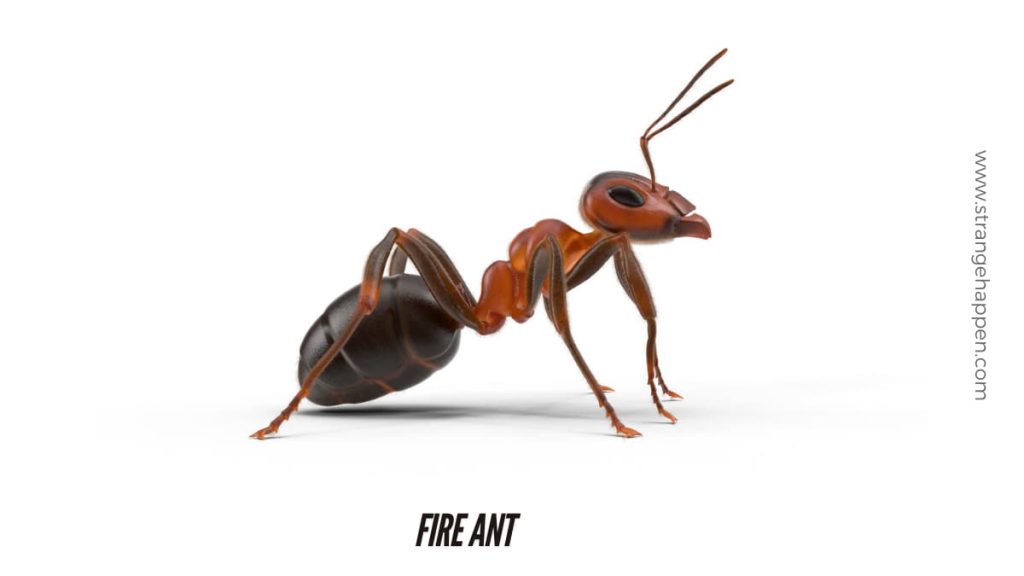
- Fire Ants: Fire ants are famously forceful and show an amassing conduct while safeguarding their homes. After distinguishing a danger, fire ants discharge caution pheromones that alert different subterranean insects, prompting a planned and overpowering assault. Their stings convey powerful toxin, and numerous nibbles can cause extraordinary agony or even hypersensitive responses in people.
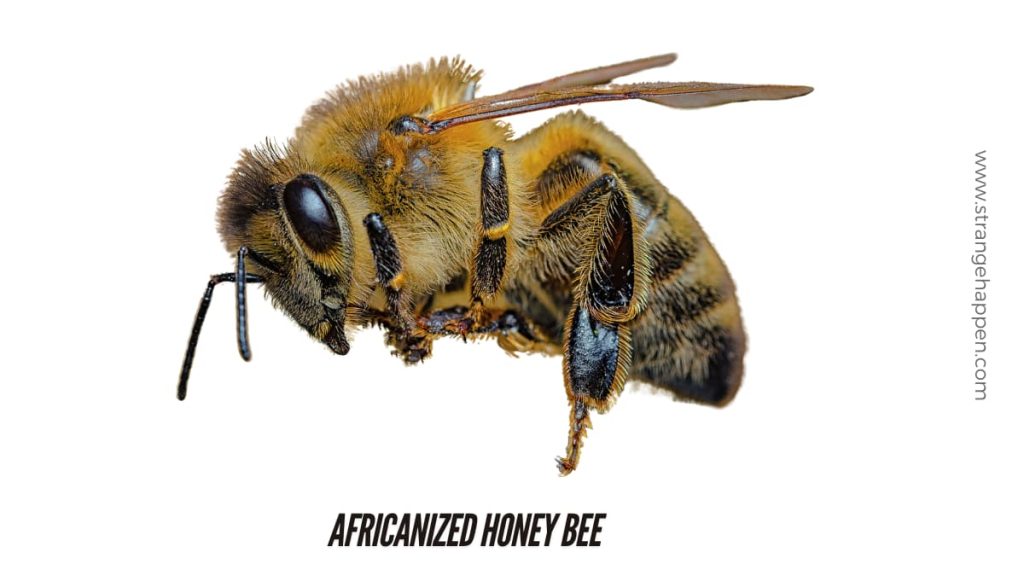
- Africanized Honey bee: Additionally called Africanized bumble bees, Africanized honey bees are known for their profoundly cautious and facilitated amassing assaults. At the point when their hive is compromised, they rush to seek after interlopers over significant distances, frequently stinging on numerous occasions. This forceful guard component guarantees the hive’s insurance and is a conspicuous difference to the more curbed conduct of standard bumble bees.
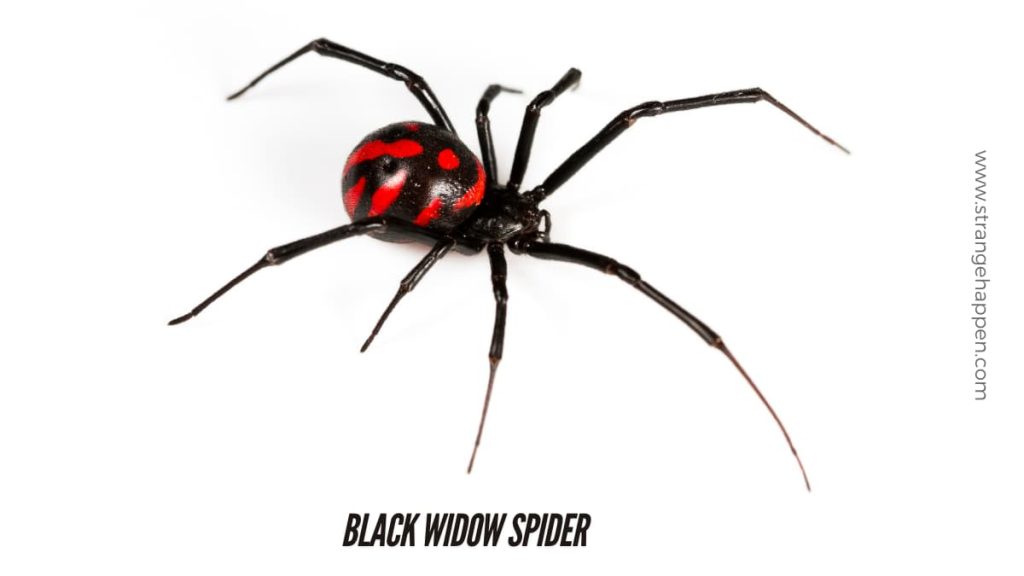
- Dark Widow Spider: Not at all like the bugs over, the dark widow spider is single and less obviously forceful. This bug will in general conceal in dull, undisturbed regions, staying away from struggle whenever the situation allows. It possibly nibbles while compromised, involving its intense neurotoxic toxin if all else fails. This held nature makes the dark widow to a greater degree a secret risk, as opposed to a functioning danger.
These conduct variations make every one of these bugs a remarkable survivalist, exceptional for guard and, when fundamental, assault. From venomous stings to forceful multitude strategies, their way of behaving guarantees they can stand their ground in the normal world.
2. Bullet Ant Life Cycle
Every one of these bugs has a one of a kind life cycle that adds to their endurance and province achievement. They go through various progressive phases, from egg to grown-up, and assume explicit parts in supporting and extending their settlements or regions.
- Bullet Ant: The existence pattern of a Bullet Ant starts when females lay eggs inside the settlement’s home. Once brought forth, the hatchlings are sustained by specialist subterranean insects and develop through transformation into grown-up insects. Bullet Ant are eusocial, implying that laborers and warriors play explicit parts, like safeguarding the province and searching for food. This agreeable design assists with guaranteeing the development and support of the state.
- Fire Ant: Fire subterranean insect sovereigns are amazingly productive, equipped for resting up to 1,500 eggs each day. Eggs form into hatchlings, which are taken care of and really focused on by laborer ants. Inside half a month, the hatchlings go through transformation to become experienced laborer insects, adding to the state’s labor force. The quick turn of events and high conceptive rate permit fire insect states to develop quickly, improving their capacity to protect and extend.
- Africanized Honey bee: The Africanized honey bee sovereign is vital to the hive’s development, laying large number of eggs all through her lifetime. These eggs form into hatchlings, which are taken care of by working drones. The hatchlings at last mature into grown-ups, satisfying different jobs like rummaging, protecting, or really focusing on new hatchlings. Africanized honey bees have a profoundly organized social association that guarantees powerful hive support and protection.
- Dark Widow Spider: The dark widow bug imitates by laying egg sacs, each containing up to 750 eggs. These sacs are ordinarily concealed in dim, undisturbed areas, where they can stay protected until bring forth. When the spiderlings arise, they develop freely, going through a few sheds until they arrive at adulthood. As singular trackers, dark widows don’t display social way of behaving, however their regenerative methodology guarantees the endurance of countless spiderlings, which spread to lay out new domains.
These life cycles mirror every species’ technique for endurance and development, with high conceptive rates, supporting of youthful, and now and again, complex social jobs that build up state attachment and defense.
3. Bullet Ant Family and Classification
These risky bugs have a place with unmistakable families and have exceptional logical characterizations that feature their developmental history and natural connections inside the animals of the world collectively:
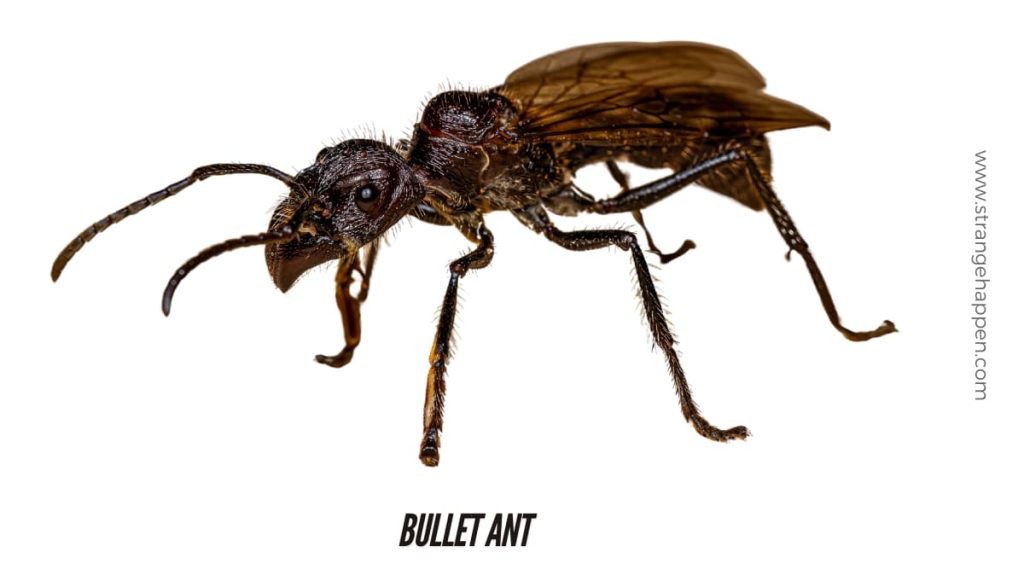
- Bullet Ant: Experimentally known as Paraponera clavata, the shot insect has a place with the family Formicidae. This family incorporates all insects, portrayed by their perplexing social designs and regional ways of behaving. The Bullet Ant is known for its extraordinarily difficult sting, frequently thought to be the most over the top excruciating of any bug.
- Fire Ant: Delegated Solenopsis invicta, the fire subterranean insect likewise has a place with the Formicidae family. Known for their forceful way of behaving and venomous stings, fire ants show province structures that are proficient in both development and protection, permitting them to flourish in different conditions and become obtrusive species in certain areas.
- Africanized Honey bee: The logical name for the Africanized bumble bee, or Africanized honey bee, is Apis mellifera scutellata, and it has a place with the Apidae family. This family envelops all honey bees, including bumble bees and honey bees. Africanized honey bees are known for their profoundly cautious way of behaving and propensity to crowd in light of dangers, which separates them from other bumble bee subspecies.
- Dark Widow Spider: Referred to deductively as Latrodectus mactans, the dark widow bug is essential for the Theridiidae family, generally alluded to as the spider web insects or tangle-web bugs. The dark widow is infamous for its intense toxin and unmistakable red hourglass stamping, and one of only a handful of exceptional insects represent a huge danger to people.
Every species’ order mirrors its organic qualities and ways of behaving, making them both interesting and imposing individuals from their particular families.
4. Bullet Ant Diet
The eating regimen of every one of these hazardous bugs is specific to suit their surroundings and methods for surviving. From plant-based nectar to hunting little prey, these bugs and 8-legged creature show a scope of taking care of ways of behaving that add to their flexibility and environmental effect.
- Bullet Ant: Basically consumes nectar and chases little spineless creatures, utilizing its solidarity and dexterity to catch prey.
- Fire Ant: Omnivorous, benefiting from plants, creatures, and periodically little vertebrates, empowering it to flourish in differed natural surroundings.
- Africanized Honey bee: Feeds on nectar and dust, which are imperative for hive support and energy necessities.
- Dark Widow Spider: Ruthless, consuming bugs and little spineless creatures trapped in its web for food.
Every species’ eating regimen features its flexibility and job inside its environment, with counts calories going from plant-based to savage.
5. Bullet Ant Defense Mechanisms
- Bullet Ant: Uses perhaps of the most incredibly excruciating sting, making outrageous agony prevent aggressors.
- Fire Insect: Stings in gatherings, infusing toxin on different occasions; amassing conduct overpowers dangers.
- Africanized Honey bee: Known for profoundly forceful amassing assaults, preparing the whole settlement to safeguard against apparent dangers.
- Dark Widow Insect: Nibbles just while upset, delivering toxin that can influence an individual’s sensory system.
6. Bullet Ant Attacking Mechanisms
- Bullet Ant: Uses enormous, sharp mandibles and stings with toxin to debilitate hunters and prey.
- Fire Insect: Conveys an excruciating sting while at the same time gnawing, infusing alkaloid toxin known as solenopsin.
- Africanized Honey bee: Multitudes with big numbers to overpower dangers, infusing toxin through rehashed stings.
- Dark Widow Insect: Uses a neurotoxic chomp, which immobilizes prey and conveys supplements.
7. Bullet Ant Habitat
The natural surroundings of every one of these risky Ants assumes a pivotal part in their endurance, impacting their way of behaving, diet, and connections with the climate. Understanding their favored surroundings outlines how they flourish in their separate biological systems.
- Bullet Ant: Flourishes in the tropical rainforests of Focal and South America, where it lays out states among vegetation and woodland floors, profiting from high mugginess and bountiful assets.
- Fire Subterranean insect: Initially from South America, fire subterranean insects have become obtrusive in North America, leaning toward open regions like fields and gardens, where they can scrounge and fabricate homes in bright areas.
- Africanized Honey bee: Found across the Americas, especially in hotter locales, Africanized honey bees adjust well to different territories, frequently possessing gardens and agrarian regions wealthy in flower assets.
- Dark Widow Bug: Lean towards detached, dim regions like heaps of wood, lofts, and storm cellars, which give the fundamental cover to hunting and security from hunters.
These assorted environments mirror the natural necessities and transformations of every species, featuring their parts in their particular biological systems.
8. Conservation Status
While these species don’t as of now face significant annihilation gambles, human infringement and living space changes influence their populaces in different ways. For example:
- Bullet Ant and Shoot Subterranean insects are for the most part steady, however discharge subterranean insects have obtrusive status in numerous locales.
- Africanized Honey bees have extended their reach, presenting difficulties for nearby biological systems.
- Dark Widows are normal in their territories however face decreased spaces because of urbanization.
9. Bullet Ant Interesting Facts
Here are a few interesting realities about these risky bugs that feature their extraordinary qualities and ways of behaving:
- Bullet Ant: In a few South American societies, projectile subterranean insects are essential to ancestral commencement customs. Youthful individuals get through the subterranean insect’s excruciating sting as a trial of solidarity and boldness, representing their change into adulthoodire subterranean insects are known for their momentous capacity to shape pontoons with their bodies during floods. This method for surviving permits them to drift together and arrive at security, exhibiting their agreeable way of behaving .
- Killer Bee” bumble bees: Began from a crossbreed made in a Brazilian lab during the 1950s. This deliberate hybridization prompted their forceful nature, bringing about boundless worry about their effect on nearby environments .
- Dark Widow Spider: The blackits name from the female’s inclination to consume the male subsequent to mating. This conduct has gathered consideration and added to the insect’s infamous standing .
10. Related Species
- Bullet Ant: Near other forceful insect species, like the Jack Jumper subterranean insect.
- Fire Ant: Family members incorporate other forceful subterranean insects like the Argentine insect.
- Africanized Honey bee: Connected with European bumble bees, however more forceful.
- Dark Widow Spider: Other Latrodectus species like the redback spider show comparable toxin.
11. Interaction with Humans
These species have outstandingly affected people:
- Bullet Ant: Stings can bring about outrageous agony, driving individuals to keep away from their living spaces.
- Fire Ant: Stings present critical dangers to those hypersensitive, prompting control endeavors.
- Africanized Honey bee: Known for lethal amassing episodes, these honey bees make difficulties for nearby beekeepers.
- Dark Widow Bug: However seldom deadly, chomps are therapeutically critical, prompting increased alert.
12. Future Outlook
As people venture into normal living spaces, experiences with these bugs are probably going to rise. Environmental change might adjust dissemination designs, prompting new attacks or expanded recurrence in populated regions. Examination into control techniques, especially for obtrusive species like fire Ants and Africanized honey bees, is progressing to moderate dangers to people and environments.
Conclusion
Anyway little in size, animals like the bullet ant, red ant, Africanized bumble bee, Dark widow spider, flea and vampire wasp the exceptional power and intricacy of nature’s smallest creatures. With entrancing transformations that permit them not exclusively to flourish yet additionally to present remarkable dangers, these animals require our wariness and regard. As people and these creatures progressively run into each other, figuring out their way of behaving, living spaces, and effects will be essential in overseeing experiences and esteeming their biological jobs.