



Glass Octopus
The Strange Glass Octopus: Nature’s Undetectable Mir
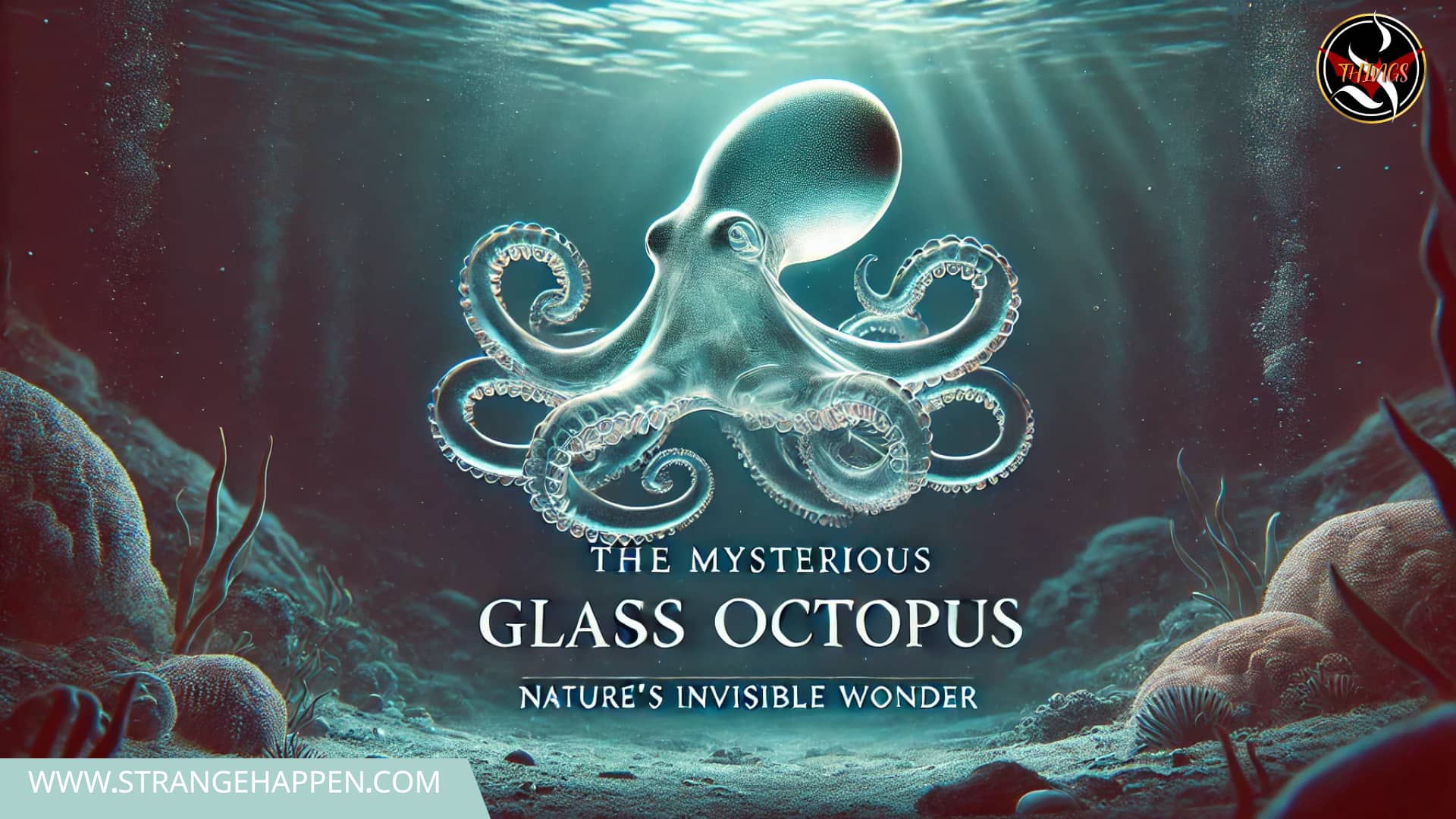
The glass octopus, or Vitreledonella richardi, is one of the sea’s most fascinating and cryptic animals. Found in the remote ocean, this striking cephalopod enamors marine aficionados and researchers the same with its straightforward body and special variations.
Glass Octopus Anatomy
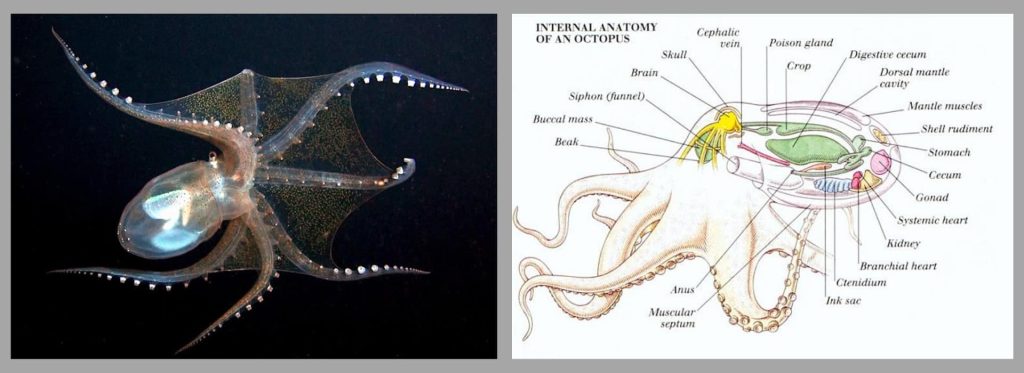
The glass octopus has a coagulated, almost straightforward body that can arrive up to 60 cm (around 24 inches) long. Its inside organs, including its cerebrum, heart, and stomach-related framework, are noticeable through its skin. This straightforwardness fills in as a brilliant cover, assisting it with mixing consistently into its environmental elements. The animal has eight long, slim arms fixed with little suckers, permitting it actually to catch prey.
Habitat and Distribution
Glass octopuses occupy profound sea waters, regularly found at profundities going from 200 to 1,500 meters (656 to 4,921 feet). They are situated in the tropical and subtropical districts of the Pacific and Indian ocean. A few eminent areas incorporate regions around the Mariana Channel, the Hawaiian Islands, and the Incomparable Obstruction Reef.
Diet and Hunting Techniques
The eating routine of the glass octopus comprises little fish, scavengers, and other marine spineless creatures. Their hunting methodology is interesting; they depend on their straightforwardness to snare prey. Utilizing their outstanding cover, they can surprise clueless creatures. At the point when sufficiently close, they stretch out their arms to catch their prey with speedy, smooth motions.
Defense Mechanisms
Notwithstanding their straightforwardness, glass octopuses have other protection components. When compromised, they can deliver a haze of ink to make a distraction, permitting them to escape from hunters. Their capacity to change tone marginally — however not as strikingly as a few different cephalopods — can likewise assist them with mixing into their current circumstance when required.
Family and Lifespan
Glass octopuses have a place with the Vitreledonellidae family. They are remembered to have a moderately short life expectancy, commonly going from 1 to 3 years. A lot of their life cycle stays a secret, as they occupy profundities that scientists can investigate.
Fascinating Facts
- Jam-like Surface: The glass octopus has a delicate, jam-like body that makes it inconceivably adaptable, permitting it to enter restricted spaces or explore through complex submerged conditions effortlessly.
- Negligible Pigmentation: Not at all like most cephalopods, which can change tone and show complex examples, the glass octopus has next to no pigmentation, making it almost imperceptible in its remote ocean natural surroundings. Just its eyes, optic nerve, and intestinal system have a recognizable hue.
- Cylindrical Eyes: The eyes of the glass octopus are rounded in shape, an uncommon element among cephalopods. This transformation permits them to catch however much light as could reasonably be expected in the obscurity profundities of the sea, working on their capacity to identify prey or hunters.
- Ink Safeguard: Even though glass octopuses depend principally on their straightforwardness for cover, they can likewise spurt ink to make an impermanent redirection and get away from hunters in crisis circumstances.
- Drifting in the Profound: Glass octopuses are much of the time tracked down floating through the water section as opposed to remaining near the ocean bottom. Their coagulated bodies and lightweight permit them to drift easily in the water, rationing energy as they look for food.
- Huge Mind for Their Size: In the same way as other octopus species, the glass octopus has a generally enormous cerebrum contrasted with its body size, which makes them keen trackers and issue solvers.
- Bioluminescence: While not bioluminescent themselves, they occupy portions of the sea where bioluminescent organic entities are normal, adding one more layer of disguise. Their straightforward bodies assist them with keeping away from identification in the shining waters of the remote ocean.
- Mating and Generation: Not much is realized about their mating propensities, however, it’s accepted that glass octopuses follow comparable cephalopod examples, where guys utilize a specific arm called a hectocotylus to move sperm to females.
Conclusion
The glass octopus and the Glow Jellyfish are showings of the marvels of improvement and variety in the far-off sea. The two animals show excellent elements and enrapturing ways of behaving that make them entrancing occupants of the remote ocean. The glass octopus, with its straightforward body and intriguing hunting strategies, depends on the disguise to escape hunters, while the Glow Jellyfish stuns with its bioluminescent sparkle, enlightening the dull waters around it.
Together, these momentous marine animals feature the marvels of development in their extraordinary environments. As we keep on researching the privileged insights of the ocean, there’s no question that these astonishing cephalopods and jellyfish will rouse further assessment and interest.